Iowa Enforces No-Touch Driving Law: What Drivers Must Know
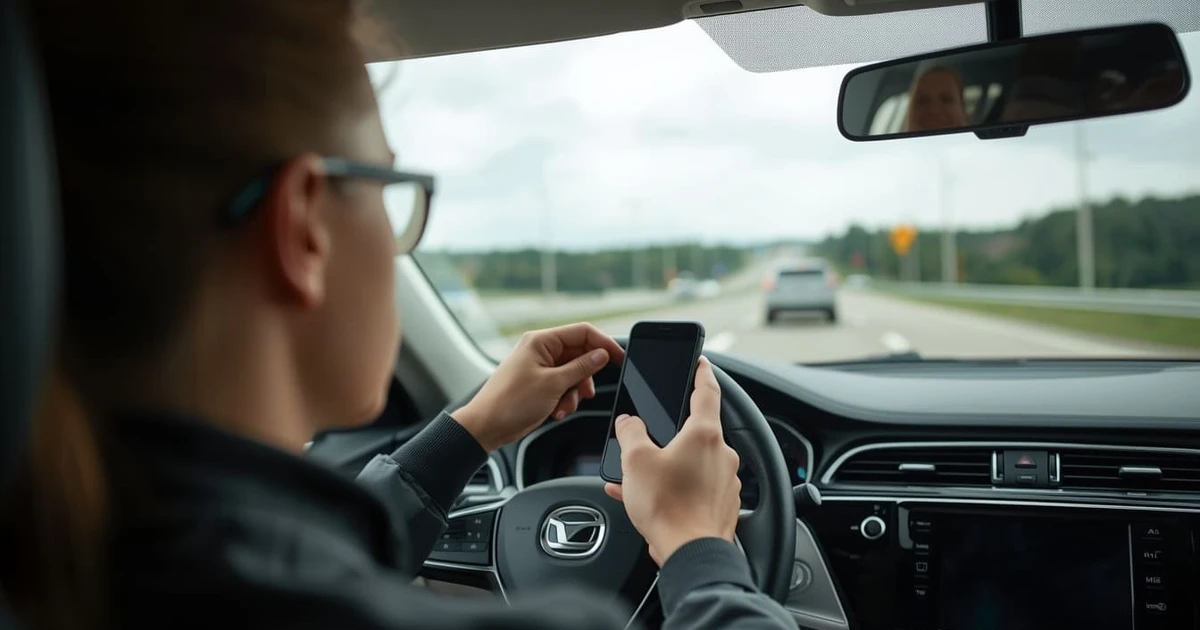
With a major stride toward making roads safer, the state of Iowa has officially begun enforcing its no-touch driving law at the start of a new year. As a preventive measure against distracted driving, this will ban the use of handheld electronic devices while driving, shifting the warning approach toward the imposition of real punishment.
Since traffic fatalities are already declining, the state officials are hopeful that this enforcement will save even more lives. As drivers in the Hawkeye State adapt to the changes, it is important to understand the specifics of this law to avoid fines and maintain compliance.
The legislation is timely, as mobile technology is everywhere, yet its abuse on the highway has been lethal. As state transportation statistics show, distracted driving has been a long-term problem, which leads to many accidents a year. At this point, as enforcement is fully underway, drivers are encouraged to be familiar with the rules to remain on the right side of the law.
The Knowledge of No-Touch Driving Law
The no-touch driving law, also known as the hands-free mandate, in Iowa builds on earlier laws that banned texting while driving. According to this new law, signed by Governor Kim Reynolds last spring, drivers cannot use their personal electronic devices in any way, whether by hand or in their pockets, while their car is moving. This involves smartphones, tablets, and any other gadgets that may be distracting at the road.
The main rule is quite simple: do not take your hands off the wheel and do not look behind. According to the law, one should be able to interact with a device only in hands-free or voice-activated mode. That is, make calls, send messages or navigate using in-built car systems, Bluetooth or voice commands. For example, the voice-recognition capabilities of these phones, such as Siri on iPhones or Google Assistant on Android devices, enable drivers to accomplish tasks without touching anything.
Its implementation began with a pedagogical step: warnings that law enforcement issued last summer instead of tickets. This grace period was meant to allow drivers time to adjust, and it seems to have been successful, as more awareness has been created across the state. That leeway has been lost with the turn of the new year, though, and officers have been given the powers to issue citations for violations.
The financial cost of non-compliance is one of the most pressing issues for drivers. The minimum amount of the fine to be paid in case of using a handheld device during driving is one hundred dollars, and this amount can be easily increased in certain situations.
The fine increases to $500 if an injury is caused by distracted driving. In the unfortunate case that a violation leads to a fatality, the penalty may be up to one thousand dollars, which is sufficient to highlight the critical impact of the rule breach.
These are the penalties that would be considered as moving violations and can impact insurance rates and driving records as well. Repeat offenders can be given much stricter penalties, such as being denied a license in the worst case. The law enforcement agencies stress that the idea is not to raise revenue but to deter; they hope that the threat of fines will help people adopt safer habits.
Exception and Compliance Strategies
The law is not lenient, but it does include some practical provisions that address practical requirements. Even in the case of a device that is not completely handled, emergency calls (e.g., 911) or first responders are allowed. Also, some occupations, such as law enforcement personnel and utility workers, might be exempt from performing their job duties.
Drivers can do so with a number of options, which are not hard. The majority of contemporary vehicles are fitted with infotainment systems that are compatible with smartphones, thereby enabling them to use their phones without holding them.
For older cars, simple dashboard-mount accessories and Bluetooth earpieces can be purchased at a low price. The voice-activated apps on phones allow users to dictate messages, set destinations in GPS software, or control music without touching the screen.
Professionals suggest testing such techniques in a secure setting before going on the road. Small modifications can reduce the interaction in the car to a minimum, including presetting favourite contacts or playlists. With these habits built into them, the motorists will be able to be connected without losing their safety.
Beyond the Effect on Road Safety
Implementation of this law is already yielding positive results for the safety of the people. The initial statistics available from the state show a significant reduction in traffic fatalities over the last year, with figures falling to approximately 260, which is quite low compared to 357 in 2011. In part, this can be explained by the expectation of the no-touch law, as well as by seatbelt use and compliance with the speed limit.
It is promising to compare them with the experience of neighbouring states, which started the same measures many years ago. Indicatively, other states such as Minnesota and Illinois had recorded massive reductions in crashes and deaths following the implementation of hands-free policies.
Iowa transportation officials assume this tendency will be maintained, which could save dozens of lives every year. The decrease does not only symbolise statistics; it also symbolises families saved from the loss of a loved one and communities that are safer.
Opinions of Authorities and Experts
The importance of the law has been lamented by state safety planners and patrol sergeants. One of the officials referred to the human factor, saying that one death that can be prevented is not a good thing, and the current negative trend of the fatalities is being compared with hundreds of lives saved in relation to the latest highs. Patrol leaders emphasise that it does not mean that, to be compliant, one needs to buy new technology; they can work with the existing phones most users use.
The advocacy for this legislation was a communal process, as it relied on the testimonies of victims’ families and survivors of injuries to drive home the need for change. Such stories were used to influence politicians, and so, Iowa is among the new states to give concern to the issue of distraction-free driving.
Driving Hints in Iowa
Drivers should prepare as the crackdown intensifies. To get you started, you should update your phone software to make its voice functionalities work best. Get a mount that is durable when you do not have a built-in system in your car, and always park when you need more focus to carry out a task. It is recommended that parents and teachers talk to young drivers about these regulations, as they are the most vulnerable group due to their lack of experience.
Public awareness campaigns are conducted across different media, such as road signs and social media, to reinforce the message. Through education and self-evolution, Iowans would help create a responsible driving culture.
To sum up, the no-touch driving law in Iowa is a progressive way of addressing one of the most significant road safety issues of the modern world. The advantages, in terms of fewer accidents and saved lives, are likely to be even more evident as drivers adjust. Hands-free is not only a way of not receiving fines but also of ensuring your protection, as well as that of other people on the road. With this in mind, motorists will be able to go through the changes safely and with confidence.