Business
Core Inflation Holds Steady at 3% in February
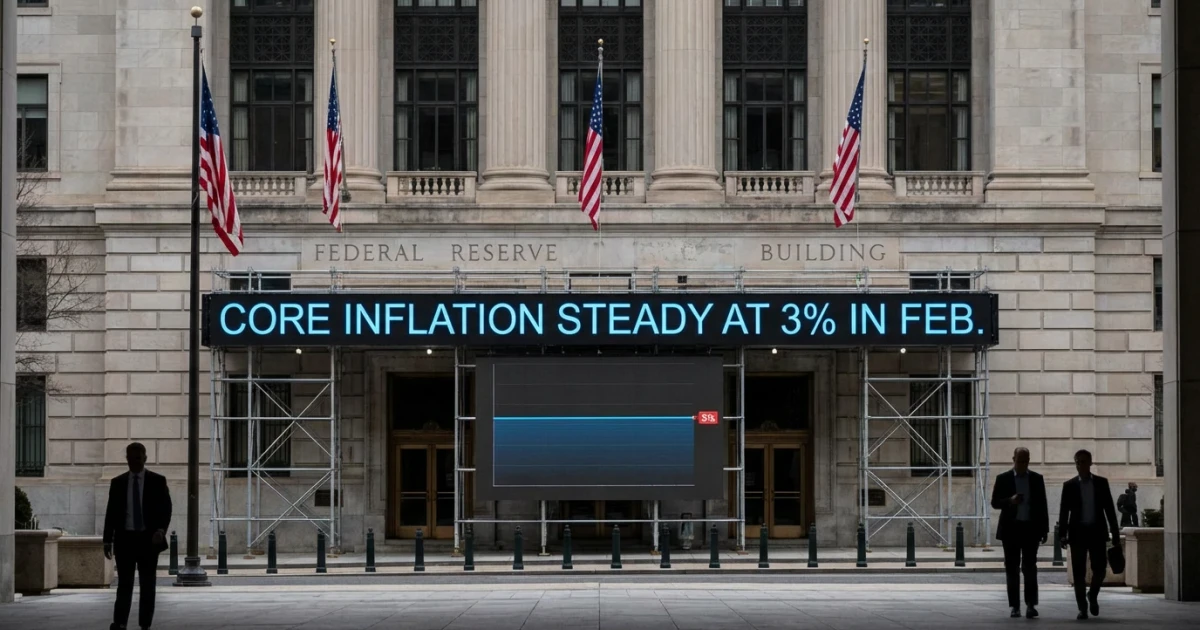
Core inflation in the United States held steady at 3% in February, according to the Personal Consumption Expenditures (PCE) Price Index, a key measure closely watched by the Federal Reserve. The reading was in line with economists’ forecasts and signals that the pace of underlying price increases remains persistent, even as headline inflation continues to cool.
Understanding Core Inflation and the Fed’s Preferred Gauge
The PCE Price Index tracks the change in prices for goods and services purchased by consumers in the U.S. economy, and the core measure excludes the often-volatile categories of food and energy. The Federal Reserve relies on core PCE as its preferred inflation gauge because it provides a clearer sense of underlying inflation trends, filtering out short-term shocks.
The core PCE index rose 3% year-over-year in February, the same pace as in January. This steady rate is still above the Fed’s official 2% target, underscoring challenges policymakers face in returning inflation to pre-pandemic norms.
Consumer Spending Slows Amid Lingering Price Pressures
While inflation shows signs of cooling compared to the highs of recent years, price pressures continue to affect household budgets. CNBC reported that consumer spending barely rose in February, reflecting caution among Americans as they navigate persistent increases in the cost of living. This aligns with data showing only modest growth in personal outlays, a key component of overall economic health.
- The Bureau of Economic Analysis reported a slight gain in personal spending for February, suggesting consumers remain sensitive to inflationary pressures.
- Economists view this subdued spending as a sign that households are adjusting to higher prices, even as wage growth offers some support.
Policy Implications and Federal Reserve Response
The Federal Reserve monitors the PCE Price Index closely when determining interest rate policy. Persistent core inflation above 3% means the central bank may be hesitant to cut rates quickly, even as some indicators point to a cooling economy. According to recent Federal Reserve Monetary Policy Reports, officials are balancing the need to control inflation with concerns about slowing growth.
Market expectations for rate changes now depend on the continued trajectory of core inflation and consumer spending. If price increases moderate in the coming months, the Fed may gain confidence to loosen its policy stance. However, stubborn inflation could prompt a wait-and-see approach.
Comparing PCE with Other Inflation Measures
While the Consumer Price Index (CPI) is another widely cited measure, the PCE is often favored by policymakers because it captures a broader range of expenditures and adjusts for changing consumer behavior. Readers interested in the differences between these two measures can explore the official CPI Databases for deeper data comparisons.
Looking Ahead
With core inflation holding at 3% and consumer spending growth subdued, the U.S. economy remains at a crossroads. The Federal Reserve’s next moves will depend on whether price pressures continue to ease and if consumers regain confidence to spend more freely. Economic analysts and market participants will be closely watching upcoming data releases for signs of progress toward the central bank’s inflation target.