Science
Corrosion and Dendrite Growth Challenge Solid-State Battery Safety
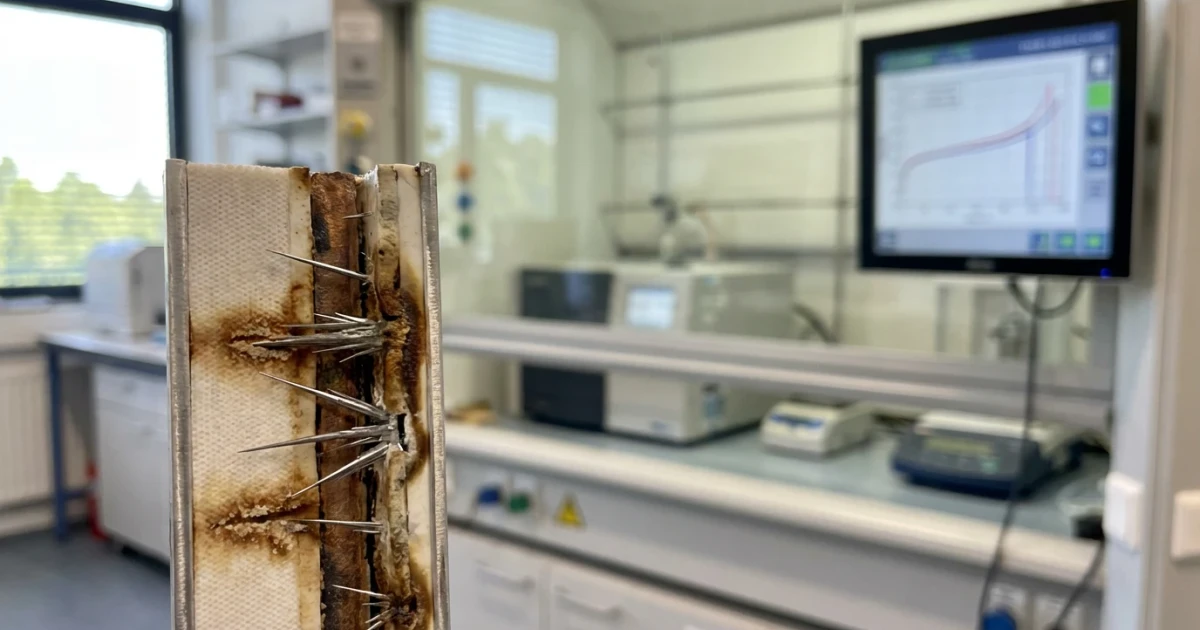
Solid-state batteries have long been considered a promising alternative to traditional lithium-ion batteries, potentially offering higher energy density and improved safety. However, recent findings published in Nature reveal that electrochemical corrosion and dendrite growth remain key obstacles to their widespread adoption, frequently leading to unexpected short-circuit failures.
Understanding Dendrite Growth in Solid-State Batteries
- Dendrites are thin, needle-like structures of lithium metal that can form within the battery during charging cycles.
- These structures can penetrate the solid electrolyte—a core component intended to block such growth—eventually reaching the cathode and causing a short circuit.
- Research detailed in the recent Nature study demonstrates that dendrite formation is not only a mechanical issue, but is closely tied to electrochemical corrosion at the interface between lithium and the solid electrolyte.
Corrosion: The Silent Partner in Battery Failure
While dendrite growth has been recognized as a failure mechanism for years, the new research emphasizes the role of electrochemical corrosion in facilitating dendrite penetration. As MIT News explains, corrosion can degrade the integrity of the solid electrolyte, creating pathways for dendrites to propagate more easily. This dual threat—mechanical intrusion by dendrites and chemical weakening from corrosion—accelerates battery failure and raises significant safety concerns.
Why Do Solid-State Batteries Short-Circuit?
Experts at MIT highlight that even with advances in material science, solid-state batteries remain susceptible to faults at the lithium/electrolyte interface. The presence of microcracks, as well as chemical reactions between lithium and the solid electrolyte, create vulnerabilities for electrochemical corrosion to take hold. This process initiates dendrite nucleation, which can ultimately lead to catastrophic short circuits.
- Solid electrolytes like lithium lanthanum zirconate (LLZO) are designed to resist lithium penetration, yet corrosion can undermine their protective properties.
- Short-circuit events often manifest suddenly, without obvious warning signs during battery operation.
Implications for Battery Technology and Safety
The convergence of dendrite growth and corrosion presents a complex challenge for battery engineers. As highlighted in the Nature research, ongoing innovation in solid electrolyte materials must focus on mitigating both mechanical and chemical degradation. This includes developing electrolytes with improved chemical stability, engineering interfaces that resist corrosion, and employing advanced monitoring techniques to detect early signs of failure.
For consumers and industries relying on next-generation energy storage—such as electric vehicles and grid-scale batteries—these findings underscore the importance of continued research and rigorous safety testing. While the promise of solid-state batteries is substantial, overcoming the intertwined issues of dendrite growth and corrosion is critical to realizing their full potential.
Further Reading and Data
- Explore battery performance data and degradation statistics from the National Renewable Energy Laboratory.
- Learn more about the science behind dendrite formation in the U.S. Department of Energy's technical report.
- For a technical overview of solid electrolytes, see the Materials Project entry on LLZO.
Looking ahead, collaboration between materials scientists and electrochemists will be vital to develop robust solutions that address both dendrite growth and corrosion. As research continues, the industry hopes to unlock safer, longer-lasting solid-state batteries that can meet the demands of modern energy storage.