Science
Crystal Ball Nebula Reveals Stunning Binary Star Transformation
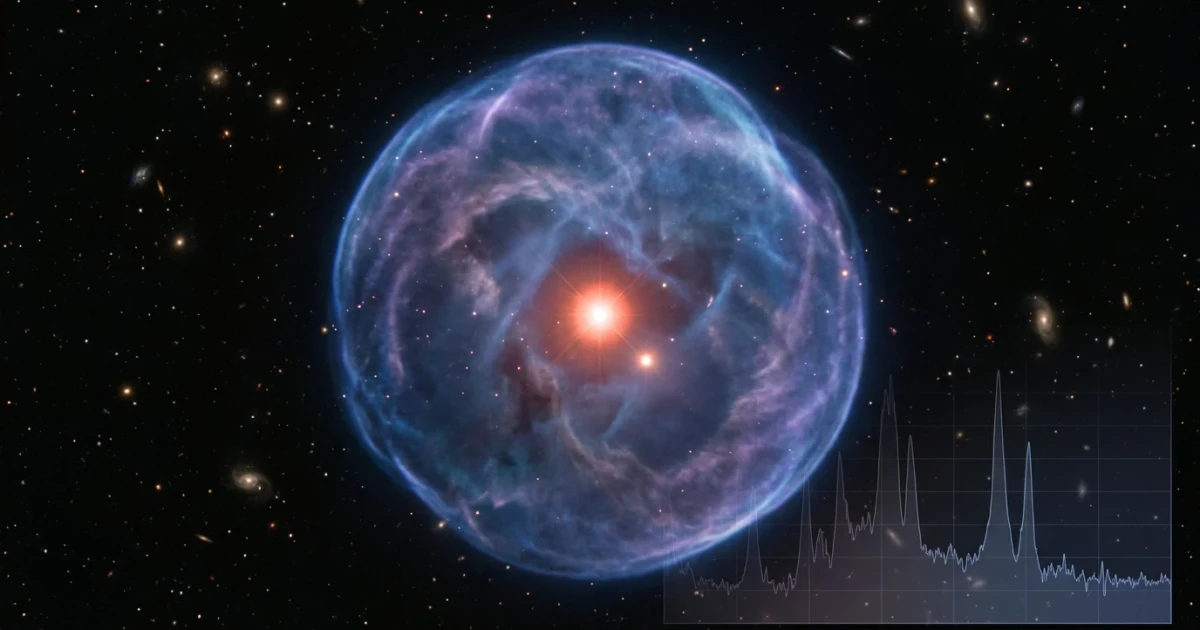
New astronomical images of the Crystal Ball Nebula (NGC 1514) have captivated scientists and the public alike, revealing intricate gas clouds shaped by a dying star in a binary system. The nebula, often referred to as the "Crystal Ball," offers a window into the late stages of stellar evolution and the complex dynamics of binary star systems.
The Binary System at the Heart of NGC 1514
At the core of NGC 1514 lies a pair of stars—one of which is nearing the end of its life. According to CNN, these stars interact closely, with the dying star shedding its outer layers while its companion influences the resulting cloud shapes. This process creates the nebula's distinct, shimmering shells, visible in high-resolution imagery released by observatories and featured in recent coverage.
- NGC 1514 is classified as a planetary nebula, formed when a star similar to our Sun exhausts its nuclear fuel and emits gas into surrounding space.
- The nebula's central binary system has been a subject of study due to its unique structure and the role each star plays in sculpting the nebula's appearance. Data from the AAVSO Variable Star Index details the variability of this system, highlighting its dynamic nature.
Imaging and Astronomical Insights
Recent observations, including those by the Gemini Observatory and featured on CNN, showcase the nebula's luminous rings and filaments. High-resolution images from the European Southern Observatory (ESO) provide detailed views of the nebula's structure, showing how the binary stars' interaction shapes the gas clouds into visually striking patterns.
- The nebula's central star emits ultraviolet light, energizing the expelled gases and causing them to glow.
- NGC 1514 spans approximately 2 arcminutes in diameter, making it a prominent feature in the constellation Taurus.
- Observational records from NASA/IPAC Extragalactic Database provide comprehensive photometric data, furthering research into its composition and evolution.
Significance for Stellar Evolution
The Crystal Ball Nebula exemplifies how binary star systems influence the shape and development of planetary nebulae. As one star dies and expels material, its companion's gravity can create symmetrical shells or distortions, a process observed in NGC 1514. This phenomenon helps astronomers understand the fate of stars and the diversity of nebular forms across the universe.
NASA's Hubble feature on the nebula highlights its scientific importance, noting that "the binary nature of NGC 1514 gives rise to its beautiful, layered appearance." These findings contribute to ongoing research into the mechanics of nebula formation and the role of binary stars in cosmic evolution.
Exploring the Cosmic Artistry
The Crystal Ball Nebula's images, widely shared in the astronomy community and now featured in mainstream media, invite viewers to appreciate the artistry and science behind cosmic phenomena. The interplay of gas, light, and gravity creates a visually stunning tableau that also encodes information about stellar lifecycles.
For those interested in deeper scientific context, Astronomy Picture of the Day offers annotated images and explanations of the nebula's structure, helping readers decode the visual cues that astronomers use to study such objects.
Looking Ahead
As telescopes and imaging techniques improve, nebulae like NGC 1514 will continue to provide valuable insights into the universe. The Crystal Ball Nebula stands as both a scientific resource and a reminder of the beauty found in stellar endings. Ongoing studies of its binary system and gas dynamics are expected to shed further light on the processes that shape planetary nebulae and the fate of stars like our Sun.