Science
Crystals Capture Chimps’ Curiosity, Shedding Light on Human Origins
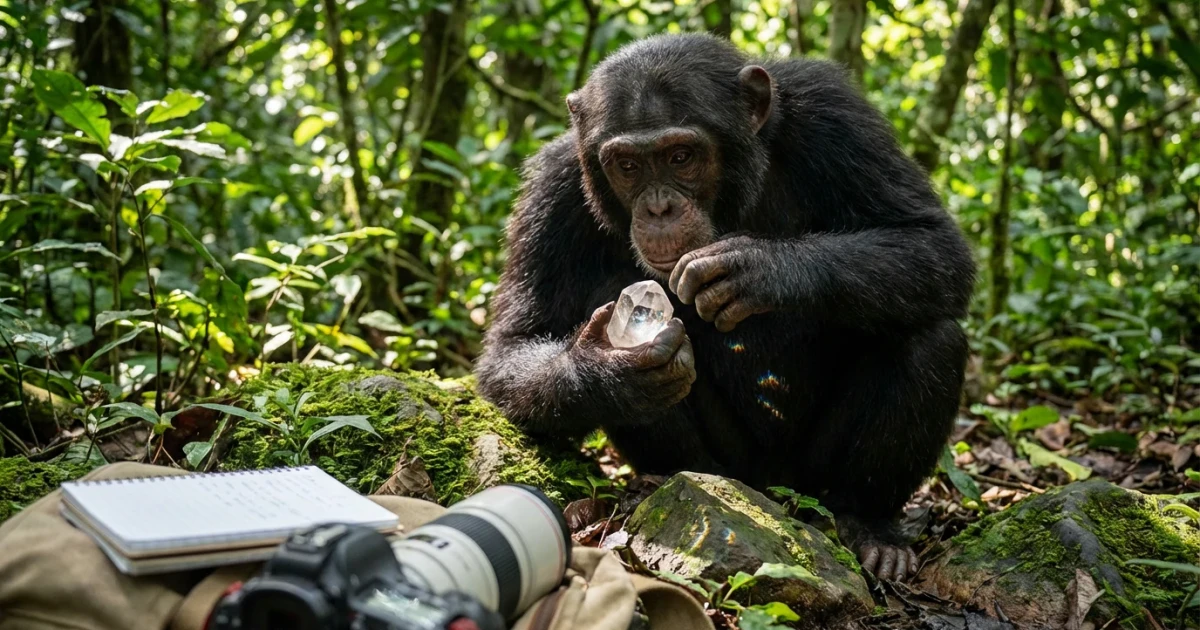
Recent research has revealed that chimpanzees display a notable fascination with crystals, a behavior that may provide insight into the origins of human curiosity and the evolutionary significance of objects with unique visual and tactile properties. This emerging field of study is drawing attention to the ways in which our closest primate relatives interact with the natural world — and what those behaviors might suggest about our own deep past.
Chimpanzees and Their Crystal Curiosity
According to a report from Phys.org, chimpanzees have been observed engaging with crystals in ways that go beyond mere foraging or tool use. Researchers noted that chimps often collect, examine, and even display crystals, suggesting a level of aesthetic or intrinsic interest not previously documented in wild primate populations.
- Some groups were seen using stones as tools to crack nuts, but their interaction with crystals appeared distinct from these utilitarian behaviors.
- Chimpanzees sometimes accumulated crystals in specific locations, hinting at possible social or ritual elements to their actions.
What Makes Crystals Special?
Crystals possess regular geometric patterns and can reflect light in striking ways, making them visually unique compared to ordinary rocks. The structure of crystals has long fascinated humans, from ancient rituals to modern collections. The observation that chimpanzees are similarly captivated suggests that the appeal of crystals might have deep evolutionary roots.
Implications for Understanding Human Evolution
Scientists believe that studying chimpanzee behavior offers a window into early hominin minds. The chimpanzees’ apparent attraction to crystals may parallel the archaeological discovery of non-utilitarian objects—such as crystals, pigments, and ornamental stones—carefully selected and transported by early humans and their ancestors.
- These findings support the hypothesis that our ancestors valued certain objects for reasons beyond immediate survival, such as symbolic or social significance.
- Researchers are now exploring whether chimpanzees’ accumulation of crystals is tied to ritualistic behaviors similar to those speculated in early human societies.
Ongoing Research and Future Directions
The growing body of evidence from field observations and chimpanzee behavioral databases is prompting scientists to ask new questions about the role of curiosity and aesthetics in evolution. While the ultimate meaning of chimpanzee crystal fascination remains uncertain, these behaviors are reshaping our understanding of the cognitive and cultural capacities of primates.
By watching how chimpanzees interact with crystals, researchers hope to uncover not just the roots of tool use, but also the origins of symbolic thought, collection, and even the beginnings of art. As study continues, the humble crystal may offer a glimmer of insight into what makes both chimpanzees and humans uniquely curious species.