Entertainment
Cult action film GetEven earns new life as so bad it's good classic

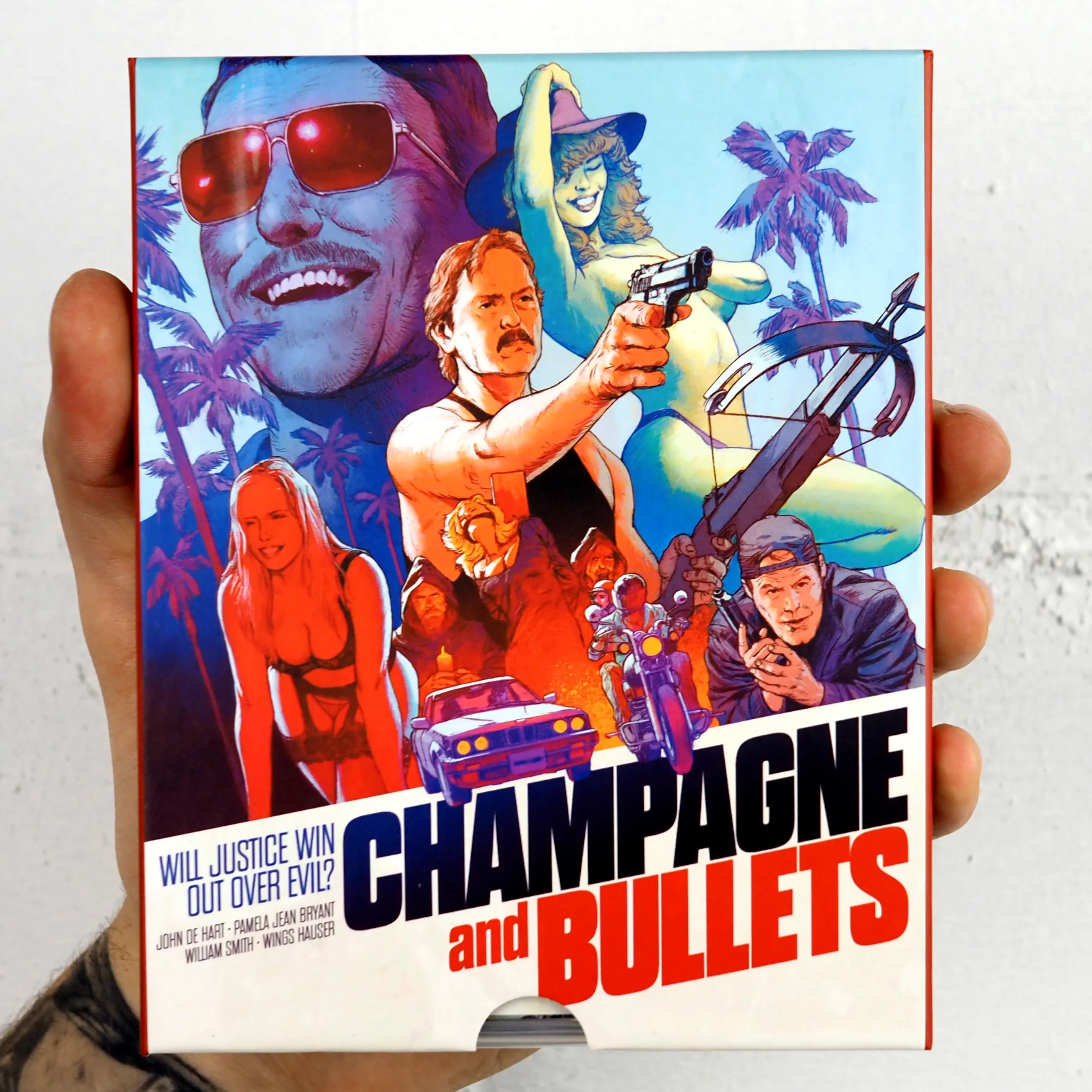
Some failures disappear because they never leave a clear imprint. Champagne and Bullets, released in 1993 and also known as GetEven and Road to Revenge, lasts because it is impossible to mistake for anything else: corrupt cops, a satanic cult, martial arts, drug deals and line dancing all collide in one overloaded action film. John De Hart is credited as director, star, producer, writer and composer, a concentration of control that helps explain why the movie feels so singular, and why it keeps resurfacing in cult-cinema circles.
A vanity project that kept changing names
The film’s three titles are part of its afterlife. Champagne and Bullets is the name that sounds like a sleazy drive-in relic, GetEven is the harder-edged revenge label, and Road to Revenge adds one more layer of pulpy menace. That flexibility makes it easier for the movie to circulate in fragments, because different listings and conversations keep pulling one version of the title into view while the others follow behind.
De Hart’s role is just as central. He is identified as the filmmaker behind the project in nearly every place it surfaces, and the credits attached to GetEven make clear how deeply his imprint runs through it. When one person is responsible for so many creative decisions, the result can become less like a studio product and more like a personal artifact, which is exactly why cult audiences keep returning to it.
The plot pushes every dial past normal
MUBI’s synopsis sets out the core premise with ruthless efficiency: two cops are fired after being set up by their corrupt boss, who is then appointed judge but secretly heads a satanic cult. After one cop’s wife is killed by the cult, he sets out to destroy it. Tubi’s description adds more grit to the mix, folding in baby sacrifices and drug deals and casting the boss as a Machiavellian police chief-turned-judge.

That narrative stack matters because it leaves no room for understatement. The film is not content with one outrageous idea, it keeps layering them until the premise itself becomes a form of spectacle. Once the police corruption plot, the cult plot and the revenge plot are all in motion, the movie has nowhere left to go but further into excess.
Tubi lists the film as a 1993 action title running 1 hour 39 minutes. Its cast includes John De Hart, Wings Hauser, William Smith, Pamela Jean Bryant and Elaine Young, names that give the production a real roster of character actors even as the surrounding material grows stranger.
The details that turn failure into attraction
One reason this kind of movie survives is that its rough edges are easy to name. Mondo Digital lists the film at 98 minutes and 59 seconds, credits John De Hart and James Paradise as directors, and gives the same central cast, including Wings Hauser, William Smith and Pamela Jean Bryant. When one listing says 1 hour 39 minutes and another says 98 minutes 59 seconds, the discrepancy becomes part of the film’s legend rather than a footnote.
The visual and tonal mix is just as important. Bristol Bad Film Club described GetEven, also called Road to Revenge and Champagne and Bullets, as "the greatest satanic cult action film to feature line dancing that you’ve ever seen." That line captures the film’s strange durability in one shot: it is not just bad, it is specific, and the specificity gives viewers something to remember, repeat and share.
A Bristol Bad Film Club screening listing at Bristol Bierkeller on 16 June highlighted the same collision of elements, naming satanic cults, corrupt cops, martial arts and line dancing as the ingredients on offer. That combination is precisely the sort of impossible genre blend that keeps a movie alive after its first life is over. A generic flop fades because it has no distinguishing shape; this one leaves behind a sequence of unforgettable mismatches.
Why cult viewers keep coming back
GetEven has stayed visible because it fits the exact pattern that gives so-bad-it’s-good movies their second life. The ambition is unmistakable, the execution is uneven, and the absurdity is quotable enough to survive screening rooms, review pages and riffing communities. It has been discussed by bad-movie reviewers and groups such as TYTD Reviews and RiffTrax, where its oddities are treated as material to be replayed rather than simply dismissed.
That is the core of its appeal. The movie is too committed to its own melodrama to be boring, too strange to be generic, and too packed with memorable contradictions to be forgotten. In the cult-movie archive, that combination is often what separates a failed action film from a lasting artifact.
Sources
- [1]theverge.com
- [2]mubi.com
- [3]tubitv.com
- [4]mondo-digital.com
- [5]bristolbadfilmclub.co.uk
- [6]tytdreviews.com
- [7]ideas.rifftrax.com
- [8]letterboxd.com