Science
Curiosity Rover Discovers Organic Molecules on Mars
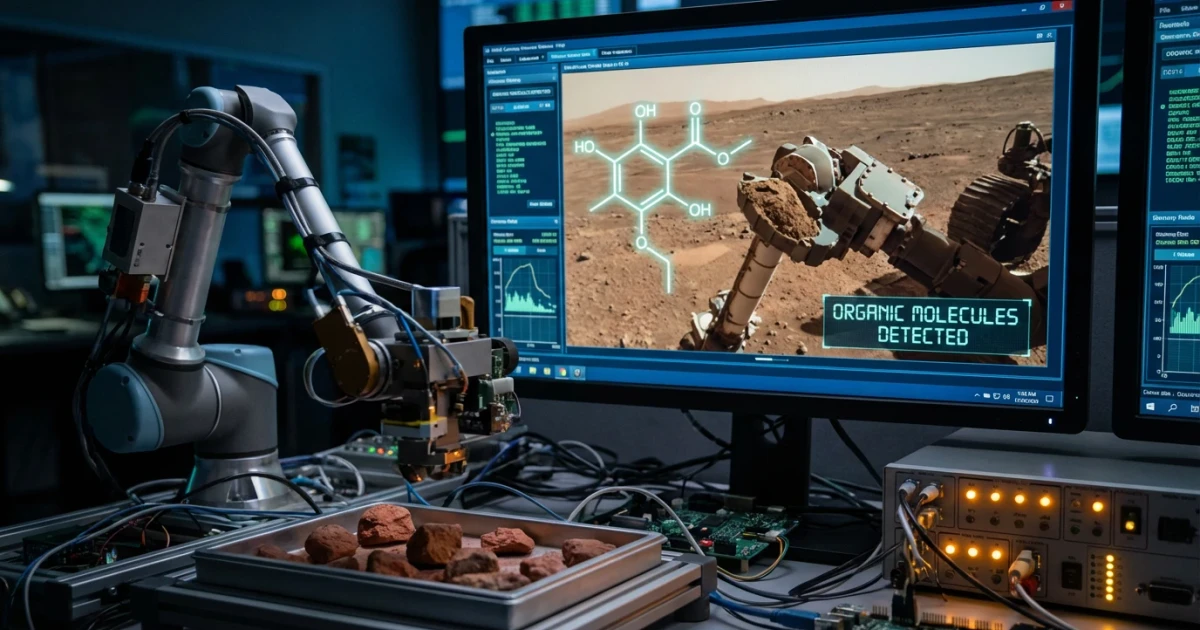
NASA’s Curiosity rover has identified previously undetected organic molecules in Martian rocks, marking a significant milestone in the ongoing quest to understand the Red Planet’s potential to host life. The findings, announced by NASA and covered extensively by The Guardian and Space, have sparked new scientific debate about whether these compounds are signs of past biological activity or the products of non-living processes.
What Was Discovered?
According to reports from both The Guardian and Space, Curiosity’s instruments detected organic molecules embedded in rock samples collected from Gale Crater, a region believed to have once hosted liquid water. These organic molecules, which include complex carbon-based compounds, are considered the fundamental building blocks of life as we know it on Earth.
- The identified molecules are more diverse and abundant than those found during previous analyses by Curiosity.
- NASA’s detailed scientific report notes the presence of aromatic compounds and aliphatic hydrocarbons, classes of molecules that are important in biochemistry.
- These findings were made possible by advanced data from Curiosity’s CheMin instrument, which allowed scientists to analyze rock powders at unprecedented sensitivity.
Is This Evidence of Life?
While the discovery is a breakthrough, the scientific community remains cautious. Both The Guardian and Space highlight that organic molecules can form through a variety of non-biological (abiotic) processes. As The Guardian succinctly put it, “Is it life? We can’t tell.” The ambiguity arises because organic molecules can also be created by chemical reactions unrelated to living organisms, such as interactions between water and rock or delivery by meteorites.
Space reports that scientists are considering several possible explanations for the origin of these molecules:
- They could be remnants of ancient Martian life, preserved in the rock over billions of years.
- They may have formed through geological processes unique to Mars’ environment.
- They might have been delivered to the Martian surface by meteorites or interplanetary dust.
As noted in peer-reviewed studies, distinguishing between biological and non-biological origins of organics on Mars remains a fundamental challenge for planetary scientists.
Scientific Context and Significance
The detection of organic molecules is not, by itself, evidence of past or present life on Mars. However, it does strengthen the argument that Mars once had conditions suitable for life and that the planet’s surface and subsurface may still preserve clues to its biological potential. NASA’s Astrobiology Program emphasizes the importance of these findings in the broader search for biosignatures beyond Earth.
- Gale Crater, where the samples were collected, is a site of intense interest because it shows evidence of ancient lakes and rivers.
- Previous findings by Curiosity have already established that Mars once had liquid water, energy sources, and essential chemical elements—all prerequisites for habitability.
- The current discovery adds new data to the growing body of evidence that Mars was once a complex chemical environment.
What Comes Next?
Researchers continue to analyze raw data from Curiosity and other missions to refine their understanding of Mars’ organic chemistry. The results will help inform future missions, including the European Space Agency’s Rosalind Franklin rover and NASA’s Mars Sample Return mission, both of which aim to bring Martian samples back to Earth for more detailed analysis.
While the question of Martian life remains unanswered, these discoveries mark an important step forward. NASA scientists and the international community will continue their search for more definitive biosignatures, using increasingly sophisticated instruments and collaborative research.
Conclusion
The Curiosity rover’s detection of new organic molecules on Mars highlights both the progress and the complexity of the search for life beyond Earth. As more data becomes available, scientists hope to unravel whether Mars’ organic chemistry points to ancient biology or fascinating non-living processes—an answer that could redefine our understanding of our place in the solar system.