Science
Curiosity Rover Uncovers New Clues About Ancient Mars Chemistry
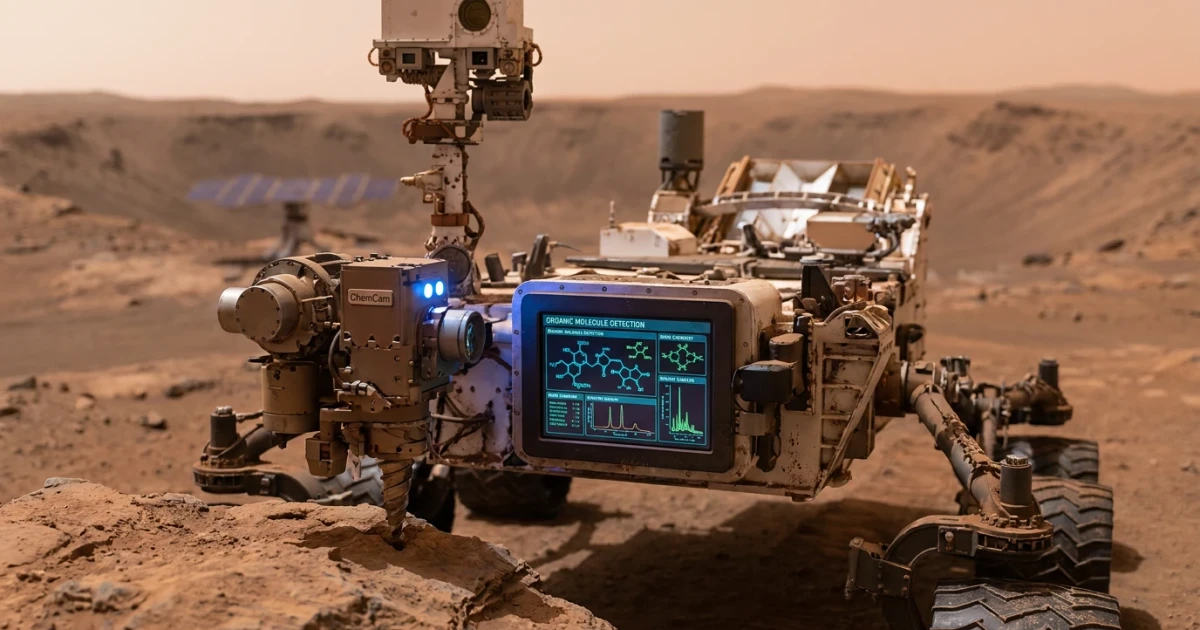
NASA’s Curiosity rover has made a significant breakthrough in Mars exploration by discovering organic molecules in Martian rocks that have never been detected before. This finding, as reported by Earth.com and confirmed by NASA, bolsters the growing body of evidence that ancient Mars possessed the chemical conditions necessary to support life.
New Organic Molecules Detected
The Curiosity rover analyzed rock samples in Gale Crater, a location long studied for its history as a potential ancient lakebed. Recent results revealed complex organic molecules—carbon-based compounds that are fundamental to life as we know it—embedded within sedimentary rocks. While organic molecules can form through non-biological processes, their presence is a key indicator when searching for environments that may have once harbored life.
This discovery renews and deepens previous confirmations from Curiosity, which found simpler organics in 2018. Now, with the identification of new and more complex molecules, scientists are gaining unprecedented insight into the planet’s geochemical record and its potential for habitability.
Implications for Mars Habitability
Organic molecules are not direct proof of ancient Martian life, but their diversity and stability in ancient rocks suggest that Mars had the right chemistry for life to emerge. The presence of these molecules, coupled with evidence of past water, points to a much more hospitable environment billions of years ago.
- Curiosity’s Sample Analysis at Mars (SAM) instrument suite was critical in identifying the molecules, using advanced techniques to heat rock powder and analyze released gases.
- Findings support earlier results showing ancient Mars had energy sources, liquid water, and the essential elements for life.
According to the official NASA feature, these organic compounds could have formed through geological processes or, potentially, by ancient biological activity. The results offer a compelling reason to continue investigating Gale Crater and other promising sites.
What Sets This Discovery Apart?
Earth.com reports that the newly identified molecules are more complex than those previously found. This complexity is significant because it suggests a wider range of organic chemistry occurring on Mars than previously thought. The molecules were preserved in sedimentary rocks estimated to be over three billion years old, which have remained relatively protected from radiation and harsh surface conditions.
These findings, detailed in peer-reviewed analyses like the one published in Science, represent some of the strongest evidence yet that Mars once had the necessary ingredients for life.
What’s Next for Mars Exploration?
Curiosity’s discoveries reinforce the importance of robotic missions in the ongoing search for signs of life on Mars. The rover will continue to explore new geological layers, seeking out additional organic-rich samples and mapping the chemical history of Gale Crater.
Future missions, such as the Perseverance rover and planned sample return initiatives, will build on this foundation by collecting and eventually returning Martian rocks to Earth for even more detailed analysis. The search for definitive signs of life continues, but with each new discovery, scientists are closing in on the answer to one of humanity’s oldest questions: Was Mars ever home to life?