Science
Curiosity Rover Uncovers New Clues to Life’s Building Blocks on Mars
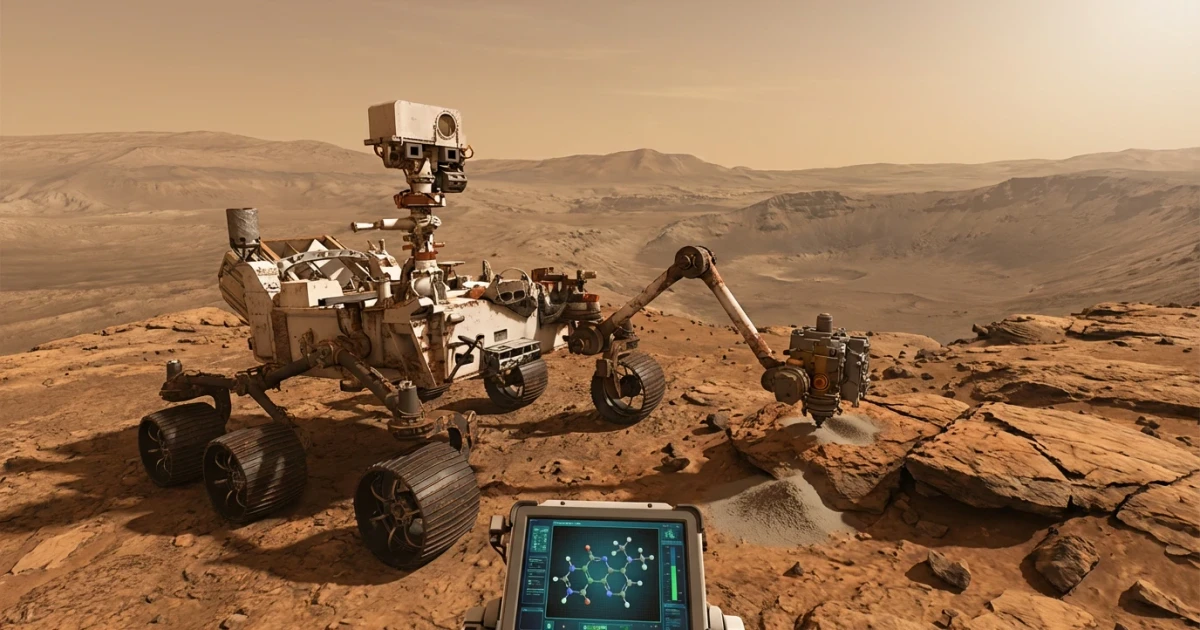
NASA’s Curiosity rover has once again pushed the boundaries of planetary science, performing a pioneering chemistry experiment on the surface of Mars and revealing new organic molecules that could illuminate the planet’s ancient habitability. The findings, announced by NASA and reported by CBS News, mark another step forward in the ongoing search for the building blocks of life beyond Earth.
Unprecedented Chemistry Experiment on Mars
According to CBS News, Curiosity carried out a chemistry experiment never before attempted on another planet. Using the Sample Analysis at Mars (SAM) instrument suite, the rover heated Martian rock samples inside an oven, analyzing the gases released to identify the presence of organic molecules—substances containing carbon that are essential to life as we know it.
- The technique, known as pyrolysis–gas chromatography–mass spectrometry, enables scientists to detect minute traces of organics trapped within Martian rocks.
- This approach has never been performed beyond Earth, underscoring the technical achievement of Curiosity’s mission.
Discovery of New Organic Molecules
The experiment yielded the detection of new organic molecules in sediments at Gale Crater, the rover’s long-term exploration site. These compounds add to the growing catalog of Martian organics, which are considered the basic chemical ingredients necessary for life. While organic molecules can arise from both biological and non-biological processes, their presence is a crucial indicator in assessing Mars’ past habitability.
NASA scientists emphasized that the discovery does not confirm life existed on Mars but does suggest the Red Planet once harbored conditions potentially suitable for life. As NASA’s astrobiology program explains, organics are considered key “building blocks of life.” However, distinguishing whether these molecules are of biological or geological origin remains an open question.
What the Data Reveals
- Data from the Mars Science Laboratory (MSL) SAM Data Archive confirms the presence of compounds such as thiophenes, benzene, toluene, and small carbon chains in the collected samples.
- These findings build on previous discoveries from Gale Crater, where 3-billion-year-old mudstones were found to preserve complex organic matter—a result published in the journal Nature.
The presence of these molecules suggests that ancient Mars possessed environments capable of supporting prebiotic chemistry. While the source of the molecules remains uncertain, the repeated detection of organics strengthens the case for further investigation into Mars’ potential for life.
Limits and Implications for the Search for Life
CBS News notes that the question “Is it life? We can’t tell,” remains central to NASA’s ongoing investigations. The detected organics could have been formed by ancient Martian life or by non-biological processes such as volcanic activity or impacts from organic-rich meteorites. NASA researchers are careful to stress that finding organic molecules is not direct evidence of past or present life on Mars, but the results are “tantalizing” and push scientists closer to answering one of space exploration’s deepest questions.
Further analysis of the Curiosity rover’s science results and data released by the NASA Planetary Data System will continue to inform the search for biological signatures—so-called biosignatures—in the Martian rock record.
Looking Ahead
As Curiosity continues to traverse Gale Crater, each new sample and experiment refines scientists’ understanding of Mars’ potential to support life in its distant past. The rover’s advanced science payload remains crucial for identifying promising sites for future missions, including those that might one day return Martian samples to Earth for detailed laboratory analysis.
With each discovery, the line between geology and biology on Mars becomes more intriguing. While the mystery endures, Curiosity’s latest findings demonstrate the remarkable progress made in decoding the chemical history of our planetary neighbor—and remind us that the search for life is as much about the questions as the answers.