Science
Curiosity Rover Uncovers New Organic Molecules on Mars
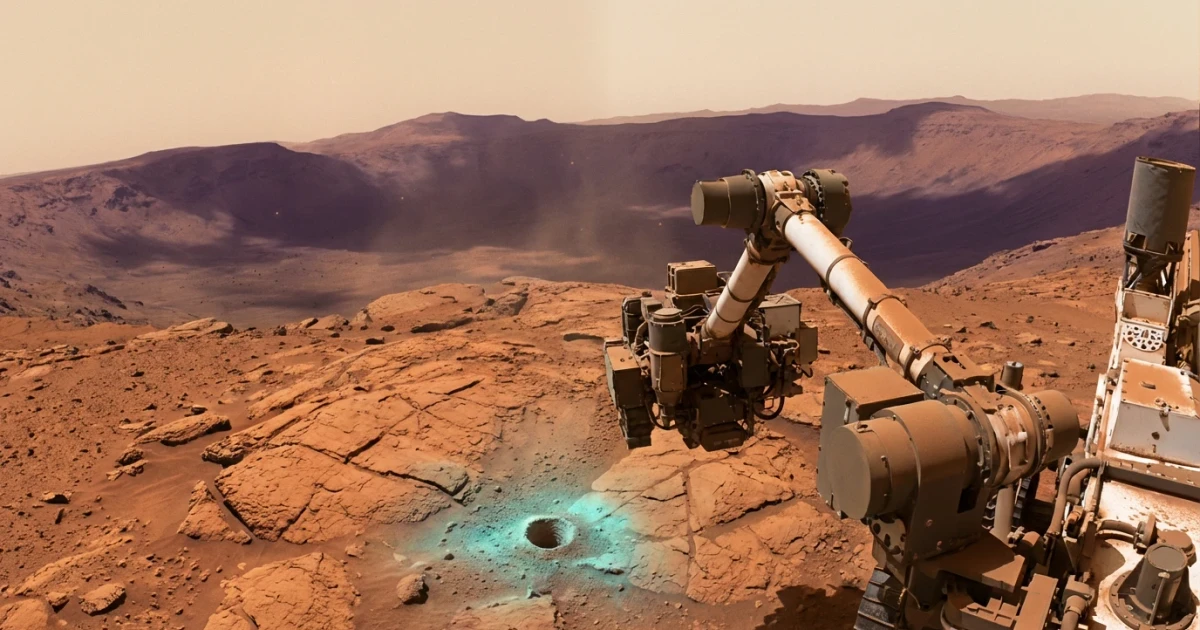
NASA's Curiosity rover has identified a new suite of organic molecules in the soil of Mars' Gale Crater, reinforcing the idea that the Red Planet may once have been 'amazingly habitable.' The breakthrough, highlighted by CNN and detailed by NASA, marks a significant milestone in our understanding of Mars' potential to support life in its ancient past.
What Curiosity Found in Gale Crater
The Curiosity rover has spent over a decade exploring Gale Crater, a massive basin thought to have once held a lake. During its latest analyses, Curiosity's onboard laboratory detected organic molecules never previously seen on Mars. Organic molecules are carbon-based compounds and key building blocks for life as we know it—though their presence alone does not prove life ever existed on Mars.
- The molecules were found in powdered rock samples drilled from sedimentary layers dating back billions of years.
- According to NASA's summary of organic detections, the compounds include thiophenes, aromatic compounds, and aliphatic molecules, expanding the diversity of Martian organics catalogued so far.
Implications for Mars’ Ancient Habitability
Scientists emphasize that organic molecules can be formed by both biological and non-biological processes. However, their persistence in ancient Martian rocks indicates Gale Crater once had conditions favorable for preserving these compounds, such as water, moderate temperatures, and protective sediments. CNN reports that these findings strengthen the argument that Mars was, at one time, 'amazingly habitable.'
NASA's ongoing analysis suggests that:
- The detected organics are likely remnants from a time when Gale Crater was filled with liquid water.
- Some molecules show evidence of interaction with sulfur, which may have helped preserve them for billions of years.
This preservation makes Gale Crater a prime location for studying the chemistry that could have supported life, or at least prebiotic processes.
Expanding the Mars Organic Molecule Record
Curiosity's latest results build on a growing body of evidence. Since its landing in 2012, the rover has made several important discoveries of organics, but the most recent findings are the first to reveal certain complex compounds. The diversity and concentration of detected molecules provide new data for astrobiologists investigating Mars' history.
- Curiosity’s instrument data is publicly available for peer review and further research.
- Continued analysis may clarify whether these organics are the result of ancient Martian life, meteorite delivery, or geochemical processes.
Looking Ahead for Mars Exploration
The discovery of new organic molecules is fueling excitement about Mars’ potential to have once supported life. As NASA and international partners plan future missions—including sample return efforts—the data from Curiosity provides a foundation for targeting the most promising sites for biosignature detection.
Readers interested in the broader context of organics research can explore NASA’s Mars Organics life detection program, which outlines the scientific implications of organic detections and the search for habitable environments beyond Earth.
Conclusion
NASA’s Curiosity rover continues to reshape our understanding of Mars’ past. By uncovering a wider variety of organic molecules in Gale Crater, scientists now have more evidence that conditions on ancient Mars may have been suitable for life—or, at the very least, for storing the chemical ingredients necessary for it. As technology and missions advance, the search for definitive signs of past life on Mars is poised to enter an exciting new phase.