Science
Curiosity Rover Unveils Unexpected Mars Rock Details
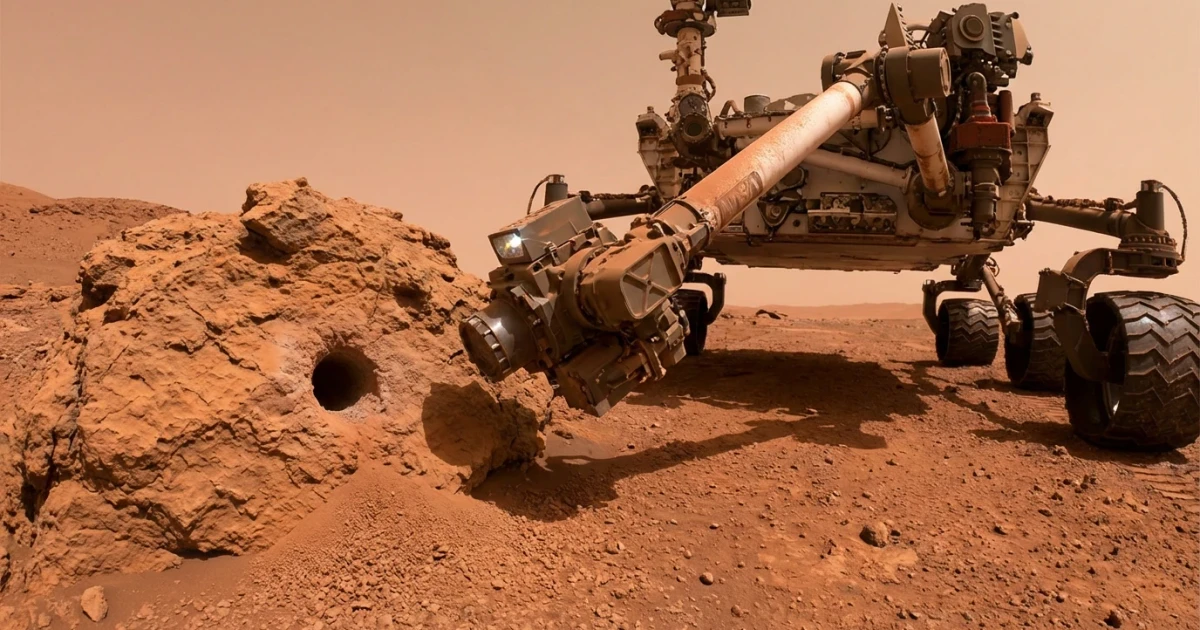
NASA’s Curiosity rover has once again shifted our understanding of Mars after drilling into a rock in Gale Crater and uncovering mineral signatures that surprised mission scientists. The discovery, reported by ScienceAlert, adds to growing evidence about the Red Planet’s ancient environment and its potential to support microbial life.
Drilling Into Mars Yields New Clues
The Curiosity rover’s rock sampling procedures are designed to dig several centimeters into Martian stones, collecting powder for analysis in its onboard laboratories. During its latest mission phase, Curiosity targeted a rock formation at the base of Mount Sharp, a central feature of Gale Crater, and used its drill to collect a fresh sample for mineralogical and chemical study.
Once the rock was cracked open and its interior dust analyzed, Curiosity’s instruments detected unexpected concentrations of clay minerals along with sulfur-bearing compounds. These findings, highlighted by ScienceAlert, suggest the rock was once altered by water under neutral chemical conditions—an environment known to be favorable for the development of life as we know it.
Why Clay Minerals Matter
Clay minerals are particularly significant because their formation typically requires prolonged contact with liquid water. According to official NASA science results, the detection of clays points to a time in Mars’ past when water was stable on the surface, supporting the theory that Gale Crater once hosted a persistent lake or river system.
- The chemical signature of the clays in this sample matches those found in Earth’s habitable environments.
- Previous research, including a Science journal study of Yellowknife Bay in Gale Crater, demonstrated similar mineral assemblages, reinforcing the idea that large portions of the crater floor were once habitable.
- The presence of sulfur compounds alongside clays indicates the area experienced shifts in water chemistry, which could support diverse microbial metabolisms.
Surprising Complexity Beneath Mars’ Surface
While Mars surface rocks are often altered by billions of years of radiation and dust storms, the interior samples accessed by Curiosity’s drill paint a clearer picture of ancient environments. ScienceAlert notes that these newly revealed minerals were shielded from surface weathering, preserving a record of the crater’s watery history. This complements raw and processed data from Curiosity’s mineralogy instruments, which are publicly available for further scientific analysis.
Implications for Life and Human Exploration
The discovery of these clays and sulfur-bearing minerals bolsters the argument that Mars was once more Earth-like, with chemical conditions potentially suitable for life. While no direct evidence of life has been found, each new sample helps scientists refine their search for biosignatures and guides the selection of future landing sites for both robotic and, eventually, human missions.
Curiosity’s ongoing work continues to transform our understanding of Mars as a dynamic planet with a complex geological history. The rover’s findings also inform NASA’s broader search for life across the solar system and shape the design of next-generation missions to the Red Planet.
Looking Ahead
As Curiosity continues its ascent of Mount Sharp, each rock it examines reveals a new chapter in Mars’ past. The recent drilling surprise underscores the importance of direct sampling and analysis in planetary science, highlighting how even a single rock can reshape our theories about ancient Martian environments and the potential for life beyond Earth.