Technology
Current AI pushes to make artificial intelligence more inclusive
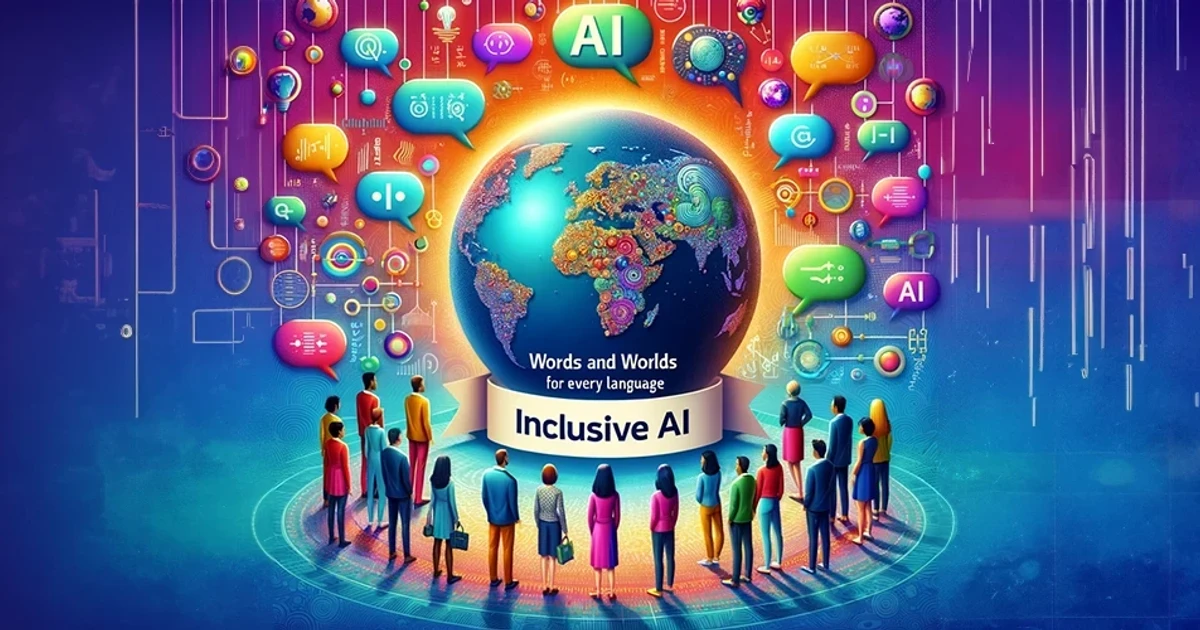
Current AI is trying to answer a public-interest question that reaches beyond one product or one nonprofit: can artificial intelligence be built in a way that does not privilege a single language, market or culture? Its pitch is straightforward but consequential, because the dominant AI systems of today still tend to reflect the data and priorities of the places that built them. That makes Current AI less a conventional startup story than a test of whether a more open AI ecosystem can exist at all.
Inclusion is the point, not the slogan
The case for Current AI sits inside a larger warning from AI researchers and journalists: mainstream systems can be culturally narrow. Stanford research has shown that AI is leaving non-English speakers behind, a gap that creates exclusion and also raises the risk of bias and misinformation. MIT Sloan has made the complementary point that generative AI is not culturally neutral, which matters whenever a system translates, summarizes, recommends or answers in ways that flatten local context.
That is why Current AI’s stated mission, building AI that leaves no culture behind, is more than branding. It puts language access, cultural fit and broader participation at the center of product design. In practice, that means the measure of success is not simply whether a model works in English, but whether it can serve people across languages and communities without forcing them to adapt to a single dominant perspective.
Why the language gap matters economically and socially
Language exclusion in AI is not a niche technical flaw. If a system cannot handle minority languages or culturally specific references, it can shut people out of services, education, commerce and information. The Stanford work ties that exclusion to missed opportunities and to more serious harms, including bias and misinformation that spread when tools misread communities they were never built to understand.
That is also why the broader discussion has shifted toward culturally grounded and equitable AI design. Academic and policy debates increasingly frame AI as something that should be built for cultural diversity, not merely deployed globally after the fact. The phrase that captures that ambition is simple and demanding: AI for everyone, with everyone, by everyone.
Sheffield is using public engagement as part of the model

The University of Sheffield’s Centre for Machine Intelligence has been pushing in the same direction through public-facing work of its own. In 2026, the centre launched its “Let’s Talk AI” campaign, led by Dr. Susan Oman, the centre’s Lead for AI and In/equality. The campaign is designed by the people, with the people, and for the people, a formulation that makes inclusion a method rather than an afterthought.
Sheffield has also used films and podcasts through The Sheffield Player to widen AI awareness beyond technical audiences. That matters because the public-interest case for inclusive AI is not only about better model training, but about who gets to understand, question and shape the systems entering daily life. Current AI’s progress across devices, AI chat and more fits neatly into that ecosystem of outreach, where technical capability and public legitimacy have to advance together.
The funding question will decide whether openness can scale
The hardest problem for inclusive AI is not rhetoric. It is funding, governance and scale. Nonprofit and public-interest AI can point to a mission, but it still has to compete with commercial platforms that have far deeper capital, larger compute budgets and established distribution channels.
The philanthropic sector is already treating AI as a serious strategic issue. The Center for Effective Philanthropy’s 2025 report, AI With Purpose: How Foundations and Nonprofits Are Thinking About and Using Artificial Intelligence, shows how foundations and nonprofits are grappling with AI adoption. The Chronicle of Philanthropy has also tracked nonprofits turning to AI to save time and money, even as adoption remains uneven across the sector.
That unevenness is important. If only larger, better-resourced organizations can deploy AI effectively, then the benefits of automation and access will concentrate rather than spread. Current AI’s challenge is therefore not just building tools, but proving that a more open AI layer can be maintained, governed and financed without collapsing into the same concentration that defines Big Tech.
Public-interest AI is already attracting serious capital

The scale of the opportunity is visible in the size of recent philanthropic commitments. In 2025, the Patrick J. McGovern Foundation announced a $75.8 million commitment across 149 grants in 13 countries. The stated aims were to strengthen community power, expand AI use cases for human welfare and support the institutions that govern AI.
That kind of funding signals that the debate has moved beyond whether AI should be part of philanthropy and into how public-interest institutions can shape the direction of the field. It also shows that the question is not confined to one country. With grants spread across 13 countries, the effort reflects a recognition that AI governance and access are global problems, not simply Silicon Valley problems.
For Current AI, that broader funding environment matters because it frames inclusion as infrastructure. If open, culturally aware systems are to survive, they need the same seriousness of investment that commercial AI has enjoyed for years. Otherwise, the market will keep rewarding the systems that scale fastest, not the ones that include more people.
The long arc from ELIZA to today’s AI assistants
The historical backdrop makes the current moment look even more significant. Conversational AI did not begin with today’s large language models. It runs back to ELIZA, the rule-based chatbot created in 1966 by Joseph Weizenbaum at MIT, which showed how easily people could project intelligence onto a machine even when the system itself was limited.
Today’s AI assistants are far more capable, but the old question has returned in a new form: capable for whom, and in what language? That is where Current AI’s project becomes part of a larger historical line. The technical leap from ELIZA to modern generative systems has been enormous, but the social challenge is familiar: make the machine understandable, useful and respectful to the people it serves.
The result is a sharper public-interest test for AI. A truly open “web of AI” would not be defined only by performance benchmarks or model size, but by whether people across languages, cultures and institutions can use it without being reduced to a default English-speaking norm. Current AI is betting that this is possible, and the next phase will show whether inclusion can remain central as the field scales.
Sources
- [1]techcrunch.com
- [2]news.stanford.edu
- [3]mitsloan.mit.edu
- [4]sheffield.ac.uk
- [5]cep.org
- [6]philanthropy.com
- [7]arxiv.org
- [8]mcgovern.org