Health
Cyclospora outbreak grows as lettuce recall fails to reassure Americans
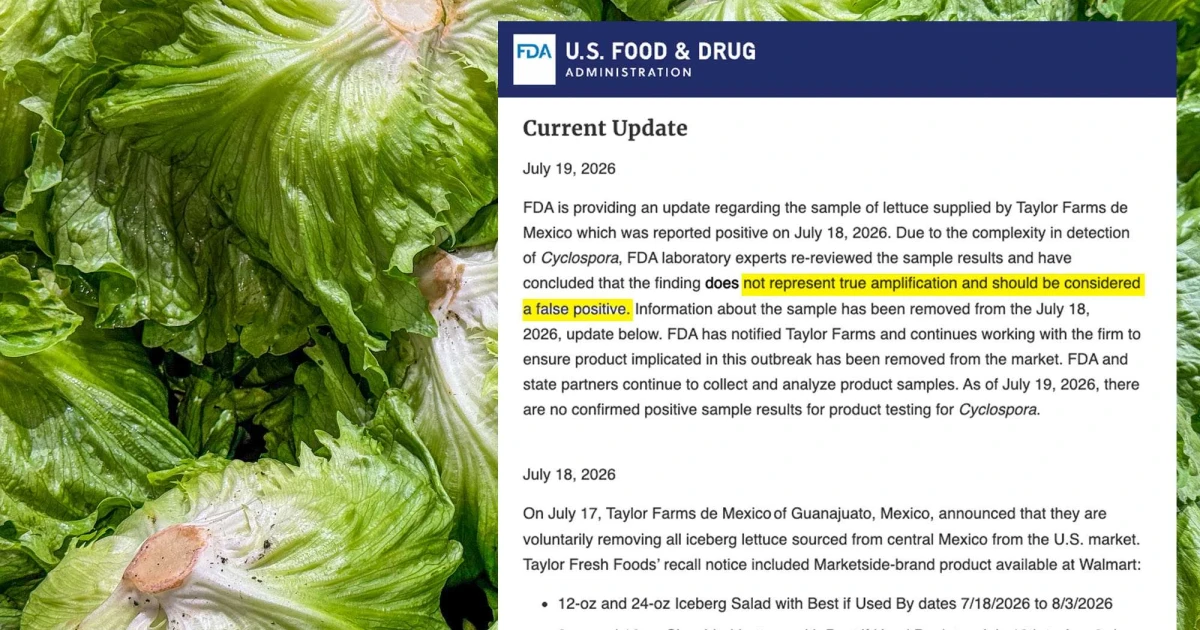
U.S. cyclosporiasis cases had climbed past 4,100 by July 21, even after the FDA’s July 19 recall alert for Taylor Farms iceberg lettuce products tied to the outbreak investigation. The CDC had earlier said lab-confirmed cases were nearly 2,000, and federal investigators had expanded the outbreak to nine states: Indiana, Kentucky, Michigan, Ohio, West Virginia, Illinois, Kansas, Oklahoma and Pennsylvania.
The recall did not end the uncertainty. The FDA later said a lettuce sample that had initially tested positive for Cyclospora was a false positive, even as officials kept focusing on the lettuce supplier as the likely source. That left consumers with a familiar problem in produce outbreaks: a warning arrives, but the path from a farm or packing line to a sick household is still hard to reconstruct with precision.
Cyclospora causes cyclosporiasis, a gastrointestinal illness often marked by watery diarrhea. The parasite is considered difficult to trace in foodborne outbreak investigations, which makes leafy greens especially challenging when contamination can move through a national supply chain before the first clusters are recognized.
The stakes are not new to federal investigators. The CDC and FDA have previously investigated Cyclospora outbreaks, including a June 2020 bagged-salads outbreak, along with other multistate incidents that showed how slowly a produce-linked parasite can be pinned to a source. In this case, the outbreak’s rapid rise from nearly 2,000 confirmed cases in July to more than 4,100 by July 21 underscored how quickly a lettuce-linked contamination event can outpace the system meant to stop it.
Sources
- [1]cbsnews.com
- [2]reuters.com
- [3]washingtonpost.com
- [4]fda.gov
- [5]thehill.com
- [6]cdc.gov