Technology
D-Wave pivots from annealing to gate-model quantum hardware
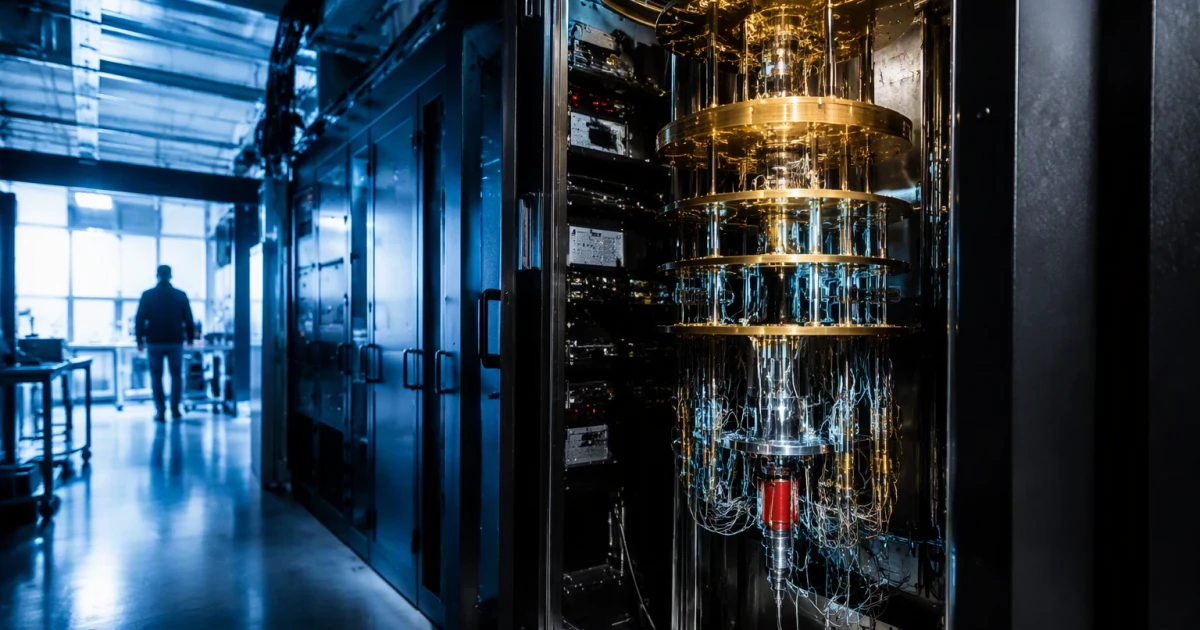
D-Wave set a target of 100 logical qubits that can perform more than 1 million operations by 2032 as it pushes beyond annealing and into gate-model hardware built on a scalable superconducting dual-rail architecture with quantum error correction. The move gives the Palo Alto company a direct test of whether a hardware line long associated with optimization can become a credible player in the broader gate-based race.
In plain English, entanglement matters because it is the link that lets qubits act together instead of one at a time. On D-Wave’s dual-rail design, that linkage is supposed to support gate operations while native error detection helps researchers study error-aware algorithms and correction techniques. That is the technical milestone investors, researchers and potential government buyers will watch: not a slogan, but whether a dual-rail machine can preserve information well enough to do useful work at scale.
The shift became concrete in January 2026, when D-Wave announced a $550 million acquisition of Quantum Circuits Inc. and said it intended to make an initial dual-rail system generally available in 2026. D-Wave later said the acquisition was completed. Quantum Circuits had described the dual-rail cavity qubit as the physical qubit and building block in its quantum processing units, and a Yale Quantum Institute talk by Rob Schoelkopf on January 19, 2024 showed dual-rail erasure qubits were already a live research topic before D-Wave bought into the field. The company is not inventing the idea from scratch; it is turning an academic hardware lineage into a commercial platform.
That distinction matters because D-Wave has spent two decades building its reputation around annealing. It says it was the world’s first commercial supplier of quantum computers, and it has pointed to peer-reviewed work including “Entanglement in a Quantum Annealing Processor” and a Science-published result it describes as the first demonstration of quantum computational supremacy on a useful problem. Now it is calling itself the only quantum computing company building both annealing and gate-model systems, a claim that should be judged against the hardware it can actually ship.
The financial backdrop gives the pivot more force. In its February 26, 2026 year-end report, D-Wave said fiscal 2025 revenue rose 179% year over year, gross profit rose 265%, and liquidity finished above $884 million, the highest in company history. That cash position matters because gate-model machines with fault tolerance are expensive to build and slow to mature. The real test is whether D-Wave can turn a research-derived dual-rail qubit into a commercial system on the 2026 schedule and keep moving toward the 2032 fault-tolerant target.
Sources
- [1]arstechnica.com
- [2]dwavequantum.com
- [3]s201.q4cdn.com
- [4]quantumcircuits.com
- [5]youtube.com
- [6]thequantuminsider.com
- [7]science.org