US News
DACA renewal delays leave Dreamers waiting for work authorization, lawmakers warn
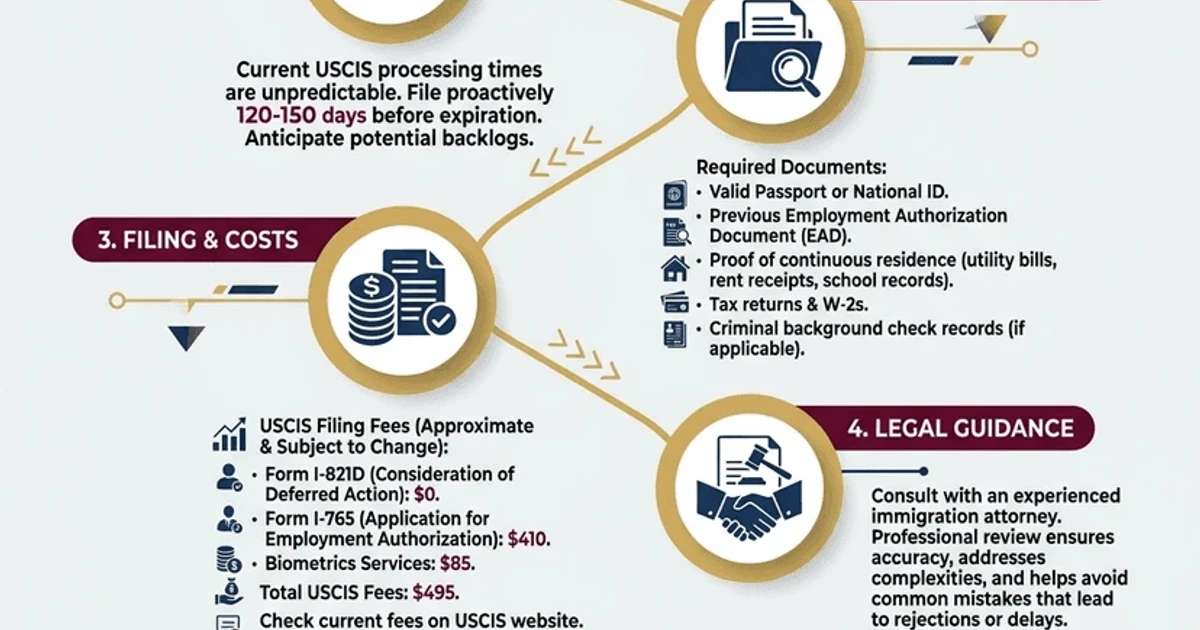
For DACA recipients, bureaucracy has become policy by another name. Renewal applications are still being accepted, but slower adjudications at USCIS are pushing some cases past the point where deferred action and work authorization remain intact, leaving Dreamers in limbo even as the program technically survives.
The warning signs now run through Congress. A March 17 letter from Sens. Catherine Cortez Masto and Dick Durbin said applicants were facing prolonged adjudication periods that could stretch beyond their deferred-action and employment authorization periods. On April 9, Reps. Lou Correa and Jesús García led 86 House members in a separate appeal to DHS and USCIS to speed renewals. Then on June 18, Sen. Michael Bennet and Rep. Joe Neguse said the backlog was harming students, health care workers, first responders, law enforcement officers and wildland firefighters, and asked for answers from DHS by June 30.
The numbers behind those warnings are stark. A Senate letter said DACA renewal review times climbed to a median of 70 days between October 2025 and February 2026, up from a median of 15 days in fiscal year 2025. Because DACA is granted in renewable two-year periods, even a short administrative slowdown can become a work-permit crisis when a recipient files close to expiration.

USCIS says current DACA recipients can still request renewals, but the program remains tied to litigation and court orders that trace back to the July 16, 2021 Texas injunction and the Fifth Circuit affirmation that followed. The agency has also been changing how it reports processing times for some forms, listing Service Center Operations, or SCOPS, instead of a specific service center, a shift that adds another layer of opacity to a system already under pressure.
The practical effect is showing up far beyond government statistics. Public reporting this spring showed some Dreamers already losing jobs while waiting for renewals, with the delay driving fear of detention and a sense that the slowdown was a personal attack. TheDream.US, a scholarship nonprofit for Dreamers, warned in June 2026 that renewals were taking longer than usual and told recipients to file 150 days before expiration. It said filings 120 days or less before expiration can leave a gap in protection and work authorization, and it has begun documenting what it calls a growing authorization gap.
DACA was created in 2012 under the Obama administration as a renewable two-year shield from deportation and a path to work authorization. More than a decade later, the fight is no longer only about the fate of the program in court. It is about whether a federal backlog can quietly narrow its protection without Congress or the courts ever formally ending it.
Sources
- [1]news.google.com
- [2]politico.com
- [3]uscis.gov
- [4]cortezmasto.senate.gov
- [5]bennet.senate.gov
- [6]correa.house.gov
- [7]thedream.us
- [8]egov.uscis.gov