US News
Dangerous heat and storms disrupt travel across the eastern U.S.
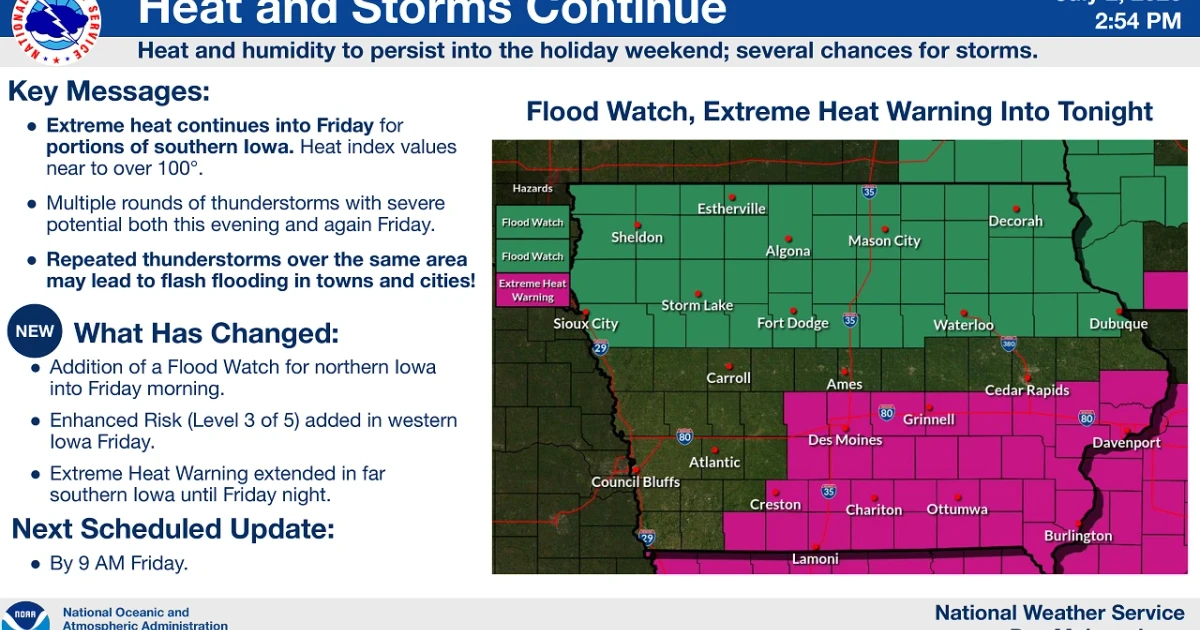
Flood watches, extreme heat warnings and severe storm threats lined up across Iowa on July 2 as the National Weather Service warned that record-breaking heat would stay locked over much of the central and eastern U.S. through the July 4 weekend. NOAA’s Weather Prediction Center said the hot spell could bring widespread highs of 95 to 105 degrees and peak heat indices of 100 to 115 degrees, a combination that strained travel, outdoor events and daily routines across several states at once.
In central Iowa, the weather was already doing two things at once: heating the air and loading the atmosphere with storm energy. The National Weather Service in Des Moines said a Flood Watch was in effect for parts of central Iowa, while KCCI said an Extreme Heat Warning covered Polk County and much of central, south central, southeast and southwest Iowa until 10 p.m. CDT, with heat index values above 100 degrees. KCCI’s forecast for Des Moines called for afternoon temperatures in the low 90s and a high of 91 degrees, with heat index values near 100.
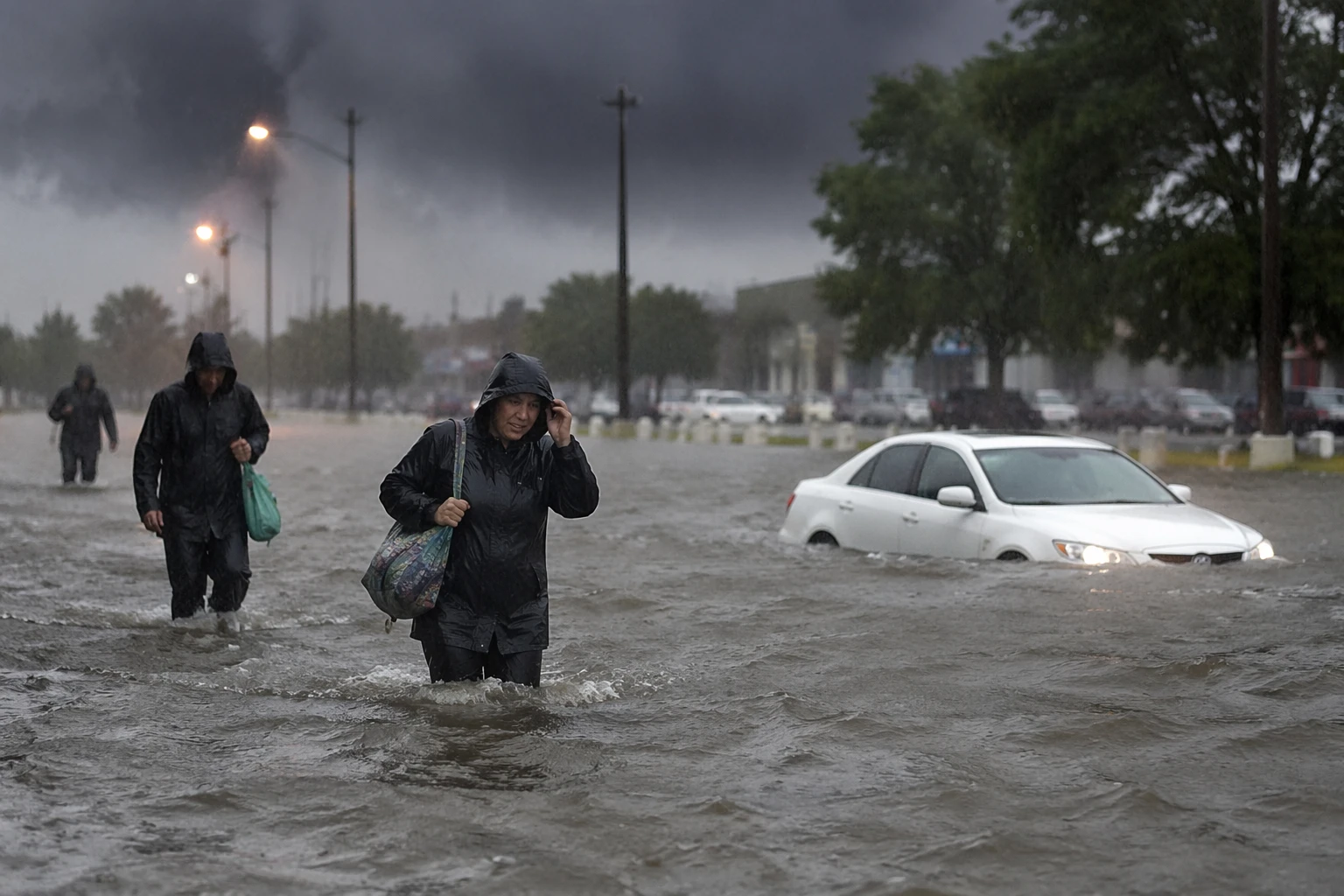
Storm chances were also climbing. WHO 13 said severe storms could bring wind, hail and heavy rainfall, with activity moving southeast across north central and eastern Iowa later that night and additional storms possible near Des Moines early Friday morning. The National Weather Service’s hazardous weather outlook for Des Moines underscored the same mix of threats, pairing the flood watch with the heat risk and the chance of scattered storms into the night.
Across the broader region, the National Weather Service said dangerous, record-breaking heat would continue across most of the central and eastern U.S. through Friday, then shift focus to the eastern U.S. through the Independence Day weekend. Severe thunderstorms were also possible in parts of the Midwest, Great Lakes, Mid-Atlantic and Northeast. NOAA’s HeatRisk guidance flagged widespread Major to Extreme HeatRisk across the central and eastern states, especially for vulnerable people and anyone without reliable cooling.
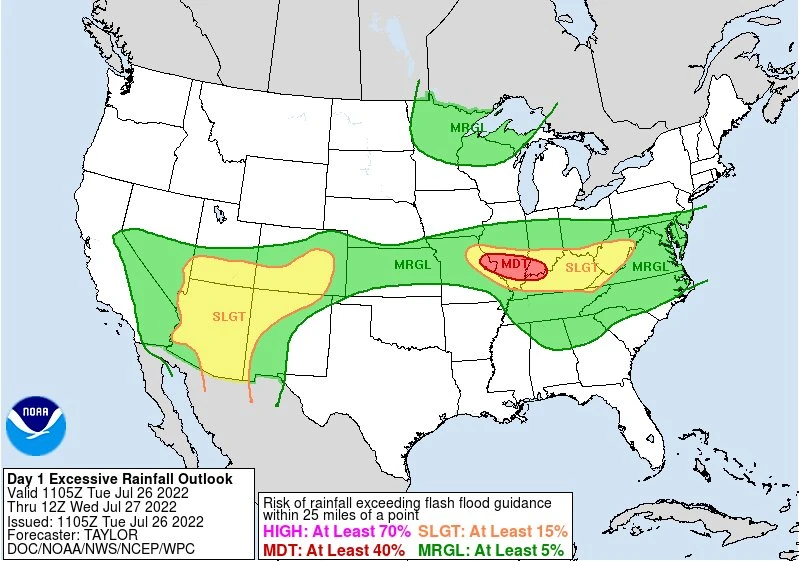
The timing matters because FIFA’s 2026 World Cup is already running across North America from June 11 to July 19, with 48 teams, 104 matches and 16 host cities in Canada, Mexico and the United States. FIFA said 1,248 players representing 48 nations were confirmed on June 2, and U.S. host cities include Boston, Philadelphia, New York/New Jersey, Miami and Atlanta. With fans and teams moving through the eastern corridor during the tournament’s busiest stretch, the weather added another layer of pressure to airports, highways and city transit already carrying summer travel load.
Sources
- [1]news.google.com
- [2]wpc.ncep.noaa.gov
- [3]weather.gov
- [4]forecast.weather.gov
- [5]who13.com
- [6]kcci.com
- [7]fifa.com