US News
Dangerous heat to build across Midwest and East this week
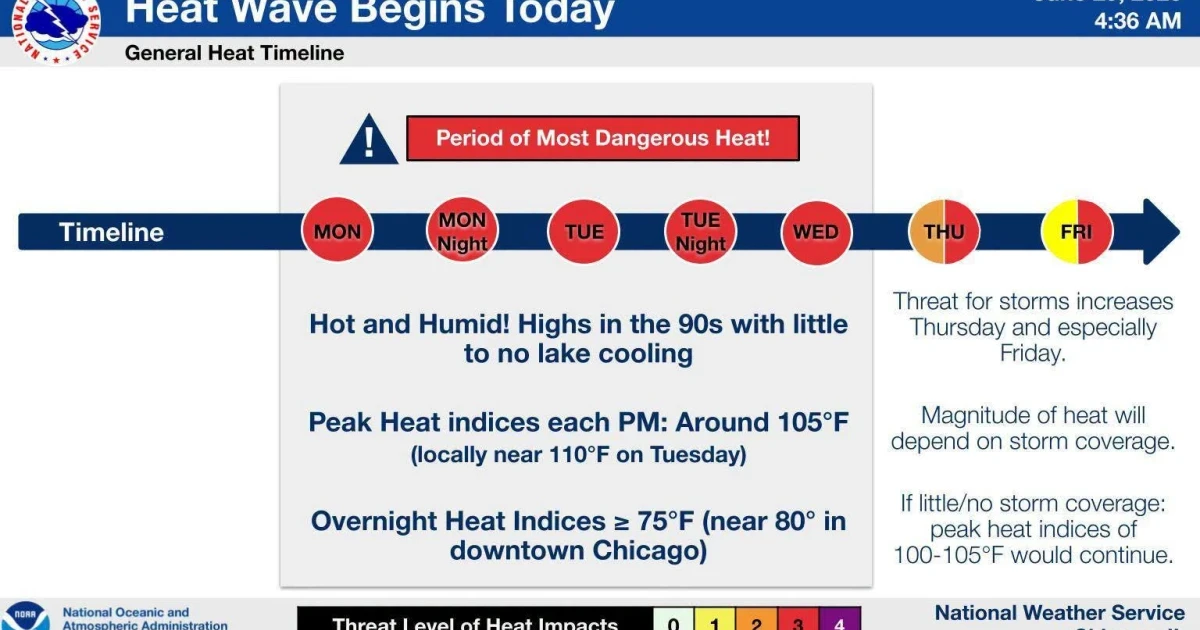
Dangerous to record-breaking heat was building across the center of the nation and moving slowly eastward, with the risk for heat-related impacts reaching major or extreme levels for about 220 million Americans. In Chicago, the National Weather Service forecast afternoon heat index values above 100 degrees, with little to no relief expected at the lakeshore or overnight as humidity and heat held in place.
Parts of the Midwest were under even more punishing expectations. A National Weather Service briefing for the region projected widespread heat index values of 100 to 110 degrees each day through Friday, a range that leaves little margin for anyone working outside, traveling without reliable cooling, or living in buildings that trap heat after sunset. The forecast also pointed to the kind of nighttime conditions that make heat dangerous rather than merely uncomfortable, because little relief at night allows bodies and buildings to stay hot for longer.
The Centers for Disease Control and Prevention says extreme heat can cause heat-related illness and death, and the agency lists older adults, young children, pregnant women, people with chronic medical conditions, people with disabilities, people without housing or access to cooling, outdoor workers and socially isolated people as groups at higher risk. The CDC says more than 700 people die from extreme heat every year in the United States, underscoring the public-health stakes when heat lingers for days instead of easing after dark.

The Weather Prediction Center said its HeatRisk graphics are designed to show the number of cities near, tying or breaking records, and its database includes roughly 390 stations in the contiguous United States as of 2026. That kind of record-watch becomes more consequential in densely populated corridors from the Midwest into the East, where NOAA has previously tracked record-breaking heat waves and the Associated Press has reported that exposure to extreme heat has tripled since 1983. As the heat dome expands, local officials, utilities and health departments face a familiar but urgent challenge: keep cooling available, warn the people most exposed and make sure overnight heat does not turn a dangerous stretch into a fatal one.
Sources
- [1]news.google.com
- [2]weather.gov
- [3]washingtonpost.com
- [4]forecast.weather.gov
- [5]cdc.gov
- [6]wpc.ncep.noaa.gov
- [7]apnews.com
- [8]nesdis.noaa.gov