US News
Dangerous heat wave shatters records across Minnesota, Dakotas and beyond
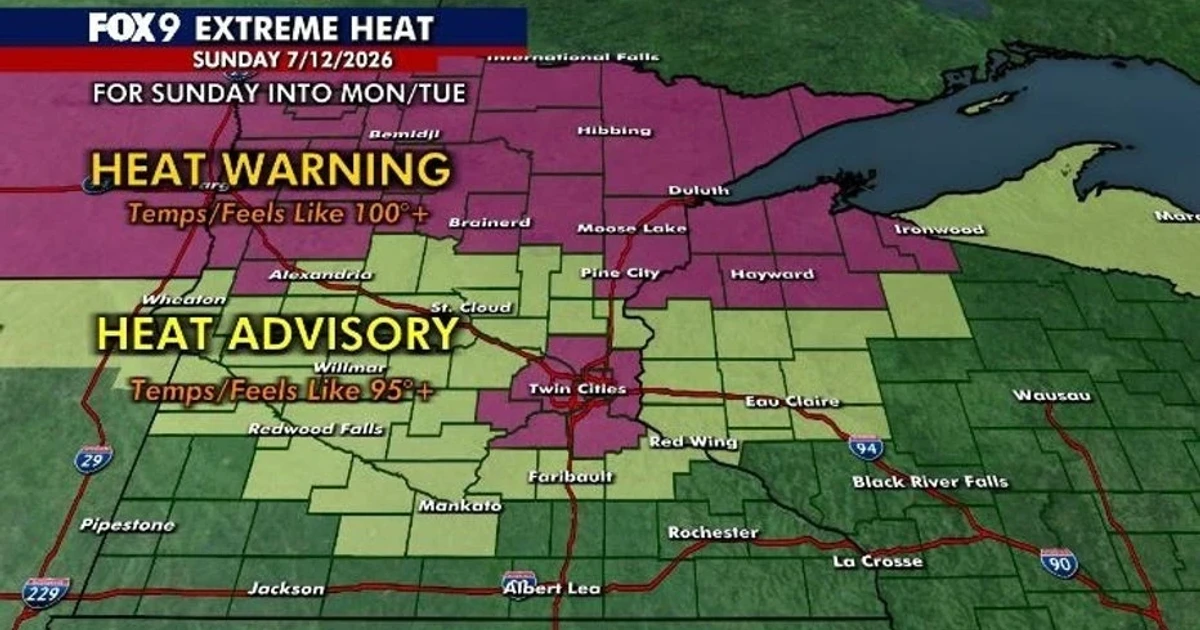
Cities in North Dakota, South Dakota and Minnesota set daily records Monday as a dangerous heat wave spread across the Northern Plains, Upper Great Lakes and Intermountain West. The National Weather Service said the system was peaking in intensity through midweek and would linger across parts of the Northern Plains and Midwest until this weekend.
In Minnesota, the NWS Twin Cities forecast office said the core of the heat dome was parked over southern Minnesota, bringing highs in the 90s, heat index values near 100 degrees and overnight lows only in the upper 60s to mid-70s. The office extended an Extreme Heat Warning through Thursday evening and added a Heat Advisory for Martin, Faribault, Freeborn, Waseca and Steele counties.

The greatest impacts were expected in the urban core of the Twin Cities metro, where little cooling relief was forecast overnight. The National Weather Service said an Extreme Heat Warning is issued when an extreme heat event is expected within 24 to 36 hours and can signal a significant threat to life, with heat indices reaching 110 degrees east of the Blue Ridge and 105 degrees west of it depending on location.
The records in the Dakotas and Minnesota fit a broader national pattern of extreme heat affecting more than 125 million Americans coast to coast, with the Midwest and Northern Plains among the hardest-hit regions this week. The event has also placed stress on the practical systems that are tested first in heat: late-day electricity demand, worker safety, school schedules and emergency preparedness in places where hot nights do not offer much recovery.
The National Weather Service climate resources point residents to historical records and past-weather archives for Minneapolis-St. Paul and other Minnesota stations, along with South Dakota climate and weather archives. Those records provide the baseline for comparing this week’s heat to long-term daily extremes, and they show how quickly a regional hot spell can become a statewide public-health event when records fall in multiple states at once.
Sources
- [1]abcnews.com
- [2]weather.gov
- [3]forecast.weather.gov