Entertainment
Danny McBride finds dark humor in violence, vanity, and hypocrisy
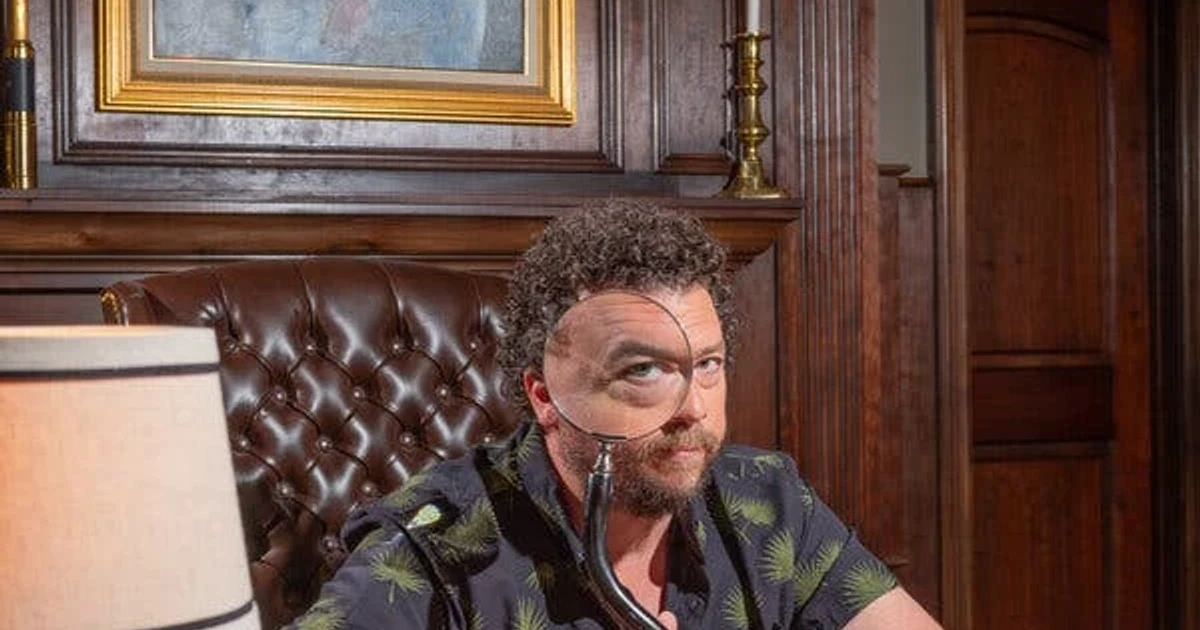
Danny McBride has built one of television’s most recognizable comic signatures by making terrible men impossible to ignore. A new New York Times Magazine profile, titled “Danny McBride Is Not Above a Little Violence (or a Lot of It),” captures the core of that appeal: the violence is funny, but the real target is moral rot, self-importance, and the lies people tell themselves to feel righteous.
Why McBride’s antiheroes still connect
McBride’s characters are not polished satiric types, they are profane, overconfident, wrongheaded Southern men who keep stepping on the same rakes and insisting the world is the problem. That is part of why his work has lasted across the last two decades: the joke is specific to the South, but the flaws are broader than any region. Vanity, delusion, class anxiety, and the hunger to look powerful even when they are clearly flailing are familiar well beyond the settings he writes from.
That universality matters more now because audiences are reading comedy with sharper eyes. McBride’s characters are often easy to label as outrageous, but the better read is that they expose how ordinary humiliation turns into bluster. Their stupidity is exaggerated, yet the impulse behind it is not. He finds comic mileage in masculine insecurity precisely because it is recognizable, which is why his antiheroes can feel as relevant in a polarized culture as they did when they first broke through.
Violence as punchline and diagnosis

The headline on the New York Times Magazine profile signals how central violence remains to McBride’s comic method. In his world, violence is not only a spectacle, it is a shortcut to revealing character. A man who reaches for force instead of clarity is usually a man who has already lost the argument, and McBride knows how to turn that failure into a joke.
He has also been explicit about the cost of that approach. As he told The Independent, if you are trying to push the boundaries of comedy, you should expect people to push back. That philosophy helps explain why his work still draws attention in 2026: the line between satire and offense is always being redrawn, and McBride keeps working near it. He does not seem interested in safety. He is interested in what happens when a joke exposes something uncomfortable enough to make the audience squirm.
That discomfort is part of the point. His comedy does not simply mock bad behavior, it shows how people rationalize it. The result is a tone that can feel brutal and sympathetic at once, a combination that has become one of his defining strengths.
The Righteous Gemstones as a case study in American hypocrisy

No recent project shows that balance more clearly than HBO’s The Righteous Gemstones. The series ran for four seasons and ended in 2025, built around a wealthy Southern televangelist family whose dysfunction, greed, scandal, and crime drove the story. It was an easy premise to misunderstand as a broad attack on faith, but McBride has repeatedly said the show was not meant to be a sweeping condemnation of Christianity.
Instead, he framed it as a satire of vanity and hypocrisy within one powerful family he created. That distinction matters. The comedy works because it narrows the lens: the Gemstones are not stand-ins for every believer, they are a portrait of people who have turned faith into status, inheritance, and cover for their worst instincts. The series is funniest when it shows how greed and moral language can live comfortably in the same house.
Around the finale, McBride kept the end of season 4 secret, according to IndieWire, which fits his larger instinct for control over how the joke lands. He also described a philosophy for ending a show that resists over-explaining everything. Consequence reported that he hoped fans would imagine what comes next, which is a revealing note for a writer who understands that the final image is often more powerful when it leaves a little unresolved. That approach suits a series about people who never fully learn from themselves.
Why the satire reads differently now

A decade ago, McBride’s work could be filed more easily under unruly cable comedy. In 2026, it lands in a different media climate, one where audiences are faster to interpret intent, faster to sort characters into moral categories, and more alert to the politics of representation. That does not make the humor weaker, but it does make the stakes clearer. Satire about masculinity, class, and American self-delusion now arrives in a culture that is already arguing about those subjects every day.
That is where McBride’s particular gift becomes more apparent. The Ringer described his characters as “magnetically terrible,” and the phrase fits because they repel and attract at the same time. They are embarrassing, but they are also legible. They carry delusions that are ridiculous on the surface and deeply human underneath. When a character is that wrongheaded, the audience is not just laughing at him. It is also watching a version of the national ego collapse in real time.
McBride’s work continues to matter because it does not flatten people into symbols. It lets them be petty, vicious, needy, and hilarious all at once. That is why his comedy keeps finding new relevance: it understands that the ugliest instincts are often the most familiar, and that the most revealing joke is the one that makes self-delusion look just a little too close to home.
Sources
- [1]nytimes.com
- [2]independent.co.uk
- [3]consequence.net
- [4]indiewire.com
- [5]theringer.com
- [6]televisionacademy.com