Business
Data center boom sparks fight over who pays for power grid upgrades

A single AI data center can demand enough electricity to look less like a warehouse and more like a midsize city. Utilities, regulators and lawmakers are confronting a basic question with major household consequences: when the grid needs new transmission lines, substations and cables, who should pay for them?
The hidden bill behind the AI buildout
The first layer of the fight is not the monthly power bill, but the capital cost of making the power available at all. AI data centers are power- and water-intensive facilities, and their growth means utilities must expand infrastructure that was built for a slower-growing grid. In practice, that can mean new transmission corridors, local delivery upgrades and other equipment whose cost is often recovered over years through rates.
A data center can bring jobs and tax revenue, but it can also trigger spending that utilities book upfront and collect later from customers. If the cost is assigned to the wrong party, the result can be a quiet surcharge spread across millions of bills.
Why ratepayer advocates say the system is broken
Harvard Electricity Law Initiative researchers argued in their March 2025 paper, “Extracting Profits from the Public: How Utility Ratepayers Are Paying for Big Tech’s Power,” that utilities are forcing ratepayers to fund discounted rates for data centers. The concern is simple: if a giant customer receives a special tariff or other concession, the shortfall does not disappear, it is often shifted into the rate base that ordinary households and small businesses help finance.
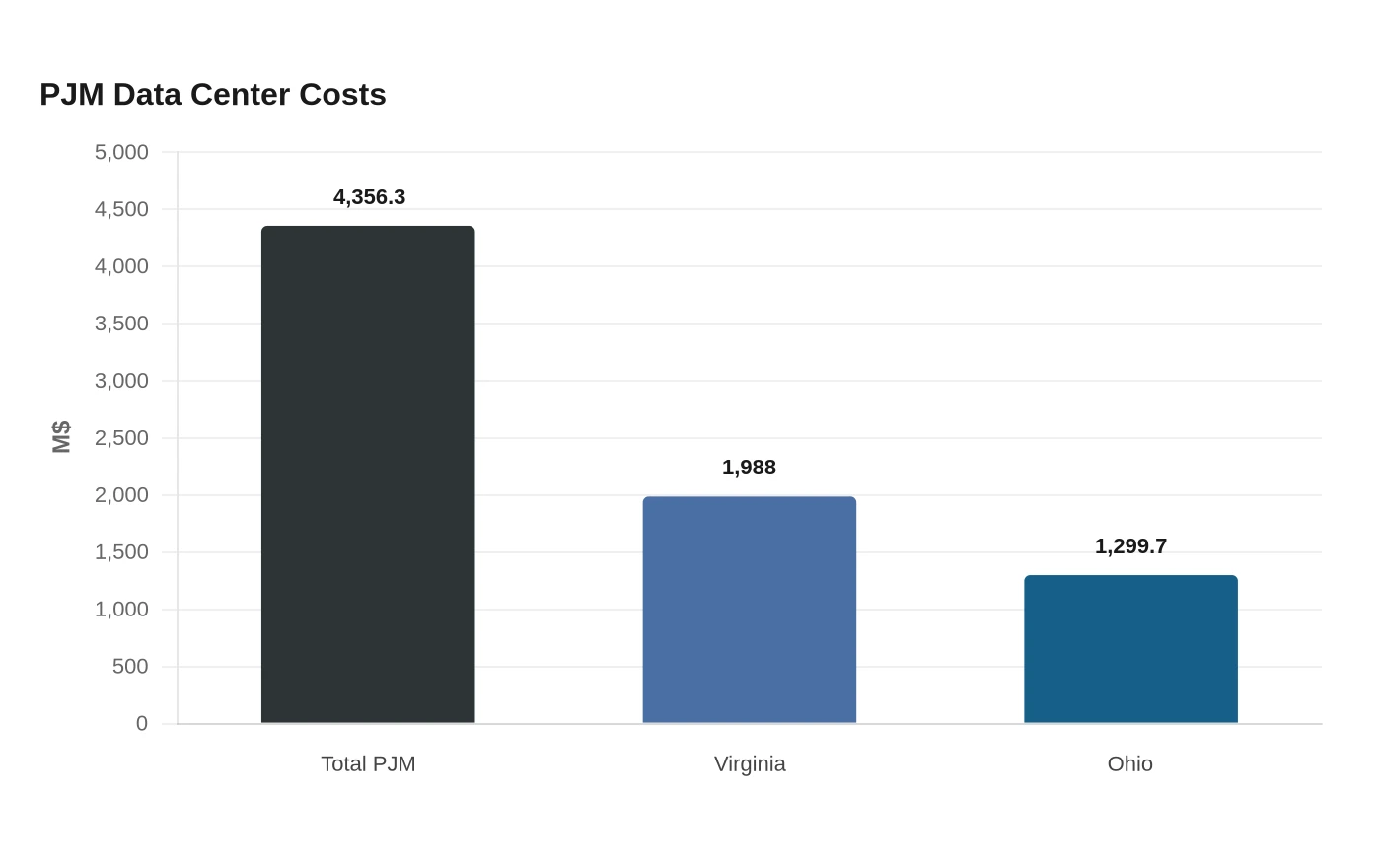
The numbers behind that concern are large. A September 2025 Union of Concerned Scientists policy brief on PJM said a connection-cost loophole had already cost customers more than $4 billion to connect data centers to the grid. The brief’s appendix listed 130 approved transmission projects in seven PJM states totaling $4,356.3 million, including $1,988 million in Virginia and $1,299.7 million in Ohio.
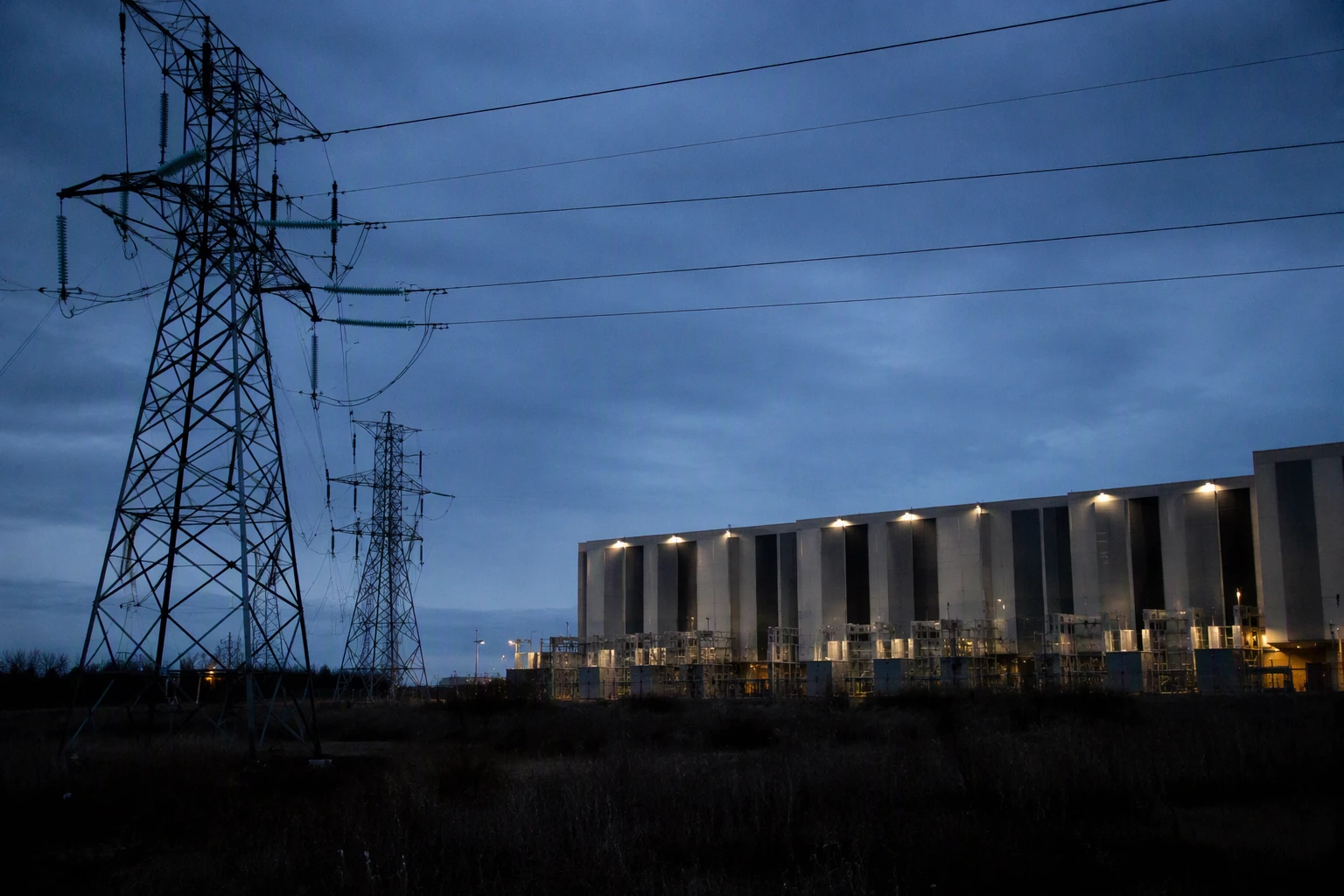
The cost is concentrated in places where data-center growth is heaviest, especially within the PJM Interconnection footprint, where multiple states share transmission planning and the financial consequences can spill across borders.
Where utilities say the math is different
Utilities and some industry executives argue that the new load can also help lower costs over time by spreading fixed expenses across more customers and by supporting more investment in the grid. In a Dec. 18, 2025 blog post, Entergy said the data center boom will ultimately drive down electricity costs. On June 9, 2026, Entergy’s chief executive pushed back on fears that AI data centers will raise electricity bills.
That argument rests on a classic utility-rate theory: if more power flows through existing infrastructure, the system can become more efficient and the cost per unit can fall. The counterargument is that this only works if the new customer is paying enough to cover the new wires, transformers and substations it requires. If not, any short-term efficiency gains can be offset by long-term subsidies from other customers.
States are starting to redraw the line
Virginia has become the clearest test case. On Aug. 5, state regulators ordered data centers to pay for new transmission infrastructure, a move expected to shift hundreds of millions of dollars away from the public. Governor Abigail Spanberger has pushed in the same direction, saying, “This Order Makes Sure That Data Centers Are Paying the Full Cost of the Transmission Infrastructure Their Developments Require.”
Virginia sits at the center of the national data-center boom. The order offers a template other states can borrow: make the customer that triggers the need for new grid capacity bear the cost of the facilities built specifically for it.
Connecticut lawmakers have raised the same warning from a different angle. A legislative report dated Oct. 14, 2025 warned that data-center growth could strand utilities with infrastructure costs that would then have to be recouped from existing customers. If demand slows, or if the cost allocation is too generous, the public ends up carrying what the developer should have paid.
Indiana is seeing a more preventive reaction. Citizens Action Coalition has called for an AI data-center moratorium so policymakers have time to craft protections before the buildout outruns the rules. The group’s position reflects a broader concern that once a large facility is connected, it becomes much harder to unwind the cost-sharing arrangement later.
Why the debate is national, not local
The same dispute is now moving through the broader policy world because the scale of the buildout keeps rising. A March 13, 2026 Quinn Emanuel client alert estimated the AI data-center buildout could require $5.2 trillion in investment for new generation and grid capacity if demand keeps accelerating.
The battle is not just over one data center or one tariff. It is over whether the grid upgrade bill will be written to corporate customers, spread across ratepayers or absorbed by utilities and then passed through indirectly over time.
Sources
- [1]cbsnews.com
- [2]eelp.law.harvard.edu
- [3]ucs.org
- [4]cga.ct.gov
- [5]entergy.com
- [6]cnbc.com
- [7]virginiascope.com
- [8]stanford.edu
- [9]citact.org
- [10]quinnemanuel.com
- [11]linkedin.com