Entertainment
David Hockney’s Los Angeles pools defined a city’s self-image
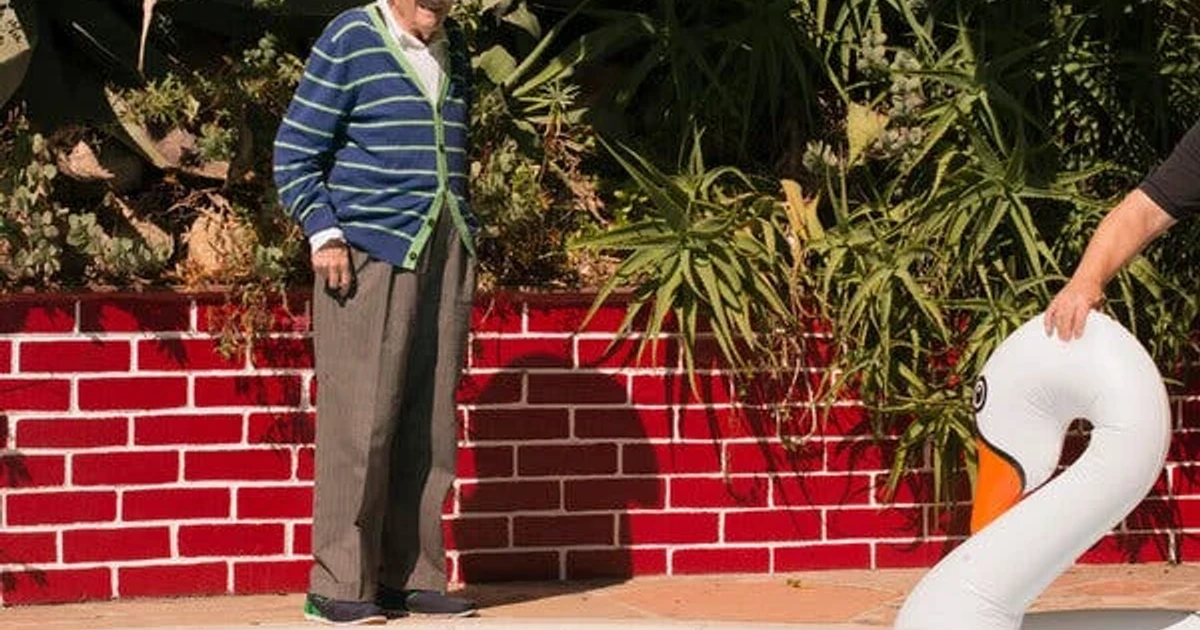
David Hockney arrived in Los Angeles with an outsider’s eye and left behind a visual language the city still uses to describe itself. The British painter, trained at the Royal College of Art and settled in California from 1964, translated pools, palm trees, and domestic architecture into an art-world shorthand for Southern California ease. In his hands, the Los Angeles swimming pool became more than a motif: it became a civic myth.
A British artist remade by California
Hockney moved to Los Angeles in 1964, two years after graduating from the Royal College of Art in 1962, having saved enough from selling his paintings to live there for a year. That move marked the beginning of an intermittent California life that continued for decades and included homes or workspaces in the Hollywood Hills, Malibu, and West Hollywood. He was not a native chronicler of the city, which is part of why his vision landed so forcefully: he came to Los Angeles as an observer and made it look newly legible.
The city he found was not just a setting but a proposition. Hockney’s work associated Los Angeles with open space, domestic glamour, and a social world shaped by sunlight and self-invention. He became, as critics often framed it, a symbol of the city’s culture: stylish, seductive, and a little alienating, because the clarity of the image made the place feel both welcoming and aspirational. That tension helped his paintings travel so well beyond California.
The pool became the signature image
Hockney’s first widely identified swimming-pool painting is California Art Collector from 1964, made the same year he arrived in Los Angeles. He returned to the subject throughout the 1960s and 1970s, repeatedly treating the pool as a symbol of wealth, relaxation, sexual liberation, and Californian exuberance. In his account, the pool in California was ordinary, while in England it would have been seen as a luxury, a distinction that tells you how radically the setting altered the meaning of the object.
That transformation mattered because Hockney did not paint the pool as a mere status marker. He made it a scene of possibility. The water, the hard geometry of the architecture, and the bright outdoor life suggested a culture built around visibility and ease, a contrast to the more enclosed social worlds many viewers associated with Britain. Los Angeles, through Hockney’s eye, became a place where private pleasure could read as public style.
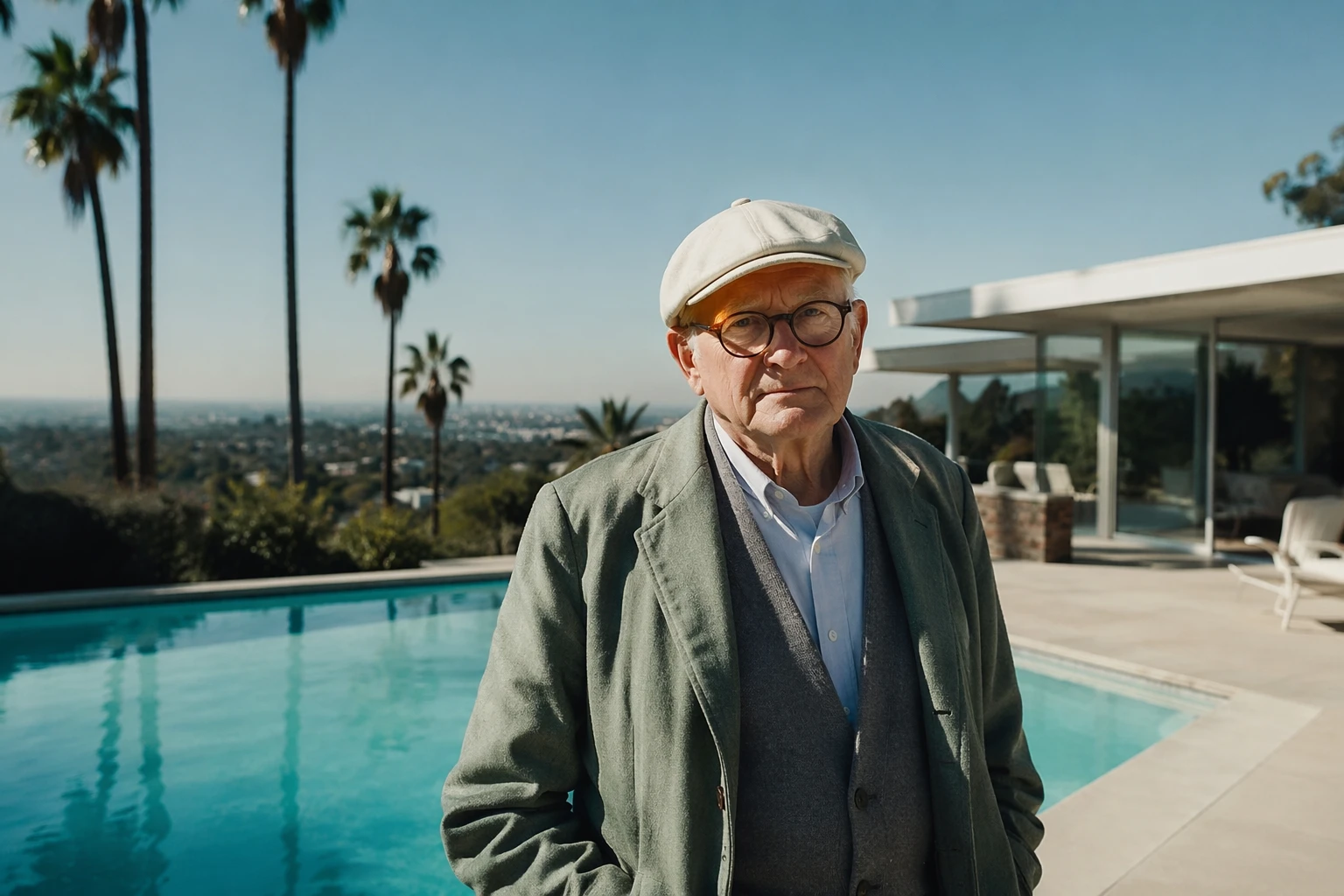
A Bigger Splash and the making of a myth
Painted between April and June 1967 while Hockney was teaching at the University of California, Berkeley, A Bigger Splash is perhaps his best-known work, according to Tate. The painting shows a sun-drenched Los Angeles pool beside a pink modernist house, with an empty chair and the sudden burst of a splash suggesting that someone has just disappeared from view. The scene is calm and theatrical at once, a snapshot of leisure that feels staged but not stiff.
That image became one of the defining pictures of Los Angeles in the modern era because it condensed so many of the city’s claims into one frame. There is light, but also artifice. There is domestic architecture, but also desire. There is an absence at the center of the image, and that absence makes the scene feel charged rather than empty. Hockney helped turn the pool into a visual emblem of the city’s self-regard, one that could be read nationally and globally as the face of California modernity.
Freedom, sexuality, and the wider moment
Hockney’s Los Angeles work also gained force because it arrived during a period of uneven legal and social change. Britain partially decriminalized homosexuality in 1967, the same year he painted A Bigger Splash. That coincidence matters historically, because his move to California could be read by readers and viewers as a passage into greater personal freedom, visibility, and possibility.
His paintings were never only about architecture or weather. They were also about the atmosphere of gay liberation and the kinds of social life that could emerge in Los Angeles more openly than in many other places. That is one reason the work feels so culturally specific: it captures the city as a space where modern identity, leisure, and desire could be pictured together without apology. Hockney gave that experience a durable visual form.
More than Pop, more than decoration
The Metropolitan Museum of Art has emphasized that Hockney never fully embraced Pop Art’s consumerist imagery, even though his work became one of the movement’s most recognizable branches. That distinction matters because it keeps the Los Angeles paintings from collapsing into mere chic surfaces. They are certainly stylish, but they are also grounded in formal intelligence and art history.
The Met also points to Cubist and Chinese scroll-painting influences in works such as Large Interior, Los Angeles, which complicates any idea that Hockney’s California pictures were simply decorative. The flattened space, shifting viewpoints, and careful orchestration of interiors and exteriors reveal an artist thinking across traditions, not just recording a lifestyle. The pool paintings may look effortless, but they are built on deep pictorial structure.
How Hockney taught Los Angeles to see itself
What Hockney achieved was not just a set of famous canvases. He helped make Los Angeles think of itself through light, modernist houses, swimming pools, and queer social possibility. The city’s image, once filtered through his paintings, became inseparable from the idea of openness and stylish ease that his work projected.
That is why A Bigger Splash remains so powerful. It does not simply depict Los Angeles; it helped author the city’s public face. Hockney turned a local landscape into a national and global myth, and the myth still shapes how Los Angeles is imagined: bright, desirable, elusive, and always a little ahead of the viewer.