Entertainment
David Hockney's pool paintings and California years defined his career
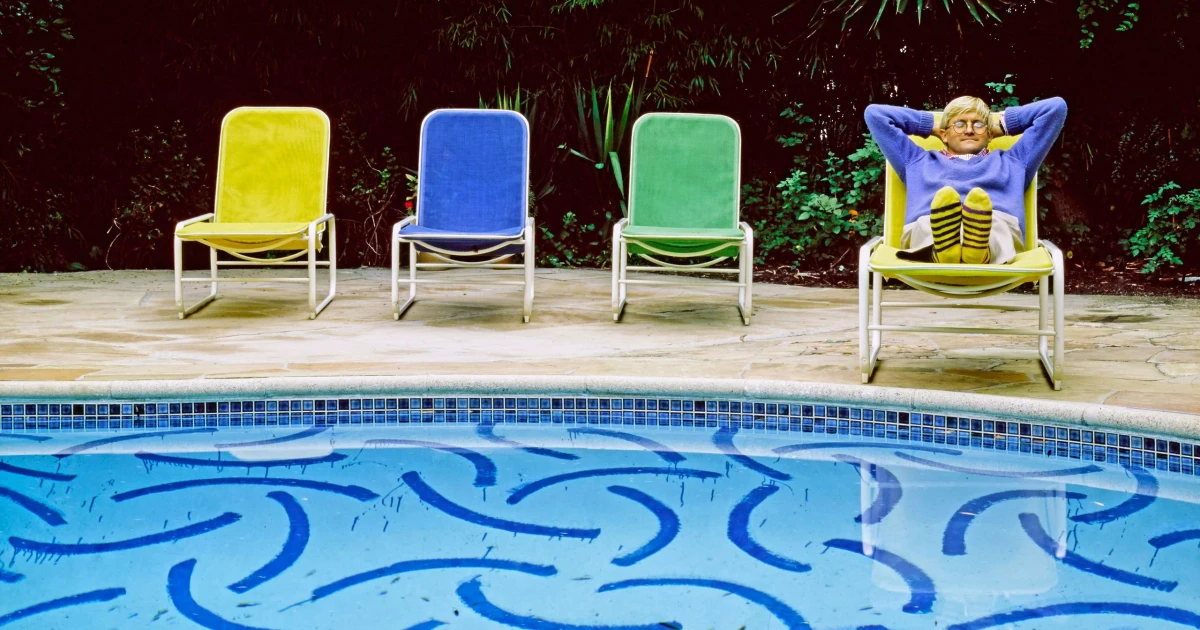
David Hockney built one of modern art's most recognizable visual worlds without ever settling into stillness. The pool paintings made him famous, but they were only one chapter in a career shaped by movement, from Bradford to California, from painting to photography, and from one studio address to another. As one memoirist put it, "As important as the boys and the pools and the light, the most important thing was becoming the driving."
Bradford roots, Californian lift
Born in Bradford on 9 July 1937, Hockney first came to public attention in 1961 while still a student at the Royal College of Art. He emerged as a major figure in the 1960s pop art movement, but the decisive turn in his career came in 1964, when he visited California for the first time. Tate notes that the climate and lifestyle there became a powerful source of inspiration, and that he lived intermittently in California from that point onward.
That geographical split never really closed. Over time, Hockney maintained residences and studios in Bridlington, London, Hollywood Hills and Malibu, alongside an office and archives in West Hollywood. The movement between Yorkshire and California is not just biographical detail. It is central to how his work kept renewing itself, with different places feeding different kinds of light, space and subject matter.
Why the pool became his signature
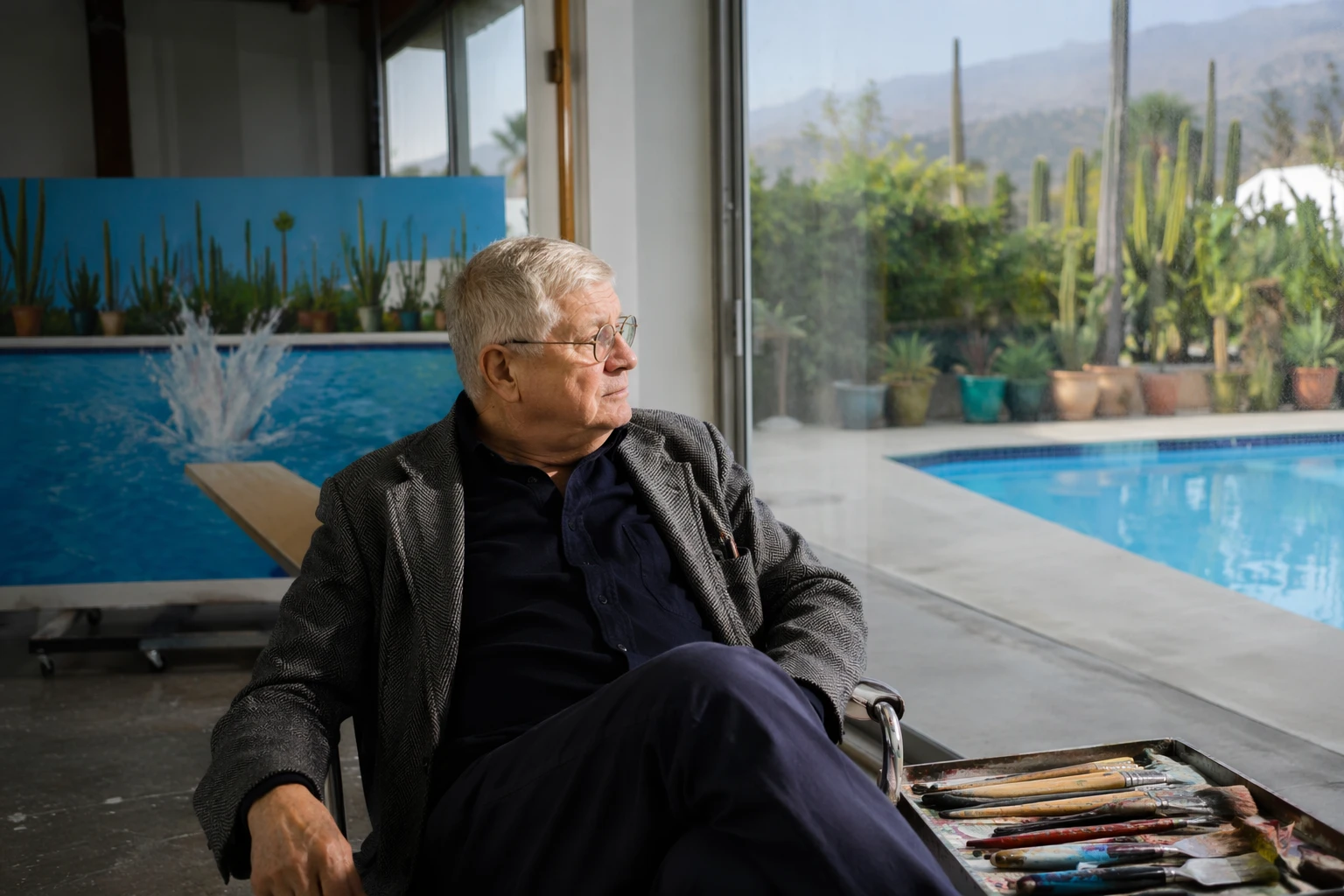
Tate says Hockney's first California trip led directly to a series of stylised landscapes and the first swimming-pool images for which he became best known. The pool motif arrived quickly and stayed potent. Water Pouring into Swimming Pool, Santa Monica, from 1964, captures the early experiment; The Splash, from 1966, sharpens the image into a clean, almost cinematic instant; and A Bigger Splash, painted between April and June 1967 while he was teaching at the University of California at Berkeley, turned the scene into one of the defining pictures of the era.
The subject mattered because it was so specifically Californian. Tate says Hockney was fascinated by swimming pools partly because, unlike in Britain, they were not considered a luxury in California and could be used year-round. That detail helps explain why the paintings feel at once glamorous and ordinary, theatrical and domestic. They are about leisure, but also about a culture in which leisure had become part of the built landscape, especially in Los Angeles.
Portrait of an Artist (Pool with Two Figures), completed in May 1972, extended the idea further. By then Hockney had moved beyond the pure splash of surface and into a more psychologically layered image, one that kept the pool as a stage while widening the emotional frame. The result is a painting that still looks immediate, but also suggests distance, reflection and looking back.
A practice built on motion
Hockney's pool paintings are only one part of a much broader body of work. Tate characterises his output as spanning painting, drawing, printmaking, stage design and photography, and that range is crucial to understanding his longevity. He did not protect a single style as a brand asset. Instead, he kept testing how vision could change when the medium changed, and how a familiar subject could be re-seen through different tools.
That is where the memoirist's line about "becoming the driving" becomes especially revealing. It reads as a compact description of Hockney's method: always pushing the image forward, always moving the focus into the future. Rather than stand still inside a successful formula, he kept shifting position, asking how far a composition, a viewpoint or a technology could be stretched before it became something new. That restless reinvention is a major reason his work has remained widely recognized for decades.
The market verdict on the pool years
The long arc of Hockney's California imagery also shows up in the art market. Portrait of an Artist (Pool with Two Figures) sold for $90 million at Christie’s in New York on 15 November 2018. At the time, that made it the most expensive artwork by a living artist ever sold at auction.
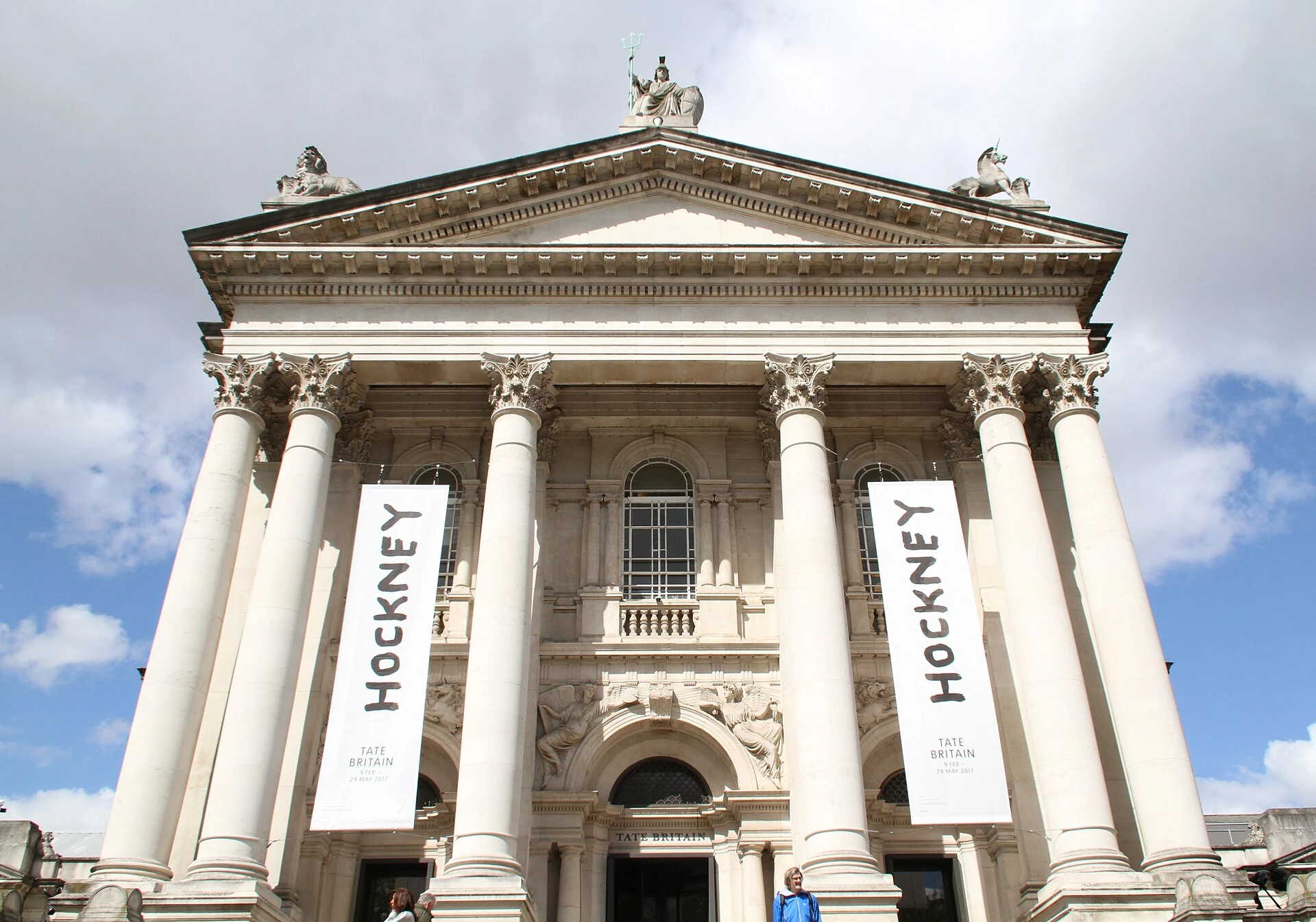
That sale was more than a headline. It confirmed the continuing economic force of Hockney's best known imagery, especially the pool paintings that fuse a clear visual identity with a strong biographical narrative. In market terms, the picture had everything collectors prize: instant recognizability, scarcity, historical importance and the sense that it belongs to a career still fully alive rather than safely sealed in the past.
Why the California years still define him
The contrast between northern England and sunlit Los Angeles remains one of the most durable ways to understand Hockney. His Bradford origins and California years are often discussed together because they frame the tension at the heart of his career: the pull between restraint and openness, between British weather and California brightness, between inherited tradition and modern leisure. The pool paintings sit exactly at that intersection, turning light, water and architecture into a language of change.
Hockney's career lasts because it kept moving. He did not become a legacy artist who repeated a known formula; he kept changing methods, subjects and technologies, and the California years are the clearest proof of that habit. The pools defined him, but they also revealed the deeper pattern in his work: reinvention as a way of staying present.
Sources
- [1]nytimes.com
- [2]tate.org.uk
- [3]shop.tate.org.uk