Health
Debate grows over literacy claims in nonspeaking autistic communication
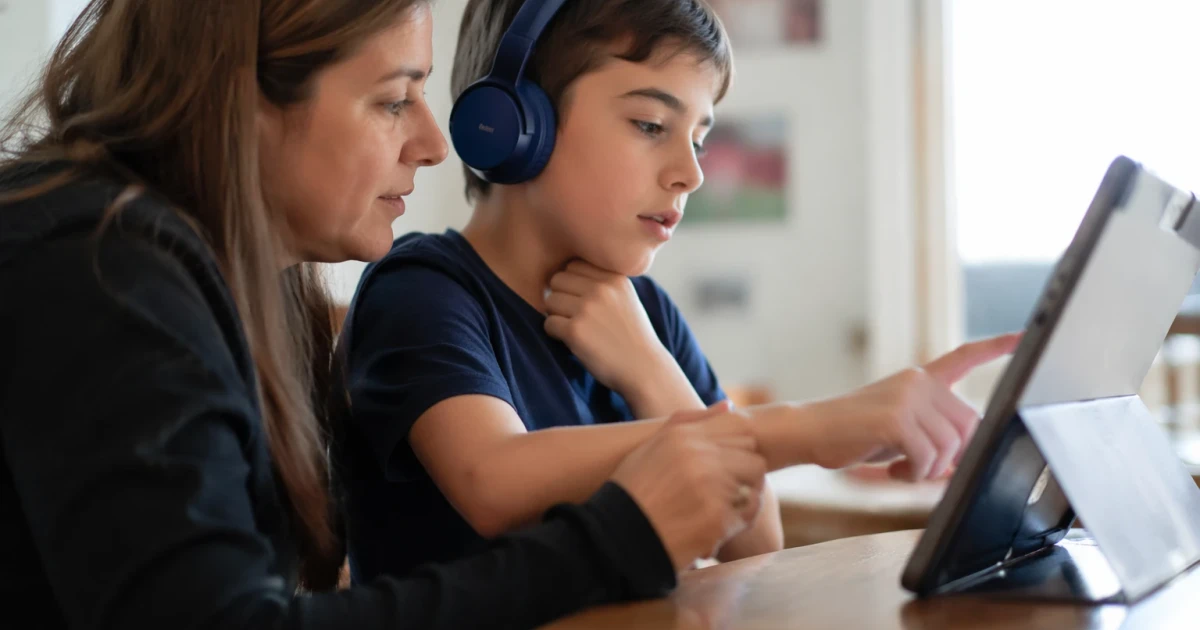
For many nonspeaking autistic people, the stakes are immediate: whether a child is offered a letterboard, a speech-generating device, or little beyond the label of “nonverbal.” About one-third of autistic people are unable to communicate using speech, and that gap has major consequences when schools, therapists, and families lack an effective alternative. The dispute now centers on a hard question: when a message appears through assistance, who is actually choosing the words?
What mainstream communication supports already include
Augmentative and alternative communication, better known as AAC, is not a fringe idea. It includes picture-based systems, speech-generating devices, typing, and letterboards, all of which are used to expand communication when speech is limited or unavailable. In practice, that means the field already contains options that do not depend on guessing what a person might mean.
The controversy starts when an assistant or physical prompt becomes part of the communication process. Supporters of assisted spelling argue that these methods can open a path to language for people who have been underestimated for years. Critics counter that once another person is guiding the hand, body, or attention of the communicator, the message may no longer be independently authored.
Why facilitated communication remains a red line
The American Speech-Language-Hearing Association has taken a firm position on facilitated communication, calling it a discredited technique that should not be used. It also discourages the Rapid Prompting Method because it lacks scientific validity and does not foster independent communication. Those statements place assisted methods outside the category of practices that the association considers reliable for clinical use.
That skepticism is not new. ASHA’s guidance points to a long history of systematic reviews and cautionary statements, and earlier controlled studies found no validated evidence that facilitated communication produced authorship from the nonspeaking person under test conditions. In other words, when researchers tried to control for the assistant’s influence, the evidence for independent message generation did not hold up.
What newer studies say, and why they still do not settle the question
The most forceful arguments from proponents come from studies that try to test what nonspeaking autistic people may know, even if they do not speak. A preregistered 2024 study of 31 autistic adolescents and adults with limited or no phrase speech reported evidence of English orthographic knowledge in many participants. The authors, along with University of Virginia publicity, said the finding suggested that many nonspeaking autistic people may be literate even without formal literacy instruction.
A separate 2020 eye-tracking study on assisted autistic communication made a different argument. It said the pattern of eye movements was consistent with the communicator selecting the message, while also acknowledging that the method itself remains controversial. That matters because eye movement can sometimes help researchers infer where attention is directed, but it does not automatically resolve whether an assistant has shaped the final output.
Taken together, those studies push the debate away from a simple yes-or-no question about intelligence. They raise the possibility that some nonspeaking autistic people have far more language knowledge than their speech status suggests, while still leaving the authorship problem unsettled when assistance is built into the method.
The research community is trying to define better tests
The National Institute on Deafness and Other Communication Disorders, part of the National Institutes of Health, held a two-day workshop on minimally verbal and non-speaking autistic individuals on January 24-25, 2023. The event was virtual and brought together autistic participants, parents, researchers, clinicians, and educators to discuss where intervention research should go next. That mix of voices reflects the field’s central tension: families want tools that work now, while researchers want methods that can show clear evidence of who is communicating and how.
The debate also spans a wide set of people and institutions, from UCLA, Boston University, and the University of Virginia to the Center for AAC & Autism. Names that recur across the broader conversation include Judith Cooper, Connie Kasari, Helen Tager-Flusberg, Vikram Jaswal, Grant Blasko, Matthew Belmonte, Eliane Lazar-Wesley, John Robison, Jasmine Urquhart Gillis, Zachary Williams, Meher Banajee, Bronwyn Hemsley, Russell Lang, and Ralf W. Their work illustrates how broad the field is, and how unresolved the core evidentiary question remains.
What is at stake in schools and therapy rooms
For families, the disagreement is not theoretical. If a school assumes a nonspeaking child lacks understanding, the child may be denied AAC instruction that could offer real access. If a therapist embraces a disputed assisted method as proof of literacy without strong evidence, the child may be steered away from tools that are more dependable, including independent typing or speech-generating devices.
That is why the literacy debate has become a flashpoint. On one side is the possibility that some nonspeaking autistic people have been systematically underestimated. On the other is the warning that apparent communication can be shaped by an assistant in ways that do not prove independent authorship. The practical outcome depends on which side a school, clinic, or family believes enough to build treatment around.
Sources
- [1]nytimes.com
- [2]asha.org
- [3]pmc.ncbi.nlm.nih.gov
- [4]nidcd.nih.gov
- [5]pubmed.ncbi.nlm.nih.gov