Science
Deep-Sea Life Thrives on Whale Falls
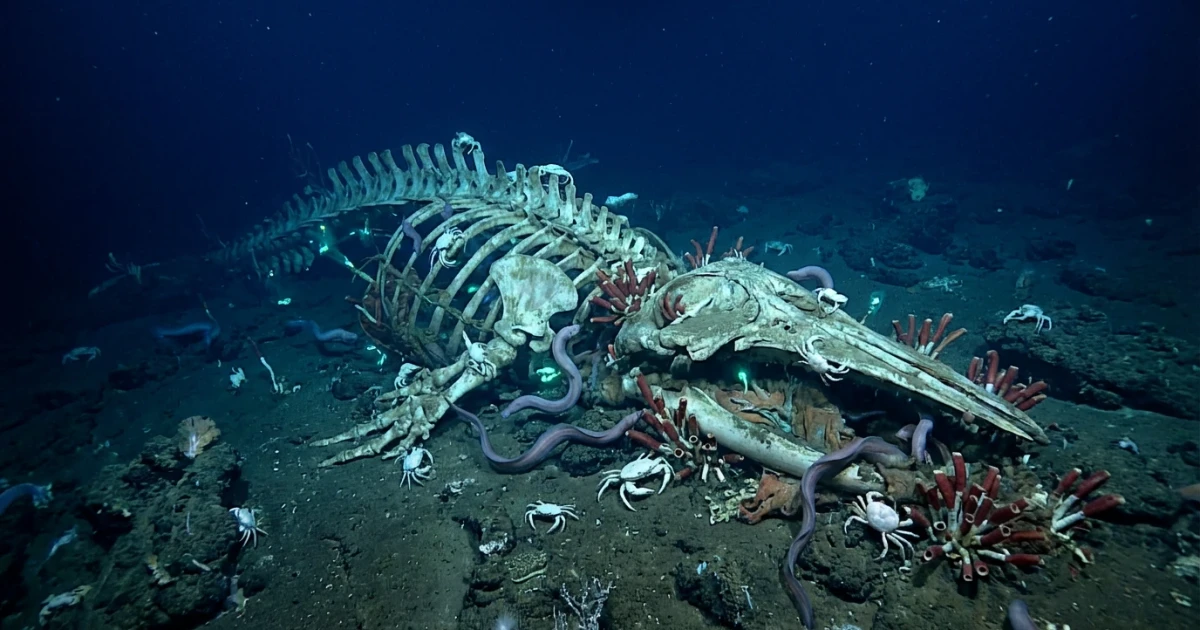
When whales die, their massive bodies sink to the ocean floor, creating what scientists call whale falls. Far from being a quiet end, this process sparks an explosion of life, as a complex cast of deep-sea creatures gathers to feed, breed, and thrive in the nutrient-rich environment. As BBC reports, researchers continue to be amazed by the strange and diverse organisms drawn to these underwater feasts.
The Succession of Life at Whale Falls
Whale carcasses support a remarkable ecological succession, lasting decades and involving several waves of marine life. According to background from the Smithsonian Ocean, the process typically unfolds in stages:
- Scavenger Stage: Large sharks, hagfish, and other scavengers arrive first, stripping soft tissue from the bones within months.
- Enrichment Opportunist Stage: Crustaceans, worms, and mollusks move in to feed on the remaining scraps and the sediment enriched by decaying tissue.
- Sulphophilic Stage: This final stage can last decades. Specialized bacteria break down lipids in the bones, releasing hydrogen sulfide that supports unique chemosynthetic communities, including clams, mussels, and the famous bone-eating worms known as Osedax.
BBC highlights how scientists are often surprised by the diversity at these sites. Deep-sea expeditions using remotely operated vehicles have uncovered dozens of new species, many of which appear to specialize in the extreme environment created by a whale fall.
Unusual Creatures and Adaptations
The BBC feature describes the discovery of bizarre and previously unknown animals, including the Osedax genus of bone-eating worms. These worms lack mouths or stomachs but use root-like structures to burrow into whale bones and extract nutrients with the help of symbiotic bacteria. According to the Marine Species Database, over 30 species of Osedax have been recorded, each adapted for this unique niche.
Other creatures attracted to whale falls include:
- Zombie worms (Osedax)
- Gigantic isopods
- Specialized snails and limpets
- Rare deep-sea crabs and shrimp
- Chemosynthetic bacteria and fungi
BBC notes that these communities may support hundreds of species at a single carcass, with many never observed elsewhere.
Scientific Insights and Surprises
Whale falls have become hotspots for deep-sea research. According to the Monterey Bay Aquarium Research Institute (MBARI), expeditions have led to the discovery of entire new families of worms, crustaceans, and mollusks at whale fall sites. Each carcass acts as an island, providing nutrients in the otherwise nutrient-poor deep sea and fueling a burst of evolutionary innovation.
BBC’s report underlines the ongoing surprises: many of these animals are still poorly understood, with researchers often finding new species each time they visit a whale fall. The unexpected diversity suggests that whale falls play a crucial role in connecting deep-sea ecosystems and may act as stepping stones for the dispersal of species across the ocean floor.
Wider Ecological Importance
Beyond their immediate impact, whale falls contribute to deep-sea biodiversity and may help sustain populations of rare or specialized organisms. Some scientists, as cited in BBC’s article, believe that whale falls could have been even more significant in the past, when larger whale populations meant more frequent and widespread carcass deposits on the seafloor.
Official records from NOAA’s Deep-Sea Coral and Sponge Database show that whale fall sites are often associated with unique coral and sponge communities, further underlining their ecological value.
Looking Forward: Mysteries Remain
Despite recent advances, much about whale falls and their inhabitants remains unknown. As deep-sea exploration continues, scientists expect to discover even more remarkable adaptations and species.
As the BBC concludes, the deep sea remains one of Earth’s last frontiers, and whale falls offer a rare window into its hidden biodiversity. For every new expedition, the ocean floor reveals surprises—reminding us how much is still left to learn about life in the darkness below.