Politics
Democratic support for Israel erodes as Gaza war divides Congress
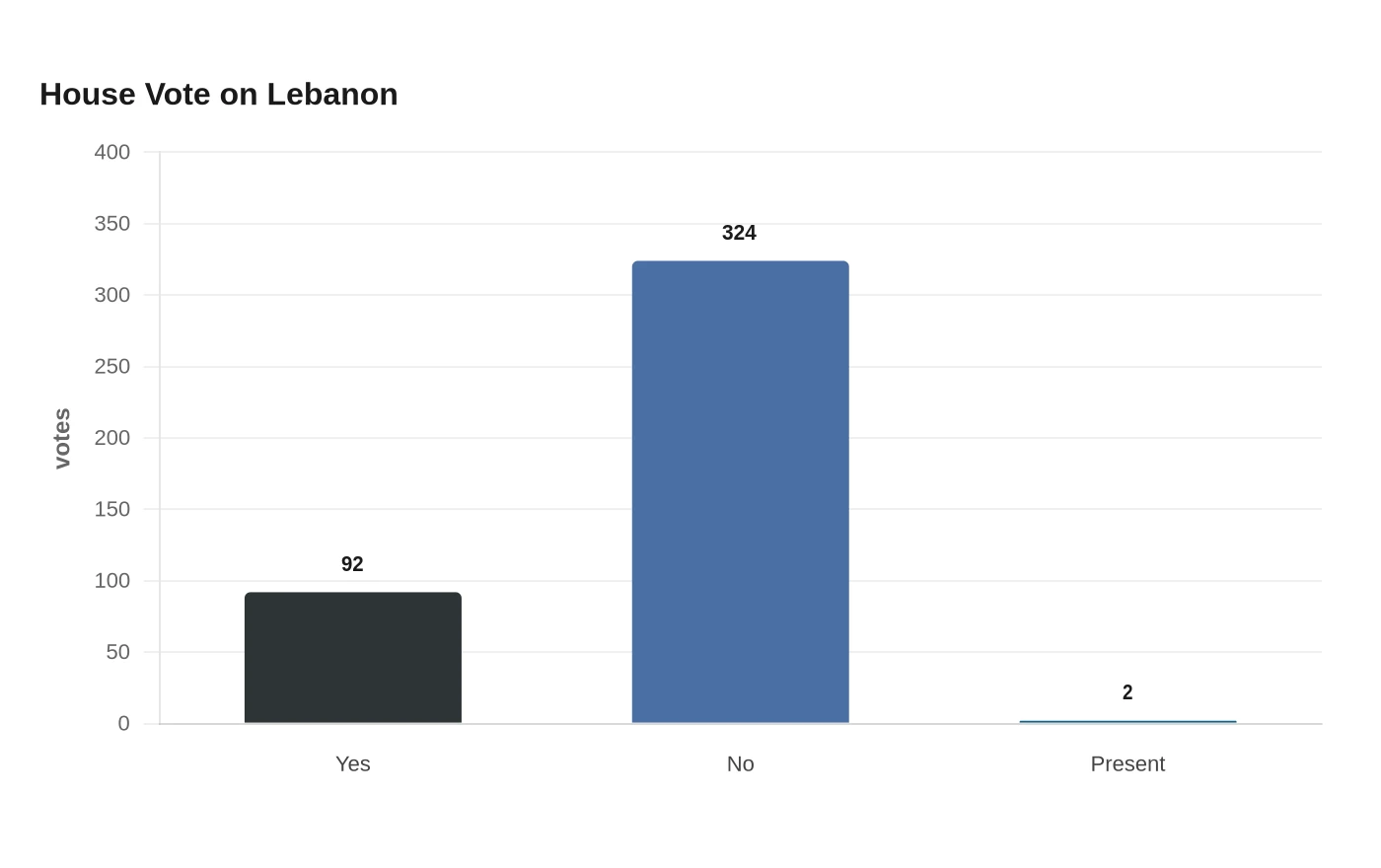
The House defeated a Rashida Tlaib-sponsored Lebanon war-powers resolution 92-324 on June 4, and more than half of House Democrats voted with Republicans to kill it. The result laid bare how far Democratic support for Israel and related military policy has shifted since the Oct. 7, 2023 Hamas attack.
Only Rep. Thomas Massie, R-Ky., voted yes among Republicans, while two Democrats, Betty McCollum and Derek Tran, voted present. House Minority Leader Hakeem Jeffries said there were no U.S. servicemembers involved in combat operations or hostilities in Lebanon, and Rep. Brad Schneider called the measure “a horribly flawed resolution.” The split showed that even when Democrats reject a specific war-powers measure, the caucus is no longer moving as one on Israel-linked votes.
The Lebanon vote fit into a broader pattern that the Congressional Research Service says has emerged since Oct. 7, when Congress began taking repeated votes tied to the Israel-Hamas conflict. By February 2026, CRS said the conflict was subject to a ceasefire and a U.S. 20-point plan for Gaza governance and security transition, yet lawmakers were still sorting through the fallout as aid and sanctions fights continued to recur on the House and Senate floors.
The underlying financial relationship remains vast. CRS says Israel is the largest cumulative recipient of U.S. foreign assistance since World War II, with the United States providing $174 billion in bilateral assistance and missile defense funding to date. The 2016 U.S.-Israel memorandum of understanding committed $38 billion in military aid for fiscal years 2019 through 2028, including $33 billion in Foreign Military Financing grants and $5 billion for missile defense.
That framework has been reinforced, not replaced, by emergency spending since the Gaza war began. In April 2024, Congress approved supplemental legislation that included $3.5 billion in Foreign Military Financing for Israel and $5.2 billion for missile defense and the Iron Beam laser defense system. CRS says fiscal 2025 appropriations continued aid at fiscal 2024 levels, with $3.3 billion in FMF and $500 million for missile defense cooperation.
The June 4 vote showed that the argument inside the Democratic Party is no longer limited to symbolic dissent over Israel’s war conduct. It now extends to whether unconditional military backing strengthens U.S. leverage or strips it away, and whether the party is still bound to the pro-Israel consensus that shaped Washington for decades.
Sources
- [1]nytimes.com
- [2]rollcall.com
- [3]congress.gov