US News
Democrats Consider Next Steps After Iran War Powers Vote Narrowly Fails
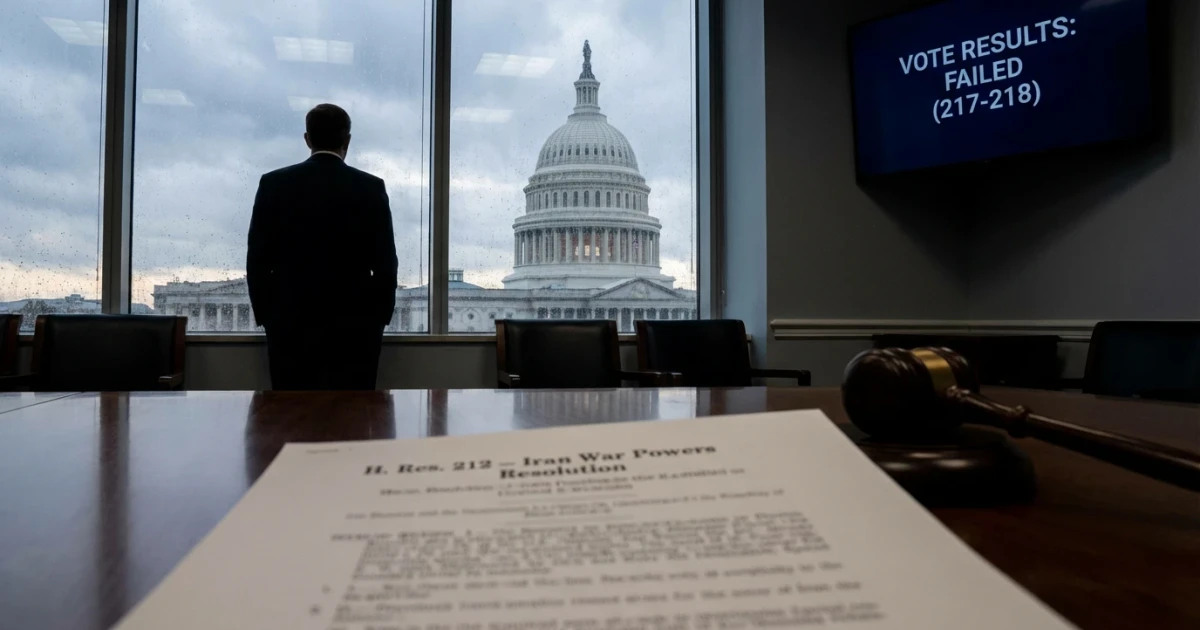
Democratic lawmakers in the U.S. House of Representatives are reassessing their approach to war powers after a high-profile measure aimed at ending President Trump’s military operations against Iran failed by just one vote. The narrow defeat highlights deep divisions on Capitol Hill regarding Congress’s role in authorizing the use of military force overseas.
House Vote Comes Down to the Wire
The closely watched resolution sought to direct the removal of U.S. armed forces from hostilities against Iran unless explicitly authorized by Congress. According to official House roll call records, the measure was blocked by a single vote, reflecting both party-line tensions and the complexity of war powers debates. The defeat marked a setback for Democratic efforts to assert greater congressional oversight over military action in the Middle East.
- The resolution was part of a broader push to reassert congressional authority through the War Powers Resolution.
- House Republicans largely opposed the measure, arguing it could undermine U.S. national security or embolden adversaries.
- Democrats and some bipartisan supporters contended that the Constitution grants Congress—not the president—the power to declare war, and that recent operations in Iran required explicit legislative approval.
Democratic Leaders Weigh New Strategy
Axios reports that Democratic leaders are now considering alternative strategies to address war powers and executive military action. The failed vote has prompted renewed discussions about how Congress can effectively check presidential authority without jeopardizing national security interests. Some lawmakers are exploring legislative tweaks or alternate resolutions that might garner broader bipartisan support in future sessions.
The debate over war powers is not new. As detailed in a recent Congressional Research Service analysis, Congress has repeatedly wrestled with the balance of power between the legislative and executive branches in matters of war. The War Powers Resolution, passed in 1973, was designed to limit the president's ability to commit U.S. forces to hostilities without congressional approval. However, its effectiveness remains a subject of ongoing debate.
Key Facts and Context
- The failed measure was part of a series of recent congressional actions responding to U.S. military involvement in the Middle East, including previous votes on Syria and Iraq.
- According to GovTrack voting data, similar war powers resolutions have produced tight vote margins and cross-party divides in recent sessions.
- Debate continues over the scope and legal interpretation of the War Powers Resolution, with some members advocating for modernization or reform to clarify Congress’s role.
Looking Ahead
With the failure of the latest House war powers measure, the path forward remains uncertain. Democratic leaders, according to Axios, are expected to engage in further negotiations aimed at finding common ground within Congress. The ongoing debate reflects the enduring challenge of balancing presidential flexibility in foreign policy with the constitutional mandate for congressional oversight.
As tensions with Iran and other global hotspots persist, war powers will likely remain a contentious issue in Washington. Lawmakers on both sides continue to grapple with how best to protect U.S. interests while upholding the principles of democratic accountability.