Politics
Democrats Push for Swift Vote to Limit Trump on Iran
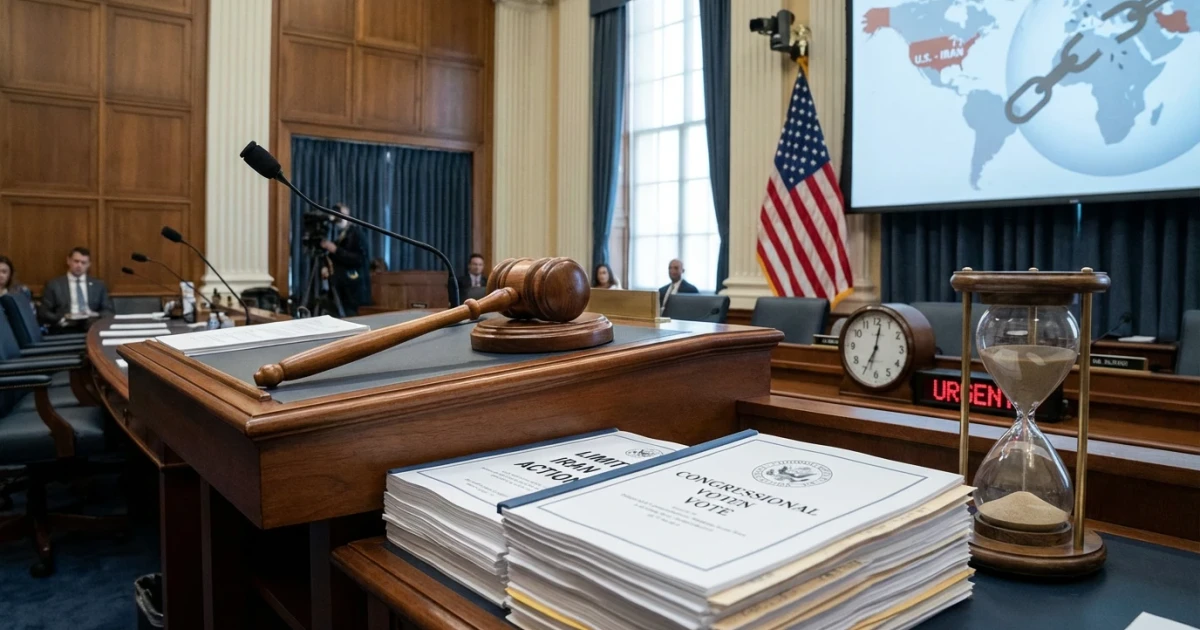
Democratic lawmakers are intensifying calls for an immediate Congressional vote aimed at restraining President Trump’s ability to conduct military operations against Iran, citing both urgent security concerns and the need to reaffirm Congress’s constitutional war powers.
Renewed Push to Assert Congressional Authority
The demand for swift legislative action reflects growing anxieties within the Democratic caucus about the scope of the president’s authority to engage U.S. armed forces in overseas hostilities without explicit approval from Congress. Lawmakers are invoking the War Powers Resolution, a statute enacted in 1973 designed to check the president’s power to commit U.S. forces to armed conflict without congressional consent.
Recent months have seen heightened tensions between the United States and Iran, raising fears of a broader military confrontation. Many Democrats argue that President Trump’s actions risk escalating conflict in the region and could circumvent the constitutional requirement that Congress, not the executive, has the authority to declare war.
Legislative Proposals and Congressional Action
- House Democrats are advocating for a vote on H.J.Res.76, a resolution that would direct the removal of U.S. Armed Forces from hostilities against Iran unless specifically authorized by Congress.
- The Senate previously passed a similar measure, S.J.Res.68, with bipartisan support, underscoring concern about unchecked executive military action.
- According to House voting records, previous efforts to limit military engagement with Iran have drawn significant support from Democrats and some Republicans, reflecting a desire for greater congressional oversight.
Advocates of the resolutions argue that the president’s unilateral military decisions risk entangling the U.S. in another prolonged conflict in the Middle East, a prospect that many lawmakers—and their constituents—are eager to avoid.
Legal and Policy Implications
At the center of the debate is the scope and application of the War Powers Resolution. The law requires the president to notify Congress within 48 hours of deploying armed forces into hostilities and limits such deployments to 60 days without explicit congressional authorization. However, its effectiveness and interpretation have been the subject of ongoing debate among legal scholars and policymakers.
Analysis from the Congressional Research Service notes that tensions with Iran, including military exchanges and threats to U.S. personnel, have tested the boundaries of executive authority and highlighted the need for clear legislative guidance. Democrats stress that any sustained military involvement must reflect the will of the people as expressed through their elected representatives.
Divergent Perspectives and Next Steps
While Democrats are unified in their push for immediate action, some Republicans maintain that the president requires flexibility to respond to threats without bureaucratic delays. They argue that congressional intervention could undermine U.S. deterrence and hinder swift responses to emerging crises.
Despite these disagreements, growing bipartisan support for war powers measures signals a possible shift toward reasserting legislative checks on military action. The outcome of the Democrats’ demand for a vote could set an important precedent for future U.S. foreign policy decisions.
What This Means Going Forward
As congressional leaders consider the timing and scope of any vote, the broader debate over war powers is likely to persist. Legal experts and policy analysts expect continued scrutiny of executive authority, especially in volatile regions like the Middle East. For now, the Democrats’ demand for an immediate vote represents an effort to re-center Congress in decisions of war and peace—a constitutional principle with enduring significance.