Health
Developing brain repairs DNA breaks as neurons migrate to cortex
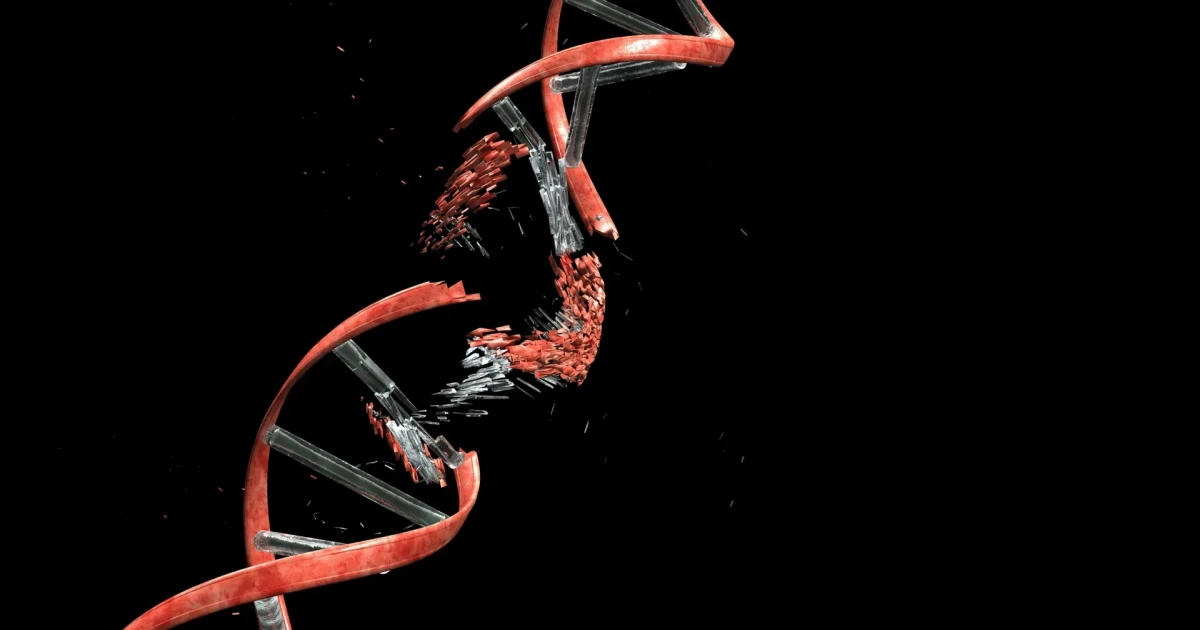
Young neurons do not glide quietly into place as the brain forms. At Kyoto University, researchers found that as newborn neurons migrated through crowded tissue toward the cerebral cortex, they routinely sustained double-strand DNA breaks, then repaired them almost immediately if development was healthy.
The study, published in Nature in June 2026, points to a paradox at the center of brain growth: the same mechanical stress that can damage DNA also appears to be part of normal cortical development. Kyoto University’s Institute for Integrated Cell-Material Sciences said the cells had to pass through narrow spaces in developing tissue, and that squeeze seemed to trigger the breaks rather than random failure.
To test the idea, the team guided neurons through microchannels designed to mimic those tight spaces. Fluorescent markers showed breaks appearing as the cells passed through the channels and then disappearing after they emerged. Most of the damage was repaired within 24 hours, with no lasting effect on function. The breaks were traced to Topoisomerase II under mechanical stress, and the repair pathway was non-homologous end joining, a fast DNA-repair system that stitched the genome back together.
The findings suggest the developing brain has evolved a repair capacity strong enough to absorb substantial genomic stress while still building complex circuits. That matters because failures in brain-development processes are linked to malformations, neurodevelopmental disease and neurodegenerative disease. Kyoto University said its brain-development laboratories study migration, circuit formation, mechanobiology and regenerative medicine, all fields that could be reshaped by the idea that DNA integrity is not a background issue but part of how the brain wires itself.
The limits of that repair showed up in mouse experiments. When the researchers removed Ligase 4, a key enzyme in the non-homologous end-joining pathway, new cerebellar neurons still allowed normal development. Later, however, the animals developed mild, progressive balance problems from early adulthood. The cerebellum helps control movement, but it also contributes to language, cognitive processing and emotion, raising the stakes for what incomplete repair may mean over time.
For Mineko Kengaku’s lab and colleagues at Kyoto University, the question now is not only how neurons survive this developmental stress, but what happens when repair falls short. That line of inquiry could help explain why some neurological conditions emerge long after the brain has appeared to form normally.
Sources
- [1]sciencedaily.com
- [2]icems.kyoto-u.ac.jp
- [3]eurekalert.org
- [4]nature.com