Business
Digitas CEO Amy Lanzi discusses AI's role at Cannes Lions

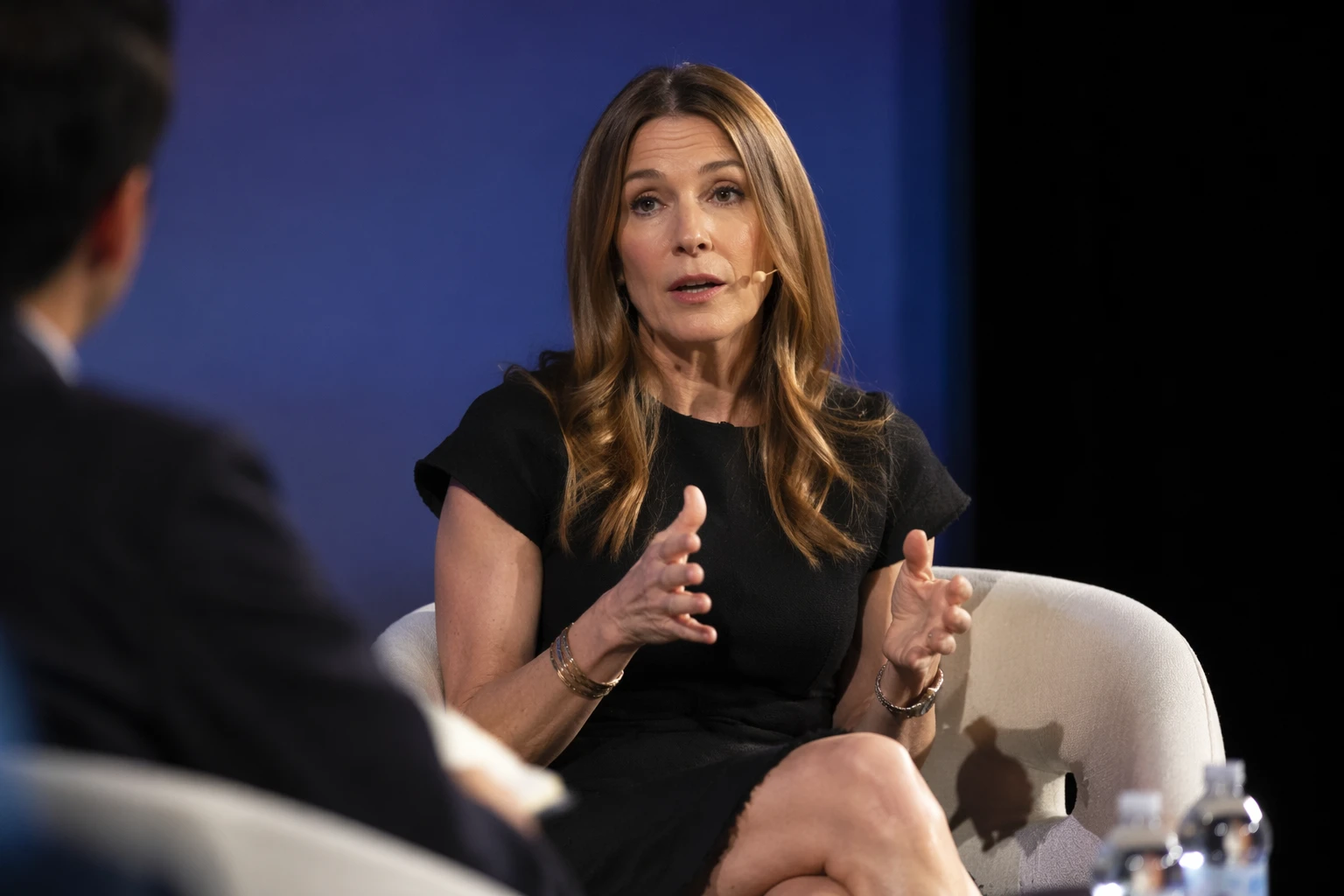
At Cannes Lions, Digitas CEO Amy Lanzi stepped onto a stage that has become one of advertising’s clearest stress tests for AI hype. The conversation at Uber Villa was not about whether agencies can use AI, but about where the technology actually helps and where it still stops short of replacing the work that clients pay for.
A Cannes conversation built around the limits of automation
The live session, titled “Decoder Podcast Live from Cannes: Advertising in the Agentic AI Era,” was the first-ever live episode of Decoder from Cannes and included an audience Q&A. It unfolded during Cannes Lions 2026, which ran June 22-26, 2026, in Cannes, France, with Uber Advertising using the week to push its case for commerce media and for reaching people in real-world moments that feel relevant. That setting matters because Cannes has become less of a simple industry showcase and more of a venue where agencies, media owners, and ad-tech firms test how much of marketing can be turned into software.
Lanzi was a fitting guest for that debate. Digitas named her CEO of Digitas North America on April 26, 2023, and her remit has been tied to the agency’s work across creative, media, data, and technology. Her presence in Cannes put a face on a broader question hanging over the business: if AI is moving into every layer of the marketing stack, what remains distinctly human?
Digitas and Publicis have already made their bet
Digitas has been explicit about where it wants AI to sit inside the agency. On April 15, 2024, the company launched Digitas AI, a generative-AI operating system and tool suite designed to support its broader AI push. That framing is important because it positions AI as an operating layer, not a creative deity. In practice, that means the promise is speed, scale, and better workflow support, rather than a claim that software can independently define brand strategy or replace the judgment behind a campaign.
Publicis Groupe has gone even further in making AI a corporate identity. In January 2024, the holding company said it wanted to become the industry’s first AI-powered “Intelligent System,” and in January 2025 it launched Leo, a creative constellation built to drive creativity in the age of AI. Those moves show how the largest networks are trying to convert AI from a tool into a management philosophy. The message to clients is not that the machine takes over, but that the agency can use machine intelligence to organize work faster and more consistently.
That distinction is where the hype begins to thin. AI can automate parts of production, data analysis, and content generation, especially when agencies are processing large volumes of briefs, assets, or audience signals. It cannot automatically supply the taste, political judgment, and client confidence that still determine whether a campaign lands, survives review, and earns a bigger budget the next time around.
What AI can fix, and what it cannot
The real-value test in advertising is not whether AI can generate more copy, more visuals, or more audience segments. It is whether those outputs improve the decisions that matter most: which idea to pursue, how to balance brand safety with novelty, and how to turn a messy consumer moment into something memorable enough to buy. Lanzi’s position at the intersection of creative, media, data, and technology makes Digitas a useful case study, because that is exactly where the industry is trying to automate the repeatable parts without hollowing out the strategic ones.
This is why client trust remains a hard boundary. Agencies sell judgment as much as execution, and that judgment depends on a relationship built over time, not a prompt. AI may compress production timelines, but it does not remove the need for a person who can defend a recommendation in a room full of marketers, finance leaders, and legal teams. In other words, the most lucrative parts of the job are still the ones that require persuasion, not just throughput.

Cannes has become the industry's reality check
Cannes has increasingly become the place where that tension is visible. The festival now doubles as a marketplace for arguments about creators, commerce media, and how AI will reshape marketing economics. Uber Advertising said its Cannes 2026 discussions centered on commerce media, real-world journeys, and brands showing up in moments that feel relevant, which is a practical counterpoint to the more abstract promises often attached to AI.
The Verge has also framed the broader backdrop in terms of “Google Zero” and the pressure AI-driven search changes are putting on web traffic and ad-supported media. That matters because if discovery shifts away from traditional search and toward AI-mediated answers, then agencies and publishers alike face a tougher environment for attention, measurement, and monetization. The same forces that make AI attractive inside agencies can also squeeze the open web that many advertisers still depend on.
Lanzi’s earlier appearances on Decoder about creators, influencers, and AI make this conversation feel like part of a longer arc rather than a one-off Cannes sound bite. That continuity is revealing. The industry is no longer debating whether AI belongs in advertising. It is now sorting out which parts of the work AI can absorb, and which parts still require the human strategy, taste, and trust that software has not replaced.