Entertainment
Dilly Carter reveals kitchen decluttering tips to reclaim space

Dilly Carter treats kitchen clutter like a space problem, not a character flaw. The British organiser, who founded Declutter Dollies and has more than 25 years of professional experience, says kitchens are "prime real estate" and that every item has to "earn its place". That mindset turns tidying into a practical weekend reset: keep what is used, move what is not, and stop sacrificing the best surfaces to objects that only work once in a while.
The rule behind the reset
She appears on Sort Your Life Out, which first launched in 2021 and returned most recently with a six-episode run on BBC One and BBC iPlayer from 10 March 2026 to 14 April 2026. She has also expanded the format into audio with Sort Your Life Out Unpacked on BBC Sounds and iPlayer, where she talks with celebrity guests and unboxes three mystery objects from their homes before asking them to keep, donate or recycle.
1. Stop letting the counter do the job of a cupboard
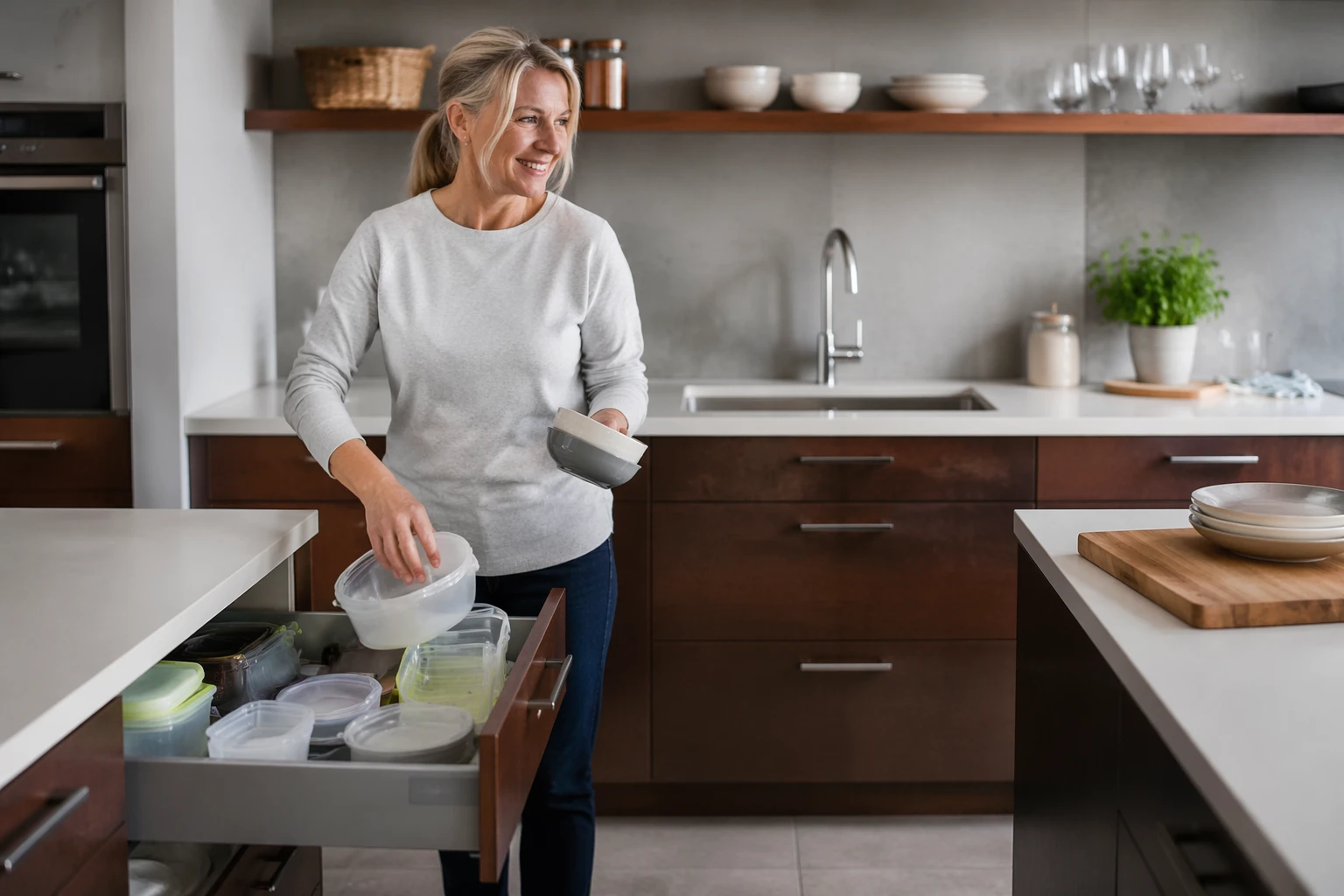
The most common kitchen mistake is treating the worktop like a storage shelf. A kettle, toaster and air fryer may be daily tools, but a bread maker, slow cooker or sandwich press sitting in view all week turns the counter into a holding zone instead of a prep area. Carter's fix is blunt: rarely used gadgets should not dominate prime counter space, and some items belong in cupboards, drawers or even the loft.
A real before-and-after version of that advice is easy to picture. Before: the breakfast counter is crowded, and every meal begins with moving appliances out of the way. After: the counter holds only the appliances you reach for every day, while everything else is stored where it does not block chopping, plating or cleaning.
For a weekend reset, start with one zone, such as the stretch beside the hob or the area under the window. Remove anything that is not used daily and assign it a home out of sight. If the item is seasonal or only useful a few times a year, Carter's logic puts it firmly outside the main traffic area.
2. Replace single-use gadgets with multi-use tools
Carter also pushes against the habit of buying a new device for every minor task. Her advice is to choose multi-use appliances instead of filling drawers with single-purpose gadgets. That means thinking about whether a tool earns its place by doing several jobs, rather than owning an appliance that looks clever but serves one narrow function.
In kitchen terms, the before picture is familiar: an egg slicer, avocado tool and popcorn maker all taking up space while the same cupboard also holds a blender, food processor or hand mixer that can do far more. The after picture is leaner. A smaller set of versatile tools is easier to store, quicker to clean and less likely to create a second layer of clutter when the novelty wears off.
The weekend fix is to empty one appliance cupboard and sort items into three groups: everyday use, occasional use and duplicate use. Keep the multi-use pieces that genuinely save time. Move the occasional tools out of the prime zone. If two gadgets do almost the same thing, keep one.
3. Give the lounge one clear job
Carter's organising work is not limited to the kitchen. The lounge often becomes the landing place for mail, chargers, remote controls, craft supplies and school papers, all of which compete with the actual purpose of the room: sitting, reading, watching television and relaxing. Once that happens, the same problem seen on crowded kitchen counters appears again on the coffee table and sideboard.
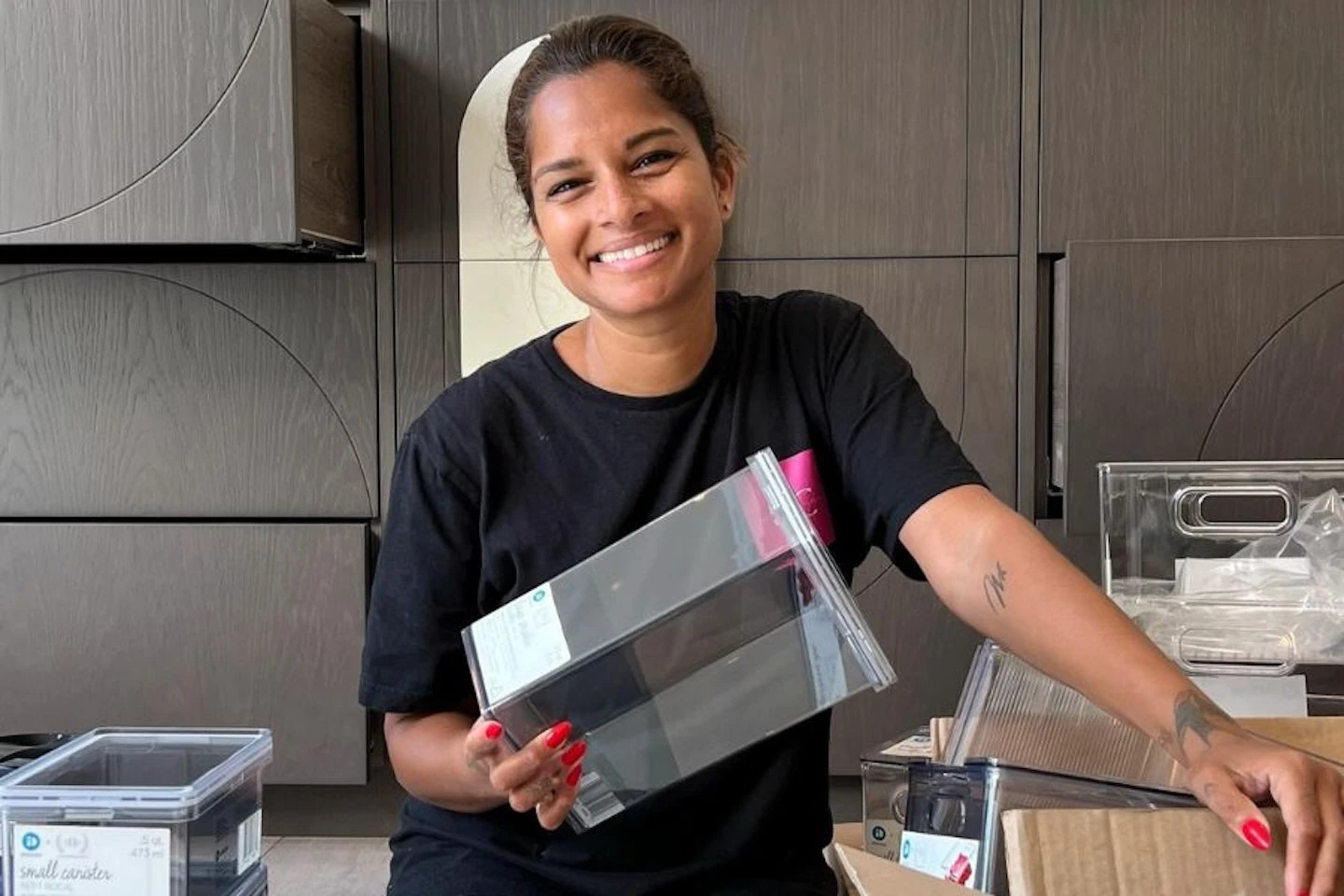
The before-and-after contrast is straightforward. Before: the sofa is clear, but every flat surface in the room is covered in small items that have no single home. After: the lounge has one controlled drop zone, such as a tray or basket, and everything else is returned to a proper storage point at the end of the day.
A weekend reset here is less about buying organisers and more about editing the clutter trail. Pick one surface, clear it completely and decide what belongs there permanently. Anything that only lands there because there is nowhere else for it should be moved to a cupboard, desk drawer or hallway system before the mess spreads again.
4. Treat clothes as decisions, not waiting rooms
Carter's method also applies to clothes, where clutter often builds through hesitation rather than lack of space. Wardrobes fill up with items kept for a smaller size, a different season or a vague future occasion, while laundry baskets and chair backs become temporary storage.
The before picture is a bedroom with a wardrobe that will not close and a floor covered in piles that are "not dirty, not clean, just there." The after picture is a tighter edit: the clothes you wear regularly stay within easy reach, while the rest are moved out, donated or recycled.
On Sort Your Life Out, the reset is emotional as well as practical because families are forced to decide what actually deserves to stay. That same discipline works in a wardrobe over a single weekend: sort by use, not by hope.
Sources
- [1]bbc.co.uk
- [2]yahoo.com
- [3]declutterdollies.com
- [4]iheart.com
- [5]tvmaze.com
- [6]hellorayo.co.uk