Entertainment
Disclosure Day opens at No. 1, Masters of the Universe plunges
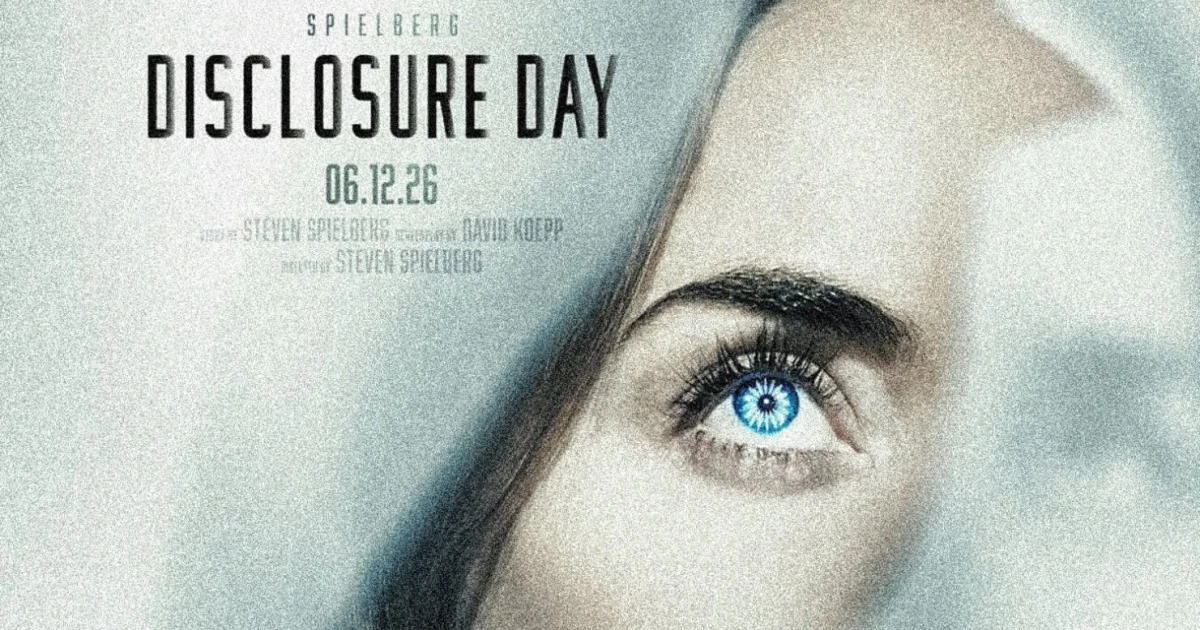
Steven Spielberg’s Disclosure Day opened at No. 1 at the domestic box office with $44 million from 3,824 theaters, a launch that gave Hollywood a rare signal that audiences will still show up for a summer spectacle that is not built on a pre-sold franchise. On the same frame, Masters of the Universe landed in second place on Friday with $11.7 million from 3,677 North American screens, a sharp mismatch between its scale and its start.
Disclosure Day’s early strength was not just about Spielberg’s name. The sci-fi thriller had already pulled in $6.5 million in Thursday previews, and its premise gave it a timely edge: Bloomberg described the film as probing truth and trust in an era of government document drops and artificial intelligence reshaping how Americans think about unexplained events. Emily Blunt stars in the film, with Josh O’Connor alongside her, giving Spielberg a cast that sold both credibility and curiosity rather than nostalgia alone.
That matters because Spielberg is trying to prove something bigger than one opening weekend. Variety framed Disclosure Day as a test of whether audiences will turn out for an original summer blockbuster that is not part of a franchise, a question that carries extra weight as Spielberg turns 80 in December 2026 and his summer legacy still reaches back to Jaws, the June 1975 hit that helped define the modern season. The Week also flagged Disclosure Day as one of June’s notable new releases, underscoring how much of the month’s box-office conversation now hinges on whether an original concept can behave like an event.
Masters of the Universe told the opposite story. The Amazon MGM title was tracking to open in the $30 million to $35 million range, but its $11.7 million Friday start pointed to a much weaker launch than the budget suggested. With a reported production cost of $200 million and $4.4 million in previews, the film entered the market carrying the weight of a brand that still had to prove it could convert recognition into urgency. It did not, at least not at the level its financing implied.
Together, the two openings exposed a widening split in audience behavior. Spielberg’s film benefited from originality, topicality and the promise of a stand-alone summer event. Masters of the Universe faced the burden of franchise fatigue, where a familiar title no longer guarantees turnout. For studios, the frame suggested that brand dependence is not enough on its own and that original-event filmmaking may have more room to run than many box-office models have assumed.
Sources
- [1]news.google.com
- [2]variety.com
- [3]bloomberg.com
- [4]theweek.com