Science
Discovery of Self-Replicating RNA Offers Clues to Life’s Beginnings
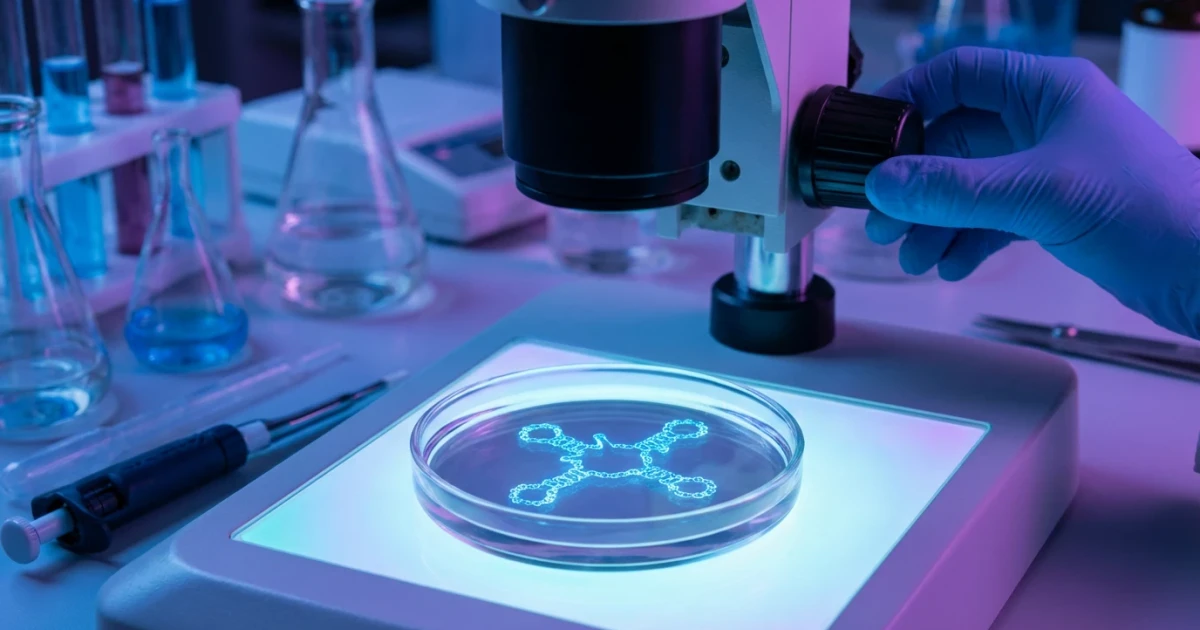
A new breakthrough in molecular biology has scientists rethinking the building blocks of life. Researchers have engineered a 45-nucleotide RNA molecule that can nearly replicate itself, a feat that could illuminate how the earliest forms of life emerged on Earth. As reported by Ars Technica, this minimalist RNA system demonstrates self-replication at a scale and simplicity not previously observed, drawing fresh attention to the longstanding RNA world hypothesis.
What Makes This RNA Discovery Significant?
- The engineered RNA is just 45 bases long, making it the smallest known RNA capable of copying itself in the lab.
- This molecule can catalyze the formation of a complementary RNA strand, which then serves as a template for creating more copies of the original sequence.
- While previous attempts required much larger and more complex RNA enzymes, this system approaches the theoretical minimum for a functional self-replicator.
According to the RCSB Protein Data Bank, the structure of this RNA replicator has been resolved, providing atomic-level insight into how such a short sequence achieves enzymatic activity. The sequence and replication data are available in the European Nucleotide Archive, offering open access for further research and validation.
Implications for the Origins of Life
This discovery reinvigorates discussion around the RNA world hypothesis, which suggests that early life relied on RNA molecules to both store genetic information and catalyze essential reactions. The minimalist system described here demonstrates that even short RNA sequences can possess complex functions under the right conditions. Ars Technica highlights that this could represent a plausible step in the prebiotic chemistry that led to life on Earth, since smaller molecules are more likely to form spontaneously than larger, more complex ones.
How the System Works
- The 45-nucleotide RNA acts as an enzyme, catalyzing the assembly of a complementary RNA strand from nucleotide building blocks.
- Once the complementary strand forms, it can serve as a template for the production of new copies of the original sequence.
- This cycle, while not fully autonomous, demonstrates a near-complete form of self-replication, a key requirement for Darwinian evolution.
Peer-reviewed analysis published in Nature and available as open-access confirms the replicator’s efficiency and explores the limits of such minimal systems. These studies detail the experiments, sequence data, and molecular structures underpinning the findings.
Limitations and Future Directions
While the 45-nucleotide RNA does not yet achieve perfect, indefinite self-replication, it comes closer than any previously engineered system of comparable simplicity. Researchers note that the replication process still relies on carefully controlled laboratory conditions, including the presence of activated nucleotides and precise temperature ranges. Further work will explore how such molecules could emerge spontaneously under prebiotic Earth conditions, and whether even shorter sequences might be feasible.
For those interested in the technical details, the atomic structure and sequence data are publicly available for independent analysis and replication.
Looking Ahead
The discovery of this minimalist self-replicating RNA marks a major step toward understanding the molecular origins of life. By demonstrating that a strand as short as 45 nucleotides can perform this critical function, scientists now have a more plausible model for how life’s earliest genetic systems might have arisen. As research continues, this finding will inform efforts to recreate prebiotic chemistry in the lab and may even guide the search for life on other planets, where similar molecular systems could exist.