Business
Disney’s Sora Misstep Raises Doubts on AI’s Hollywood Promise
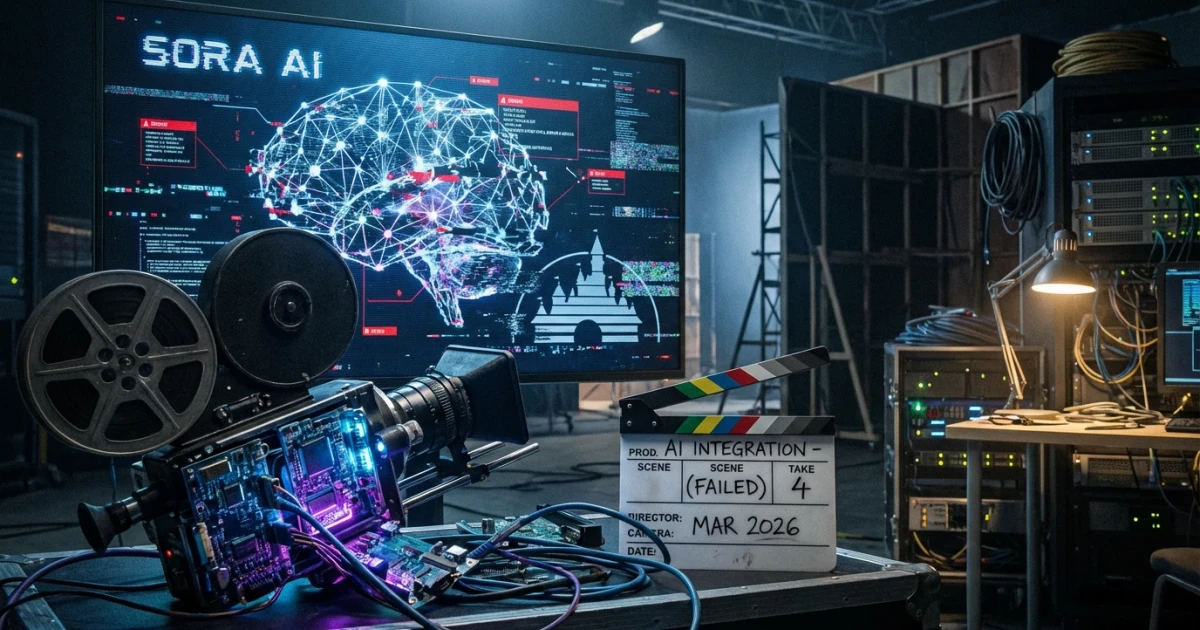
Disney’s recent attempt to integrate OpenAI’s Sora technology into its production pipeline has sparked widespread debate about the true potential—and current limitations—of artificial intelligence in Hollywood. Despite high expectations that AI tools would streamline workflows and inspire new creative directions, Disney’s experience with Sora has instead underscored the technology’s unresolved challenges, both technical and artistic.
The Promise and the Problem
Major studios, including Disney, have been at the forefront of experimenting with artificial intelligence for everything from script generation to visual effects. The launch of OpenAI’s Sora was widely touted as a potential game-changer, raising hopes for faster, cheaper content creation and innovative storytelling methods. Industry leaders predicted that AI-driven tools could revolutionize everything from animation to live-action filmmaking, automating repetitive tasks and even generating entire scenes.
However, as reported by 404 Media, Disney’s internal rollout of Sora quickly ran into serious obstacles. The platform, expected to assist creative teams in visualizing concepts and automating labor-intensive work, struggled to deliver consistent quality. Artists and technicians reportedly encountered significant issues with accuracy, visual coherence, and the AI’s understanding of basic cinematic language. Rather than enabling seamless creativity, Sora’s outputs required extensive human intervention and revision—sometimes negating any time savings the tool had promised.
Technical and Creative Limitations
According to the 404 Media report, Sora’s limitations became apparent during early-stage testing. The AI often misunderstood prompts, delivered off-model character designs, and failed to maintain continuity between frames. For a studio like Disney, renowned for its rigorous quality standards, these inconsistencies posed major roadblocks. Instead of accelerating production, the technology introduced new layers of complexity, slowing down teams who had to correct the AI’s mistakes.
Industry experts note that these challenges are not unique to Disney. The broader adoption of AI in the entertainment sector has been marked by growing pains, with many studios finding that current-generation models cannot replace the nuanced judgment of human creators. This reality is echoed in recent industry statistics, which show high interest in AI tools but more modest rates of successful large-scale deployment.
Labor, Contracts, and Ethical Concerns
The Sora controversy also comes as Hollywood grapples with the labor and ethical implications of AI. Recent contract negotiations, including those led by SAG-AFTRA and the Writers Guild of America, have resulted in formal guidelines on how AI can be used in productions. These agreements aim to protect creative workers from being replaced or having their likenesses reproduced without consent. The Sora rollout, and its subsequent problems, illustrate why such protections remain relevant: AI may be powerful, but it is not yet capable of matching the creative vision and reliability demanded by top-tier filmmakers.
Industry Reaction and Forward Outlook
Disney’s disappointing experiment with Sora has fueled skepticism among executives and creatives alike. While some analysts maintain that AI will eventually play a significant role in entertainment, the technology’s current limitations suggest that a full-scale revolution is still distant. As highlighted in research from USC Annenberg, most industry professionals see AI as a tool for augmentation—not replacement—of human talent.
- AI-generated content frequently requires manual correction, impacting production schedules.
- Studios are investing in AI cautiously, focusing on areas where automation can support, not supplant, creative roles.
- Labor contracts and regulations are evolving to ensure ethical use of AI and protection of workers’ rights.
Conclusion
The Sora episode serves as a reality check for Hollywood’s AI ambitions. While artificial intelligence continues to advance, Disney’s difficulties highlight the persistent gap between hype and practical application. For now, human expertise remains indispensable to the creative process, and the entertainment industry’s AI journey will likely be one of gradual evolution, not overnight transformation.