Science
Divers Uncover Remarkable Roman Treasure in Swiss Lake
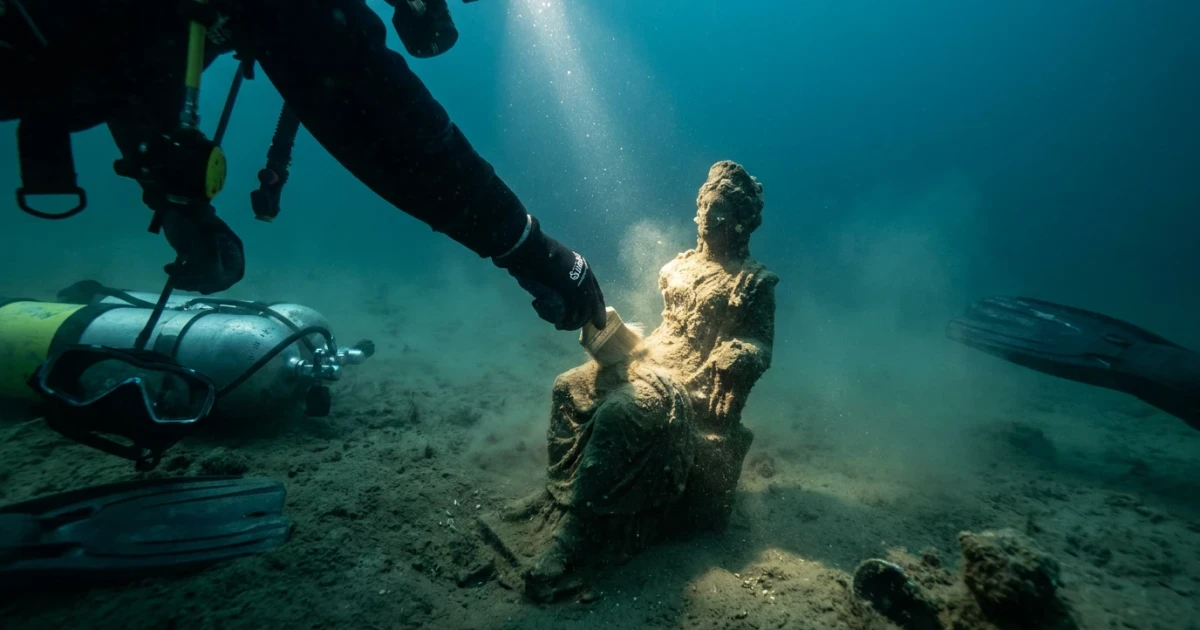
A team of divers has uncovered an intact Roman treasure in a Swiss lake, marking a significant milestone in underwater archaeology and shedding light on Switzerland’s ancient past. The discovery, announced by The Daily Galaxy, comes nearly 2,000 years after the artifact was first submerged beneath the lake’s waters.
Discovery Details and Archaeological Significance
The find was made during a recent underwater expedition, where divers encountered a well-preserved Roman artifact in the depths of a Swiss lake. Although details about the exact location and nature of the treasure remain limited, the preservation and context suggest it could be a major breakthrough for researchers studying Roman-era activity in Switzerland. Experts note that underwater conditions can sometimes protect artifacts from decay, resulting in discoveries that are both rare and valuable.
- The find is believed to be intact, a rarity among Roman artifacts recovered from underwater sites.
- Swiss lakes have yielded numerous archaeological discoveries in recent decades, including Roman coins, tools, and vessels.
- Such discoveries contribute to the understanding of Roman Switzerland, a period marked by trade, migration, and military presence.
Underwater Archaeology in Switzerland
Switzerland’s lakes have long been a focus for archaeological research, with advanced methods enabling the recovery of artifacts from challenging environments. According to University of Lausanne research, Roman-era findings in underwater sites often consist of everyday objects, trade goods, and sometimes treasures linked to ancient settlements or transport routes.
- Underwater excavations require specialized equipment and expertise, as outlined in the ETH Zurich thesis on methods and discoveries.
- Swiss law mandates protection and careful documentation of all archaeological finds, with oversight from the Swiss Federal Department of Foreign Affairs.
Impact and Future Research
The intact Roman treasure promises to offer new information about the region’s ancient history. Researchers are expected to conduct further analysis to determine the artifact’s provenance, its role in Roman society, and how it came to rest in the lake. This find may also prompt renewed interest and funding for underwater archaeology in Swiss lakes.
While details are still emerging, the discovery underscores the importance of underwater exploration for expanding our knowledge of the past. As scientists examine the artifact, its story may reveal connections to broader Roman networks and illuminate aspects of daily life, trade, and culture in ancient Switzerland.
Readers interested in technical details, excavation reports, and inventories of Roman-era discoveries can consult the annual Archaeological Discoveries in Swiss Lakes report, or review ongoing research at the University of Lausanne.
Conclusion
The Swiss lake discovery highlights both the challenges and rewards of underwater archaeology. As more information becomes available, scholars and the public alike will gain a deeper appreciation for Switzerland’s rich Roman heritage and the technologies enabling such finds.