Science
DNA Building Blocks Discovered in Asteroid Samples
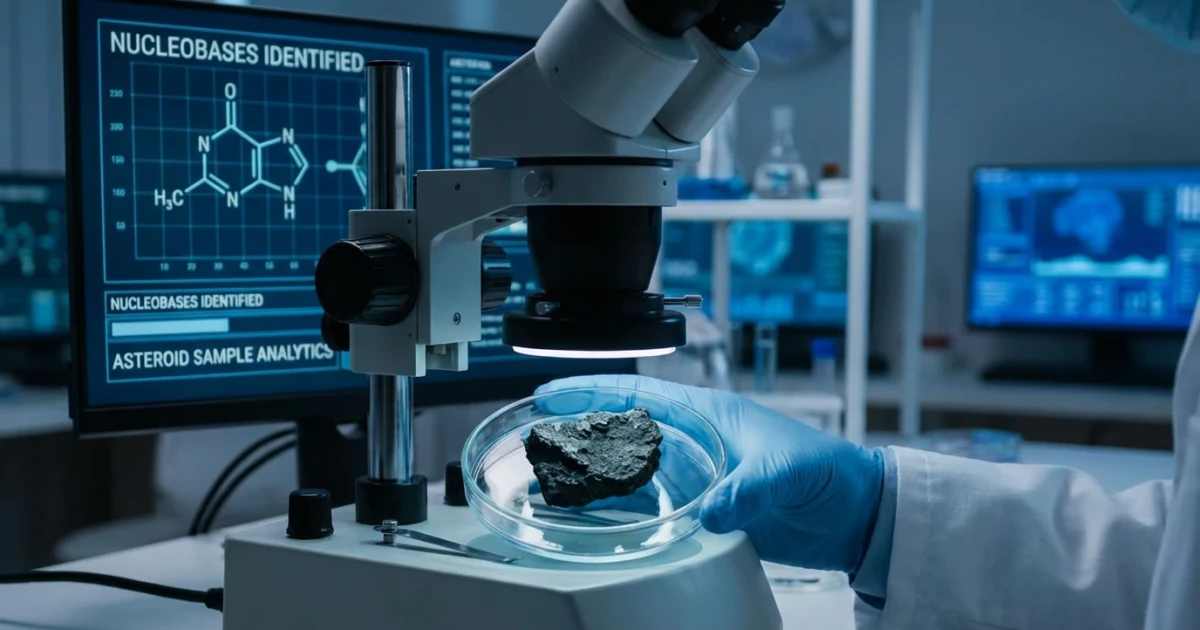
Recent analyses of asteroid samples have uncovered the presence of all canonical DNA nucleobases in space rocks, deepening our understanding of the building blocks of life and their cosmic origins. As reported by Ars Technica and corroborated by peer-reviewed research, these discoveries are providing fresh evidence for theories about the extraterrestrial delivery of life's essential ingredients to Earth.
Discovery of DNA Components in Asteroids
Analysis of material returned from the Japanese Hayabusa2 mission to the carbonaceous asteroid (162173) Ryugu revealed a complete set of canonical nucleobases—the molecular subunits of DNA and RNA. This marks the first time all five DNA and RNA bases—adenine, cytosine, guanine, thymine, and uracil—have been conclusively identified in extraterrestrial material, according to a recent Nature study.
- The Ryugu samples were collected and returned to Earth in 2020 as part of Hayabusa2’s official mission objectives.
- Advanced analysis techniques detected all five nucleobases, which are essential for storing and transmitting genetic information in known life forms.
- Previous studies had only identified some of these bases in meteorites or asteroidal material; this is the first complete set found together in a pristine sample.
What This Means for the Origin of Life
The discovery bolsters the hypothesis that key organic molecules necessary for life’s emergence on Earth may have been delivered via asteroids or comets. The presence of nucleobases in space rocks suggests that these compounds can form in non-biological environments and survive interplanetary journeys.
The European Space Agency explains that nucleobases, alongside amino acids, are considered critical building blocks for life. Their resilience in the harsh environment of space supports the idea that prebiotic chemistry is not unique to Earth.
Cross-Mission Confirmation and Data Access
Ryugu’s findings echo results from NASA’s OSIRIS-REx mission to asteroid Bennu, which also found traces of complex organic molecules. The JAXA Hayabusa2 Data Archive and NASA’s sample datasets offer open access to the analytical results, enabling researchers worldwide to further examine the implications of these compounds in planetary science and astrobiology.
Scientific Debate and Implications
Researchers are now debating how these nucleobases formed within the asteroid. Some propose that ultraviolet light or chemical reactions with water and minerals on the asteroid’s surface could have synthesized these molecules. Others highlight the importance of confirming that the sample handling process ruled out terrestrial contamination.
The discovery also raises questions about the biosynthesis pathways for nucleobases and whether these could occur in environments far from Earth. Understanding these pathways could help clarify the steps leading from raw chemical ingredients to life-sustaining molecules.
Looking Forward: The Ongoing Search for Life’s Origins
The identification of all DNA and RNA nucleobases in Ryugu’s samples marks a significant milestone in astrobiology. Ongoing and future asteroid missions are expected to build on these findings, providing further insight into the cosmic chemistry that predates life on Earth.
As scientists continue to analyze returned samples and improve detection methods, the question of how life’s molecular building blocks formed—and whether they arrived from space or Earth’s early chemistry—remains a central focus of space exploration and planetary science.