Business
Dollar slips as U.S. inflation data cools Fed rate-hike bets
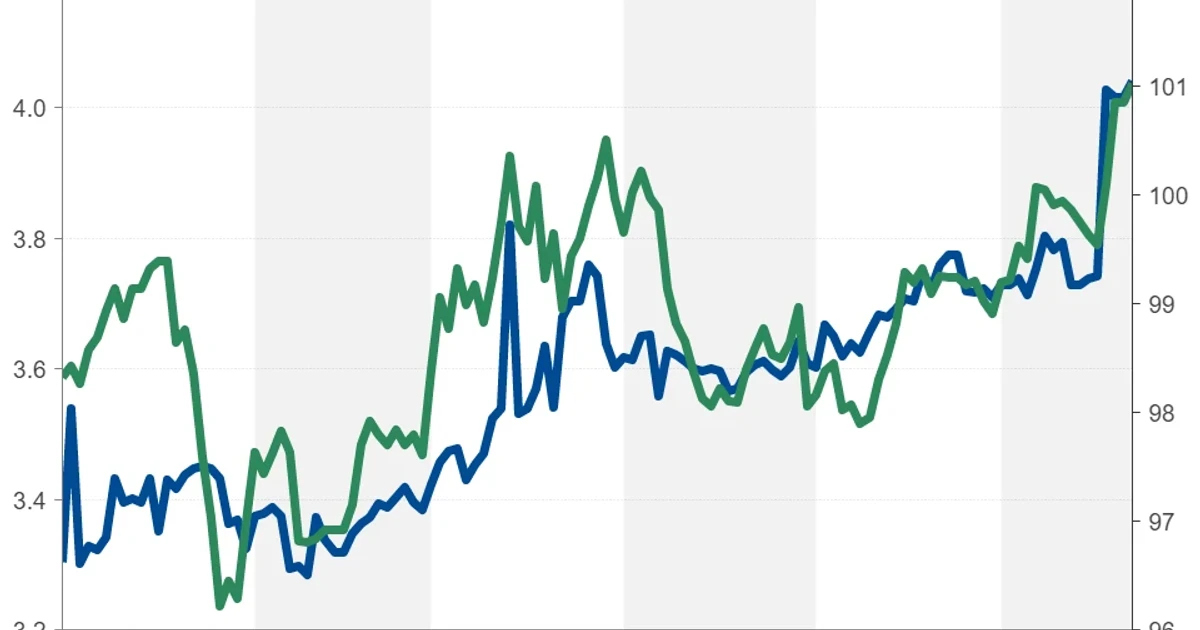
The dollar slipped 0.18% to 101.43 on Thursday, easing from a 13-month high after May inflation data matched forecasts and trimmed bets on another Federal Reserve rate hike this year. The euro rose to $1.1366 as investors re-priced the odds of tighter policy, even though inflation remained well above the Fed’s target.
The Bureau of Economic Analysis said the personal consumption expenditures price index rose 4.1% in the 12 months through May, the first reading above 4.0% since April 2023. On a monthly basis, the gauge increased 0.4%, slightly below economists’ expectations. Core PCE, the Fed’s preferred underlying inflation measure, climbed 3.4% from a year earlier and 0.3% from April. Consumer spending also stayed resilient, rising 0.7% in May, a combination that kept pressure on policymakers but did not deliver the kind of upside shock that would have pushed rate expectations sharply higher.
That shift showed up immediately in futures pricing. CME FedWatch put the odds of a July rate hike at about 30%, down from 34.2% in the prior session, while the chance of a September move fell to 62.1% from 65.7%. The latest data also showed first-quarter gross domestic product revised up to a 2.1% annualized pace, while weekly jobless claims fell by 12,000 to 215,000 in the week ending June 20, below the 225,000 forecast. The message for traders was not that the economy had weakened, but that it had cooled just enough to make another Fed move less urgent.

The dollar’s retreat followed a sharp run higher. It had hit a 13-month peak on June 24, gained in the previous three sessions and in five of the last six, and briefly pushed gold below $4,000 an ounce and bitcoin under $60,000 as investors sought refuge in cash and the greenback. Sterling and the yen also moved, with the dollar firming modestly against the yen and sterling recovering after political turbulence in Britain.
For households and companies, the pricing matters well beyond foreign exchange screens. A softer dollar can make imports less expensive than they would be at a stronger level, while easing rate-hike odds can help steady mortgage borrowing costs if bond yields stop rising. Multinational companies may also see less currency pressure on overseas sales, and retirement portfolios with international holdings can benefit when foreign assets translate back into dollars at a slightly weaker exchange rate. Brian Jacobsen of Annex Wealth Management in Menomonee Falls, Wisconsin, said, “The worst of inflation and consumer angst may be mostly behind us,” adding that inflation expectations are tied more to gasoline prices than to microchips and memory.
Sources
- [1]finance.yahoo.com
- [2]msn.com
- [3]bea.gov
- [4]cmegroup.com
- [5]usnews.com
- [6]cnbc.com
- [7]brecorder.com