Business
Dow falls as inflation hits 3-year high and chip sell-off deepens
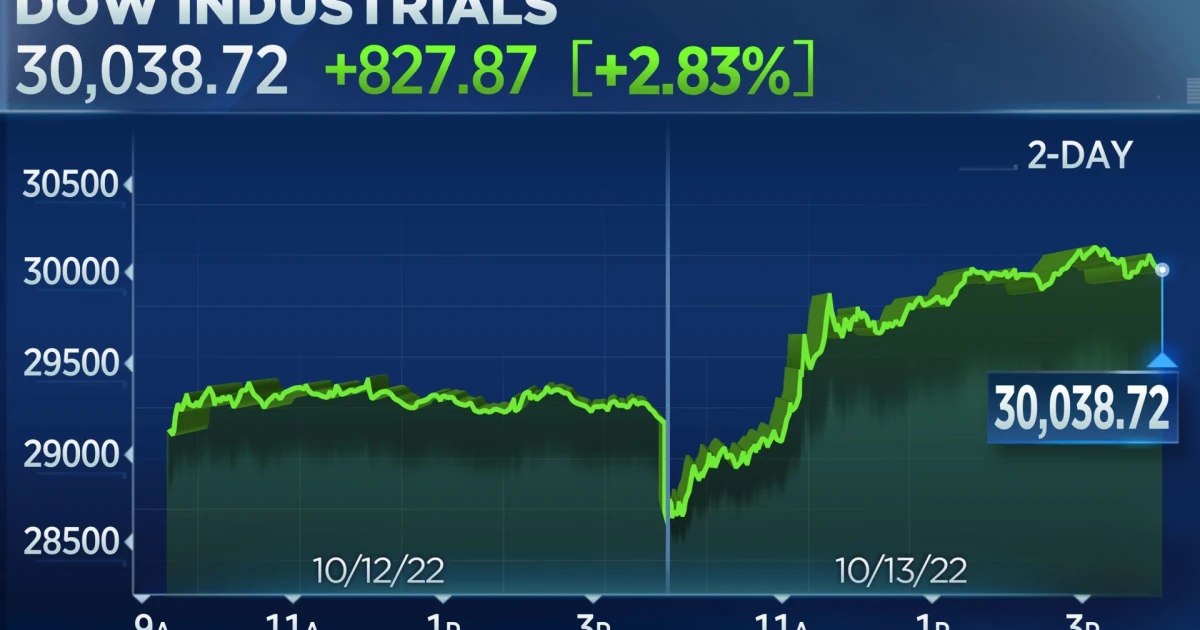
Stocks slid across Wall Street as a hotter inflation reading collided with a deepening semiconductor sell-off and renewed tension over Iran, pushing the Dow Jones Industrial Average down as much as 650 points intraday. The move showed how quickly investors have shifted from chasing chip and AI leaders to protecting capital, with the latest drops hitting retirement accounts, pension funds and other broad market portfolios at the same time.
The U.S. Bureau of Labor Statistics said the Consumer Price Index rose 0.5% in May and 4.2% from a year earlier, the fastest annual inflation rate since April 2023. Energy was a major driver: the energy index climbed 3.9% in May and accounted for more than 60% of the monthly increase in overall prices. That report landed just as traders were already bracing for more volatility in the largest stocks.
The pressure on equities had been building since a sharp semiconductor rout earlier in the week. On June 4, the Nasdaq Composite fell 4.18%, its biggest drop since April 2025, while the Dow lost 695.15 points and the S&P 500 dropped 2.64%. The damage spread beyond chips as investors rotated away from the names that had powered the market’s advance, leaving the broader technology complex vulnerable to every new piece of bad news.
Geopolitical risk added another layer of stress. U.S. equities weakened on Wednesday after Donald Trump signaled that negotiations with Iran were taking too long and threatened more action. Traders also watched developments around the Strait of Hormuz, a chokepoint that can quickly move oil prices and, by extension, inflation expectations. That matters because higher energy costs can feed directly into gasoline, shipping and other consumer prices.

The inflation report sharpened the focus on the Federal Reserve and Jerome H. Powell. The central bank left rates unchanged at its April 29 meeting and said future decisions would weigh labor market conditions, inflation pressures, inflation expectations and international developments. With May CPI running at 4.2%, investors are now less certain that the Fed will be able to cut rates soon, which keeps borrowing costs elevated for mortgages, auto loans and credit cards.
The market’s message was blunt: chip weakness, Middle East risk and hotter inflation are no longer separate worries. Together, they are forcing investors to price in slower policy relief and a less forgiving market for growth stocks.
Sources
- [1]news.google.com
- [2]cnbc.com
- [3]finance.yahoo.com
- [4]bls.gov
- [5]federalreserve.gov