Dow Drops 800 Points as Oil Tops $100, Stagflation Fears Rise
The Dow plunged 800 points as oil prices topped $100 a barrel, sparking stagflation fears and rattling Wall Street.

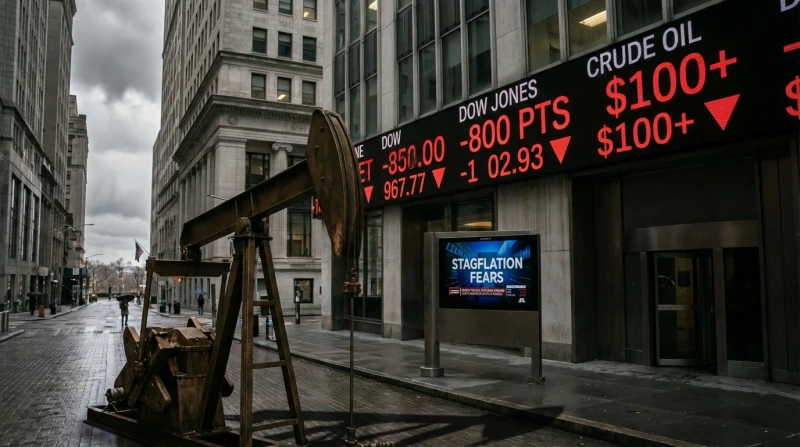
The Dow Jones Industrial Average fell by 800 points on Monday, with concerns mounting over stagflation as oil prices surged past $100 per barrel. The sharp sell-off, reported by CNBC, underscored mounting unease on Wall Street as investors digested the implications of rising energy costs and slowing economic growth.
Market Reaction to Oil Price Jump
Stocks tumbled across the board, with the Dow, S&P 500, and Nasdaq all posting significant losses as oil’s rally intensified. The market’s negative reaction reflected fears that higher energy costs could further dampen consumer spending and corporate profits, increasing the risk of stagflation—a phenomenon where inflation remains high while economic growth stagnates.
- Dow Jones Industrial Average: Down 800 points
- Oil Prices: Surged above $100 per barrel
- Broader Markets: S&P 500 and Nasdaq also declined sharply
Stagflation Fears Roil Investors
The surge in oil prices has revived memories of past periods of stagflation, most notably in the 1970s, when high energy costs and weak growth pummeled financial markets. Rising oil prices can fuel broader inflation, while also weighing on businesses and consumers through higher transportation and production costs.
Concerns over stagflation are especially acute as investors monitor key indicators like the Consumer Price Index for signs of persistent inflation and the employment situation for signals of a slowing labor market. The combination of these factors often makes it difficult for policymakers to address both inflation and weak growth simultaneously.
Implications for the Economy
Market analysts warn that if oil prices remain elevated, the risk of stagflation could intensify. Persistent high energy costs may force the Federal Reserve and other central banks into a delicate balancing act—combating inflation without triggering a deeper slowdown in economic activity.
While the stock market’s sharp drop reflects immediate investor anxiety, the longer-term outlook will depend on how quickly energy markets stabilize and whether inflationary pressures subside. Investors will be watching upcoming economic reports and central bank statements for clues on how policymakers respond to these challenges.
Key Takeaways
- The Dow’s 800-point drop highlights Wall Street’s sensitivity to oil price shocks.
- Stagflation fears are growing as rising energy costs meet slowing growth.
- Investors are closely tracking inflation data and employment trends for further signals.
With volatility returning to financial markets, both Wall Street and Main Street will be watching closely to see if policymakers can thread the needle between stabilizing prices and supporting economic growth in the months ahead.

Pamella Goncalves
Arts and culture journalist with an ear for emerging talent and an eye for the stories behind the stage. Covers music, theatre, film, and the creative forces shaping modern entertainment.