Business
Dow surges to record as weak jobs report eases rate fears
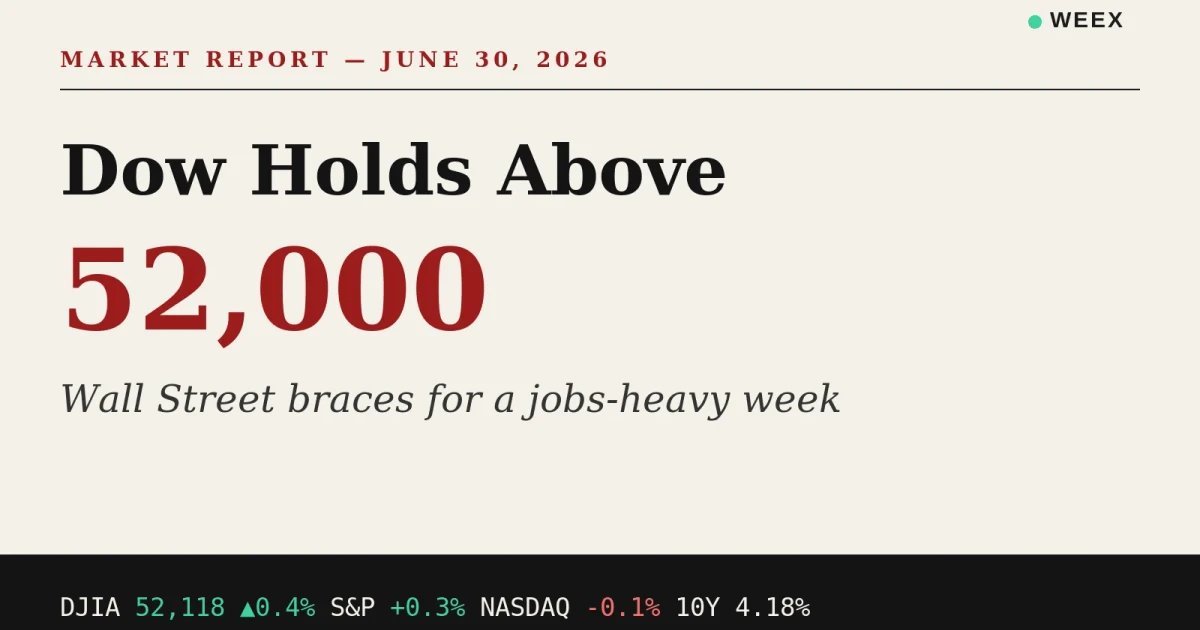
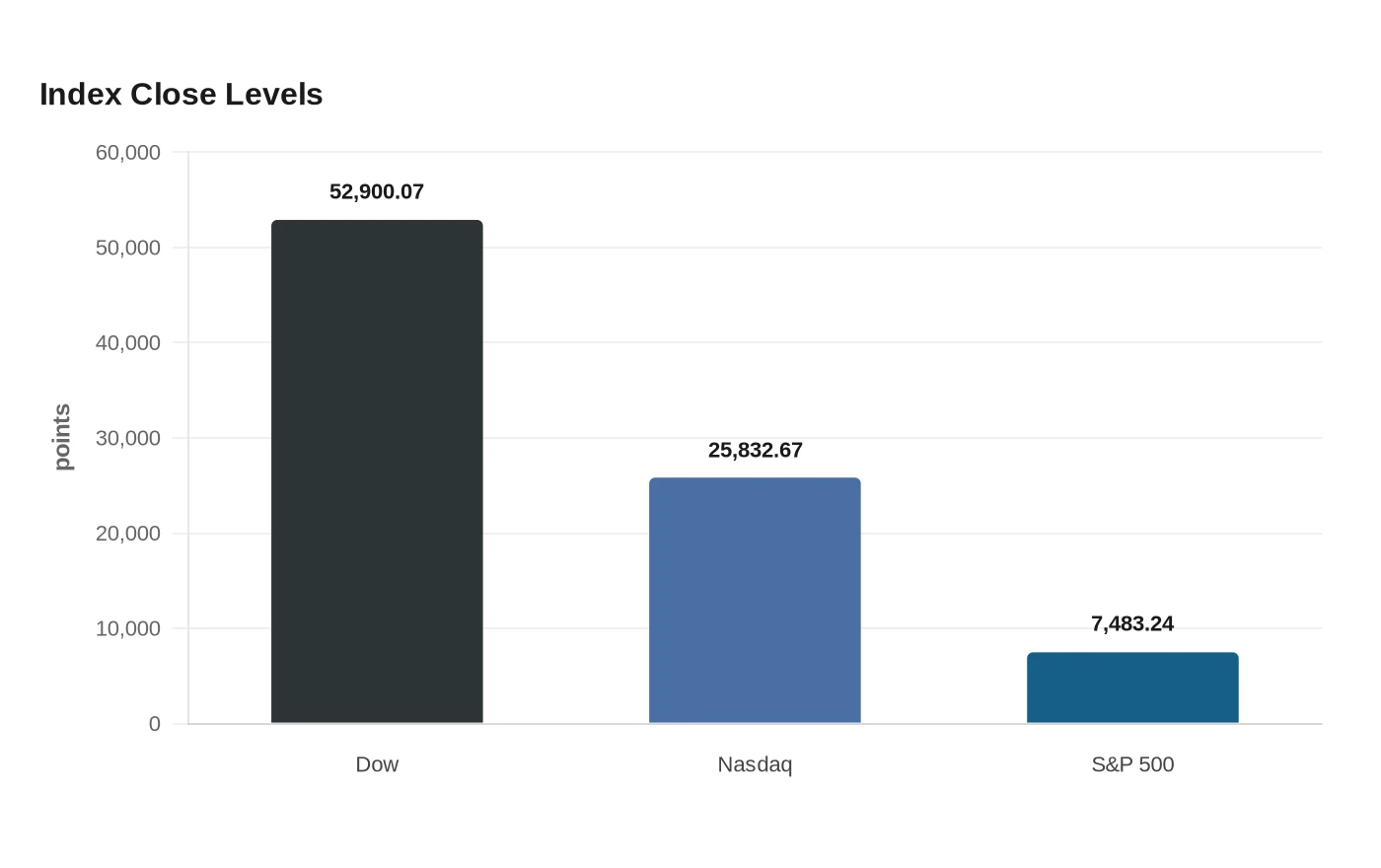
The Dow Jones Industrial Average climbed to a record close of 52,900.07 on Thursday, rising 594.83 points, or 1.14%, after June payrolls came in far below expectations at 57,000. The move lifted industrial and blue-chip shares even as the Nasdaq Composite fell 0.8% to 25,832.67, exposing how sharply Wall Street has split between rate-sensitive growth stocks and the rest of the market.
The June employment report gave traders a fresh reason to think the Federal Reserve will not move quickly to raise rates again. The Bureau of Labor Statistics said nonfarm payrolls increased by 57,000, well under the 115,000 expected by economists and down from May’s downwardly revised 129,000. The unemployment rate still edged down to 4.2% from 4.3%, but the labor force participation rate slipped to 61.5% and the employment-population ratio eased to 59.0%.
That mix helped explain the day’s market rotation. The S&P 500 finished almost unchanged at 7,483.24, but the Dow’s 20th record close of 2026 showed where money was going: into mature companies that can benefit when rate fears recede, while richly valued technology shares faced another round of selling. Reuters said the dollar fell after the report, another sign that investors quickly scaled back bets on near-term tightening.
Semiconductors remained the pressure point. Bloomberg said the Philadelphia Semiconductor Index had surged 88% in the second quarter, leaving chip stocks vulnerable to profit-taking at the start of the third quarter. Earlier June trading had already pushed the Nasdaq more than 5% below its June 2 peak during a tech selloff, and Thursday’s weakness suggested that leadership in the market has narrowed further.
Tesla added to the drag on technology. The company said second-quarter deliveries reached 480,126 vehicles and production totaled 451,758, both above expectations near 406,000 deliveries, yet the stock fell about 7% to 8%. The drop underscored how little room investors are leaving for even strong operating numbers when sentiment toward big tech is fragile.
For the next few months, the split market points to a slower-growth economy that could keep borrowing costs from rising further, while also testing how long retirement accounts can lean on a narrow group of winners. If hiring keeps cooling, the Fed’s next move will matter less for the Dow than for mortgages, auto loans and corporate financing, but it could matter much more for the stretched valuations still concentrated in technology.
Sources
- [1]news.google.com
- [2]cnbc.com
- [3]bls.gov
- [4]investopedia.com
- [5]reuters.com
- [6]bloomberg.com