World
Drone Strike at Dubai Airport Raises Regional Security Concerns
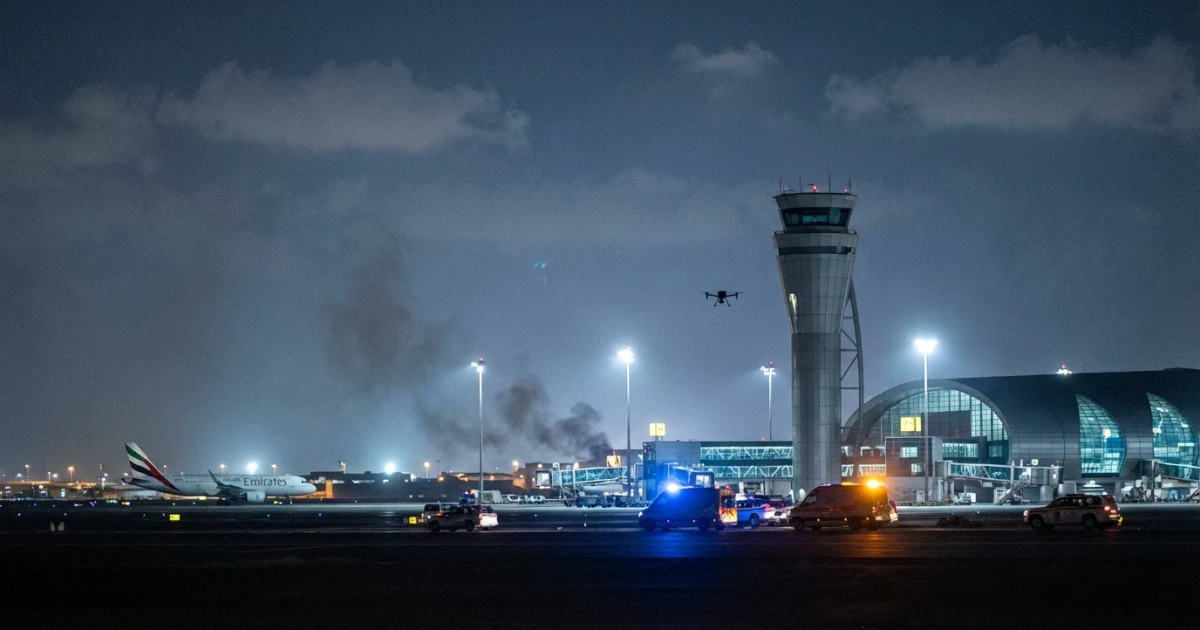
Dubai International Airport, one of the world’s busiest aviation hubs, was temporarily disrupted after a drone strike on Saturday sparked a fire in a fuel storage tank, underscoring rising regional tensions as Iran extends its campaign to target commercial infrastructure.
Drone Attack Disrupts Major Air Hub
According to reporting from The Washington Post, the incident occurred early Saturday morning when a drone struck a fuel tank at the airport, causing a fire that led to a brief suspension of flights. Airport authorities confirmed that the blaze was contained with no casualties reported, but the attack prompted delays and raised alarms about the vulnerability of critical infrastructure in the Gulf.
- Dubai International Airport regularly handles over 7 million passengers per month, serving as a gateway between Europe, Asia, and Africa.
- The drone strike marks a rare direct attack on UAE commercial assets, with few similar incidents in recent years recorded in the region’s major airports.
Iran Expands Target List to Commercial Assets
The Washington Post emphasized that Iranian-backed groups have increasingly targeted commerce in the region, shifting from primarily military to economic and civilian infrastructure. The attack on Dubai’s airport follows earlier strikes on shipping lanes and energy facilities, reflecting a broader strategy to exert pressure amid ongoing tensions with Israel and the West.
Experts note that Iran’s drone program has become more sophisticated, with longer-range capabilities and growing deployment by allied groups across the Middle East.
- Regional commerce, especially maritime and air trade, faces heightened risk as tensions persist.
- The attack underscores the strategic importance of the Gulf states’ infrastructure to global supply chains and energy markets.
Israel Vows to Continue Military Operations
In the wake of the Dubai attack, Israeli officials reiterated their commitment to ongoing military operations against Iranian-backed forces in the region. The Washington Post reported that Israeli leaders view Iran’s actions as part of a campaign to expand its influence and destabilize rivals.
While no group immediately claimed responsibility for the drone strike, analysts cite a pattern of Iranian-backed attacks on Gulf assets over the past year. The UAE, a close Western ally, has increased its security coordination with international partners, but the incident highlights ongoing vulnerabilities.
Impact on Aviation and Commerce
Though the fire was quickly contained, the incident caused delays and diversions, disrupting travel for thousands. Data from the International Air Transport Association shows Dubai’s airport is among the world’s top airports by international passenger and cargo volumes, amplifying the potential economic consequences of even brief shutdowns.
- Airport authorities have pledged to review security protocols and enhance monitoring of airspace around the facility.
- Global airlines and logistics firms are reassessing risk assessments for key transit points in the Gulf.
Analysis: A Shifting Security Landscape
This latest attack is part of a broader trend of asymmetric warfare targeting economic infrastructure, complicating efforts to ensure regional stability. The incident demonstrates both the reach of advanced drone technology and the challenge of defending vital assets in a volatile environment. As conflict continues, commercial and civilian targets are likely to remain at risk, forcing governments and businesses to invest further in security and contingency planning.
With the Gulf’s role in global aviation and shipping, disruptions like this reverberate far beyond the region. The coming weeks will test the resilience of both commercial operators and diplomatic efforts to de-escalate tensions.