Science
Early 'Octopus' Fossil Redefined by New Research
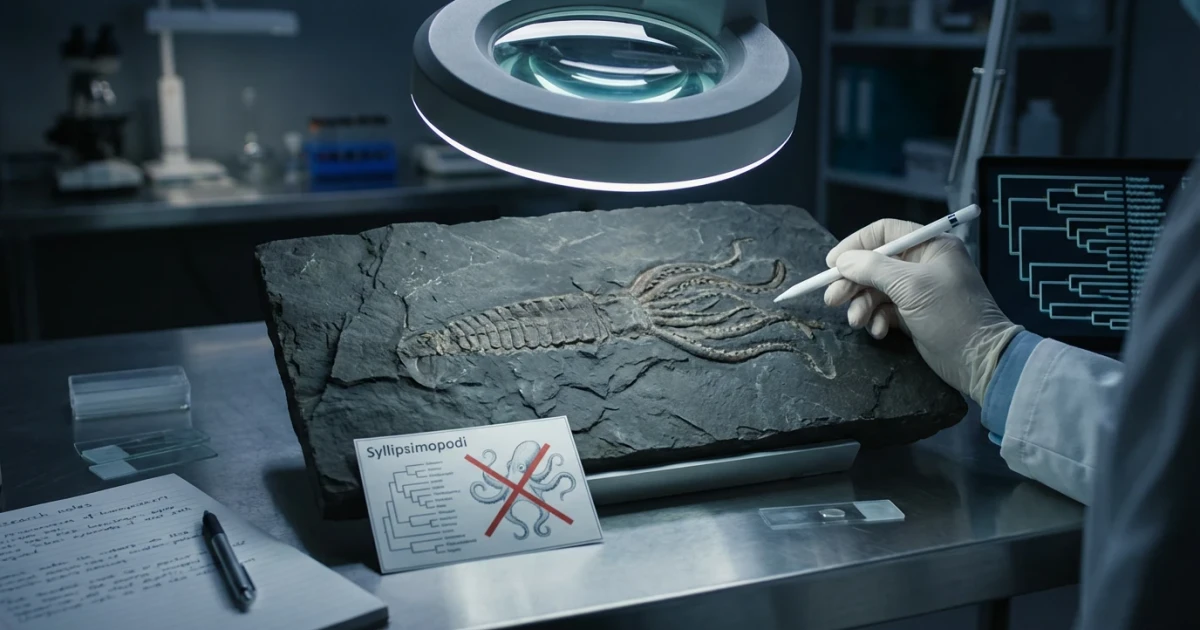
New research has overturned a long-held belief about the origins of octopuses, revealing that the fossil once heralded as the world’s oldest octopus is not an octopus after all. The re-examination of Syllipsimopodi bideni, a 328-million-year-old fossil, has prompted a significant revision of the cephalopod evolutionary tree, according to a recent report from Ars Technica.
Reevaluating Syllipsimopodi’s Identity
The fossil specimen of Syllipsimopodi bideni was first described in 2022 and quickly made headlines as the oldest known octopus relative. Its unique features, including ten arms and a gladius (an internal shell), led many paleontologists to place it within the group Vampyropoda, which includes both octopuses and vampire squids.
However, new peer-reviewed analysis published in Nature demonstrates that the fossil's morphology does not match true octopuses. The study’s authors used advanced imaging and comparison with other fossil invertebrates to determine that Syllipsimopodi belongs to a more ancient, previously unrecognized lineage of cephalopods.
Key Findings from the New Analysis
- The fossil retains several primitive traits not found in modern octopuses, such as a well-developed gladius and ten functional arms.
- 3D model data from the high-resolution scan of the specimen reveal muscular and structural features inconsistent with octopod anatomy.
- Taxonomic records in the Paleobiology Database and GBIF have been updated to reflect the new classification as a non-octopod cephalopod.
Implications for Cephalopod Evolution
This discovery shifts the timeline for octopus evolution forward by millions of years. As Ars Technica and other outlets report, the oldest true octopus fossils are now several tens of millions of years younger than Syllipsimopodi. The revision also highlights the diversity of ancient cephalopods, many of which experimented with different numbers of arms, body plans, and feeding strategies.
According to a recent analysis, the fossil’s features suggest a complex evolutionary pathway for vampyropods, with multiple ancient lineages branching off before the emergence of modern octopuses and vampire squids.
What’s Next for Fossil Cephalopod Research?
The case of Syllipsimopodi demonstrates how advances in imaging and morphological analysis continue to reshape understanding of ancient life. Researchers are now focusing on finding additional specimens and re-examining other fossils previously assigned to octopods. These efforts may further clarify the timeline and evolutionary relationships among early cephalopods.
For readers interested in exploring the anatomical details of Syllipsimopodi, the 3D model data and taxonomic records can be viewed online. As new discoveries emerge, the story of how octopuses and their relatives evolved is likely to see further refinement.