Science
Earth’s Mantle Holds Clues to Atmospheric Oxygen Levels
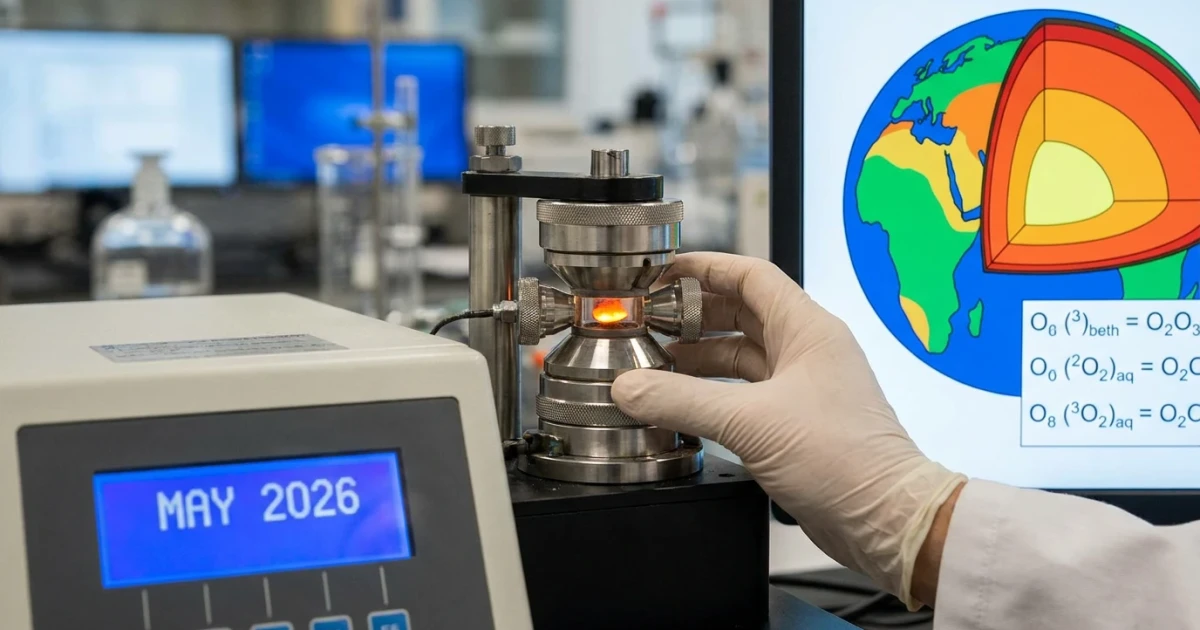
Recent studies are shedding light on the vital role Earth's mantle plays in maintaining the planet’s oxygen-rich atmosphere, revealing how deep geochemical processes impact surface conditions essential for life.
The Mantle’s Role in Earth’s Oxygen Balance
While oxygen makes up about 21% of the air we breathe, its abundance on Earth is no accident. According to the USGS, the mantle—a thick layer of rock between the crust and the core—consists primarily of silicate minerals rich in elements such as magnesium, iron, and oxygen. The exchange of these elements between the mantle and the atmosphere, driven by volcanic activity and tectonic processes, has been a critical factor in shaping Earth’s habitability over geological time.
Oxygen’s ‘Friends’ and the Mantle’s Chemistry
As explained in a recent Nature Geoscience analysis, the concept of oxygen fugacity—the measure of oxygen’s chemical availability—helps determine how much oxygen is available to combine with other elements in the mantle. Elements such as iron, manganese, and chromium, often called ‘oxygen’s friends,’ readily bond with oxygen. When these elements are drawn into the mantle through tectonic subduction, they can remove oxygen from the surface environment, storing it deep within the planet.
- High mantle oxygen fugacity leads to more oxidized volcanic gases, releasing more oxygen into the atmosphere.
- Low oxygen fugacity results in more reduced volcanic gases, which can consume atmospheric oxygen.
This delicate balance means Earth’s mantle acts as a vast reservoir, cycling oxygen and its ‘friends’ through melting, subduction, and volcanic outgassing, according to the USGS Volcano Science Center.
How Mantle Processes Affect the Atmosphere
The link between the deep mantle and atmospheric oxygen has been the subject of decades of research. Data from the EarthChem Library show that variations in mantle oxygen isotopes and trace elements are closely associated with major shifts in Earth’s atmospheric composition over time. For example, the rise of atmospheric oxygen about 2.4 billion years ago—the Great Oxidation Event—coincided with changes in mantle chemistry that increased the release of oxidized gases during volcanic eruptions.
According to multiple studies, the cycling of oxygen and its ‘friends’ through the mantle continues to influence atmospheric conditions today. When subducted oceanic crust—rich in oxidized minerals—enters the mantle, it can alter the redox state of mantle rocks. Subsequent volcanic eruptions then release gases that either add to or subtract from atmospheric oxygen levels.
Implications for Earth and Beyond
Understanding how the mantle controls atmospheric oxygen has broad implications, not only for reconstructing Earth’s history but also for assessing the habitability of other planets. As noted by geochemists, planets with active mantles capable of cycling oxygen and similar elements might be more likely to develop and sustain life-supporting atmospheres.
Future research could help clarify how tectonic processes, mantle composition, and volcanic activity have combined to maintain Earth’s unique balance of oxygen. These insights are critical as scientists search for biosignatures on exoplanets and seek to understand the long-term prospects for life on our own world.
Looking Forward
As research continues, advances in mantle geochemistry and isotopic analysis promise to deepen our understanding of the dynamic processes that have shaped Earth’s atmosphere. Readers can explore more about the composition of the mantle, oxygen fugacity, and the global geochemical data that underpin these discoveries.