Science
Earth’s Molten Core Shifted Direction Beneath Pacific
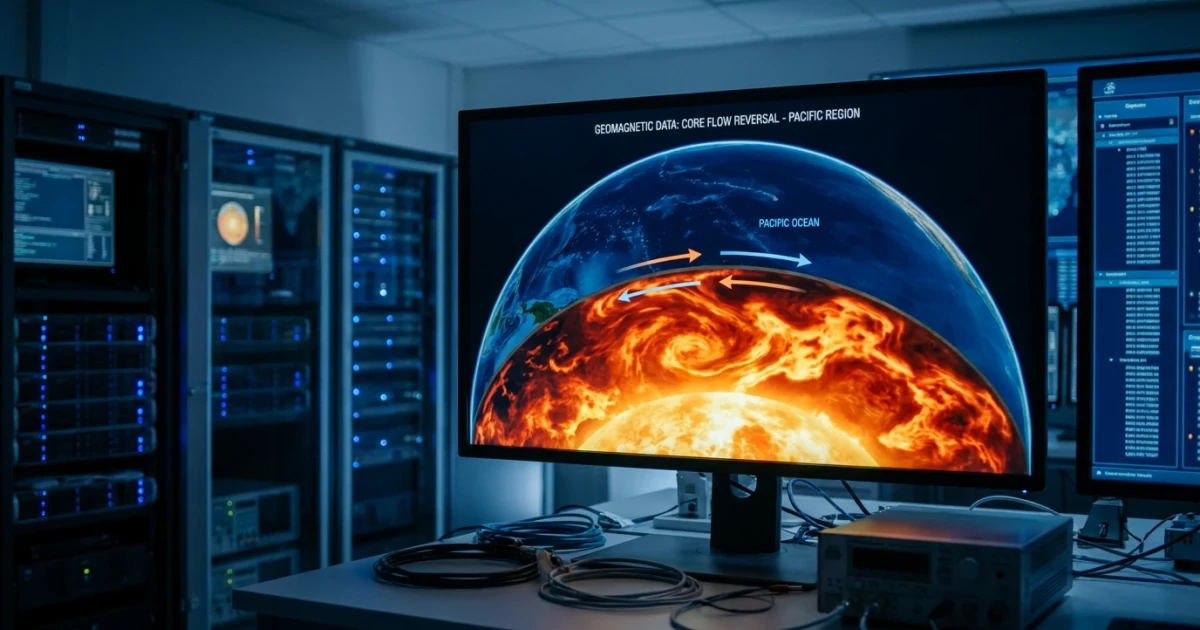
Earth’s molten outer core experienced a dramatic reversal in its flow direction beneath the Pacific Ocean in 2010, according to new research highlighted by ScienceAlert. This discovery sheds new light on the deep processes driving our planet's magnetic field and hints at implications for both geophysics and geomagnetism.
Evidence of a Core Flow Reversal
The reversal was detected far beneath the Pacific, where scientists have been tracking changes in the movement of Earth's outer core using seismic and geomagnetic data. According to ScienceAlert, analysis of these datasets revealed that the direction of molten iron flow—responsible for generating Earth's magnetic field—shifted around 2010.
- The outer core consists of liquid iron and nickel, circulating in complex patterns.
- This movement is critical for sustaining the geomagnetic field that shields the planet from solar and cosmic radiation.
- Researchers observed a notable change in secular variation, signaling the reversal.
Peer-reviewed studies, such as those published in Geophysical Research Letters, corroborate these findings, providing detailed models and visualizations of the flow change.
How Was the Reversal Detected?
Scientists used a combination of seismic monitoring and satellite-based geomagnetic observations. Missions like ESA’s Swarm have delivered precise magnetic field measurements, while ground observatories offer long-term tracking of changes in the field’s strength and direction.
- Seismic waves passing through the core provide clues about its flow patterns.
- Satellite data captures real-time variations in the magnetic field.
- These complementary datasets are compiled in repositories such as PANGAEA for scientific analysis.
According to ScienceAlert, the reversal was not abrupt but occurred gradually, with clear evidence emerging from 2010 onward.
Implications for Earth's Magnetic Field
This shift in the core’s movement has prompted geophysicists to explore its impact on the geomagnetic field. The field is generated by the dynamo effect of the rotating, convecting outer core. Changes in flow can influence:
- The location and strength of the magnetic poles
- Secular variation, or slow changes in field intensity and direction
- Potential regional anomalies in magnetic field strength
While no immediate effects have been reported on navigation systems or biological processes relying on the magnetic field, researchers continue to monitor for longer-term consequences. Studies in Earth and Planetary Science Letters suggest these core dynamics may play a role in historical geomagnetic reversals and fluctuations.
Ongoing Research and Future Questions
The discovery of this reversal has energized the scientific community. Ongoing monitoring through satellite missions and ground observatories aims to track whether this is part of a cyclical process or a unique event. Scientists are examining:
- How often such reversals occur in the geological record
- The relationship between core flow changes and geomagnetic field behavior
- Potential links to seismic activity or mantle dynamics
With Earth’s deep interior remaining largely inaccessible, these findings underscore the importance of remote sensing and computational modeling. Researchers hope that further analysis will clarify the mechanisms driving core flow reversals and their broader planetary impacts.
Conclusion
As new data continues to emerge, the 2010 reversal of Earth’s molten core beneath the Pacific stands as a reminder of the dynamic forces shaping our planet from within. The interplay between core movements and geomagnetic variations remains an active area of research, with implications for understanding Earth’s past and predicting its future behavior.