US News
East Coast braces for repeated wildfire smoke as climate threat grows
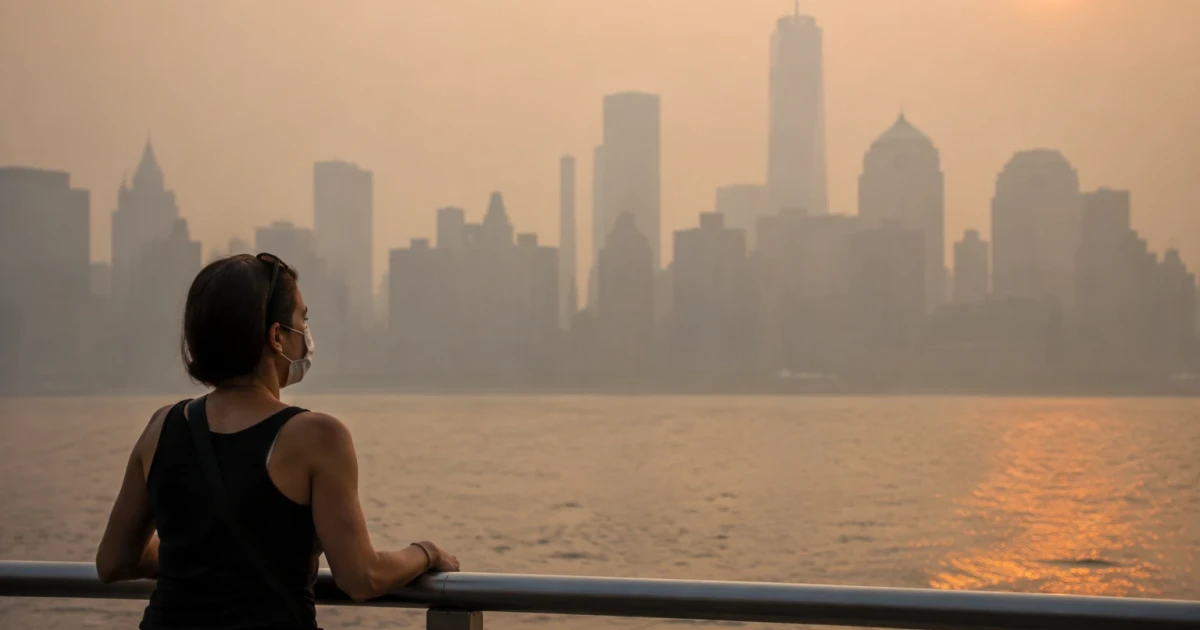
More than 830 wildfires were burning in Canada and more than a dozen in northern Minnesota as smoke drifted into New York, Boston and the Great Lakes again in 2026. The return of orange and hazy skies came after similar episodes in 2023 and 2025, underscoring how quickly a fire season north of the border can become an East Coast air-quality crisis.
In June 2023, smoke from record Canadian wildfires turned skies orange across New York, New Jersey and other East Coast states, triggering hazardous-air-quality alerts and public-health warnings. That episode was treated at the time as a warning, not an anomaly. Scientific American called Canada’s wildfires a warning of the East Coast’s smoky future, while The Guardian warned that East Coast cities needed air-quality plans similar to those already used in the West.
The warning was repeated in the months that followed. Penn State’s Institute of Energy and the Environment described wildfire smoke in the East as a potential new normal, and Science News said blanketing the U.S. East Coast would not be a one-time event. By 2025, NJ Spotlight News was reporting that researchers were evaluating the public-health impacts of increasing wildfires in New Jersey, a state that had not been built around recurring smoke seasons but was already being asked to absorb them.
The climate context is now harder to ignore. The State of Wildfires 2024-2025 report said climate change is increasing the frequency and intensity of extreme wildfires globally, and a New York Times interactive noted that fires in Canada, the United States and Mexico can send smoke across the continent. That is the pattern East Coast officials were told to prepare for after 2023, yet the region still appears to be reacting event by event rather than building the kind of air-quality infrastructure, forecasting and emergency planning that repeated smoke episodes now demand.
David Wallace-Wells has framed the moment as one in which every climate disaster becomes preparation for the next, and the East Coast’s smoke problem fits that pattern. The question is no longer whether the skies will turn orange again, but whether governments, schools, transit systems and public-health agencies will keep treating it as an exception instead of a recurring hazard.
Sources
- [1]nytimes.com
- [2]scientificamerican.com
- [3]theguardian.com
- [4]iee.psu.edu
- [5]sciencenews.org
- [6]njspotlightnews.org
- [7]abcnews.com
- [8]wbur.org
- [9]news.climate.columbia.edu