Business
ECB study says AI boom has not yet dented U.S. jobs or wages
The loudest warnings about artificial intelligence have not yet shown up in the broad U.S. labor market. A new European Central Bank study found that while AI can displace some workers, the overall impact on employment and wages in the United States has remained muted, even as firms pour money into the technology.
The paper, titled AI and the US labour market: effects on employment growth, was written by ECB economists Isabella Moder and Til Pommer. It focused on the United States because the ECB said AI effects were likely to surface there earlier than in other major economies, given the country’s early adopters and relatively flexible labor market.
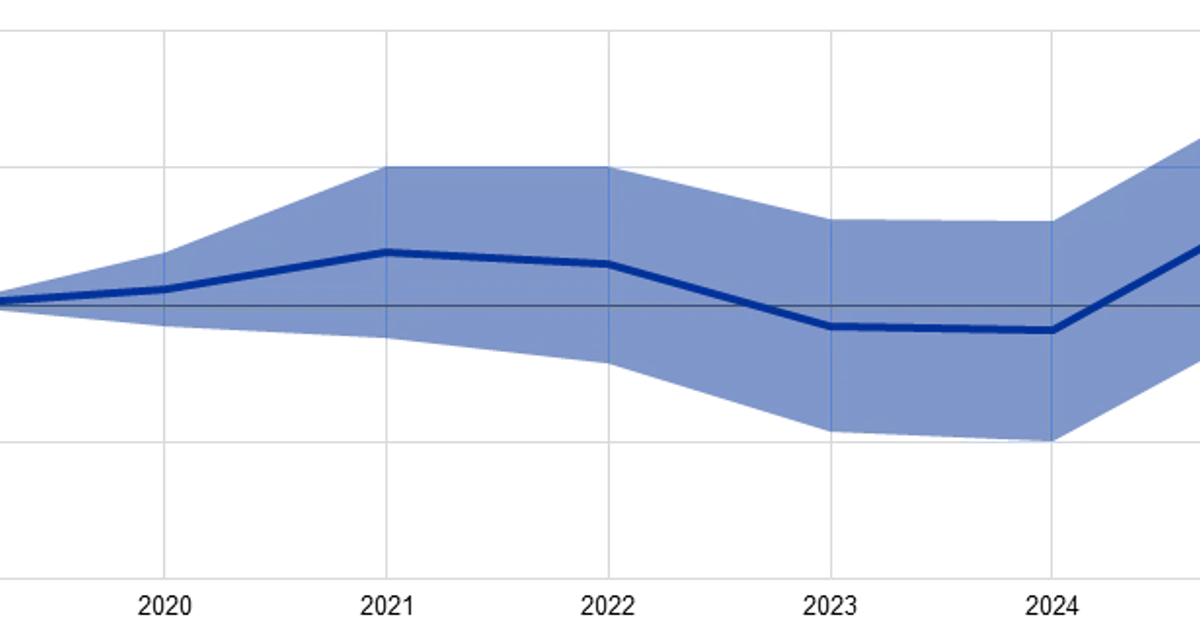
The numbers point to pressure in specific corners of the workforce rather than a sweeping labor-market shock. U.S. employment in occupations with high AI substitution risk fell by more than 4% between 2019 and 2025. Employment in low-risk occupations rose 13% over the same period. The share of low-risk jobs in total U.S. employment increased from 23% to 25%, while the share of high-risk jobs declined from 35% to 33%.
That shift helps explain why the ECB said the macroeconomic damage has been limited so far. The study found that the biggest strain has fallen on junior workers in highly exposed occupations, suggesting that AI adoption is not spreading pain evenly. Instead, labor reallocation has cushioned the blow, with workers moving across tasks, firms and roles as businesses test and deploy new AI tools.

The ECB’s findings land squarely in the center of a larger debate over whether AI will destroy jobs or mostly reshape them. The Yale Budget Lab said in October 2025 that broader labor-market measures showed no discernible disruption since ChatGPT’s November 2022 release. The Federal Reserve Bank of St. Louis said in March 2026 that 43.0% of U.S. workers reported using AI for their jobs in January and February 2026, while finding no industry-level evidence of AI-related job losses.
Even so, the technology is already moving into more parts of the economy. Goldman Sachs said in March 2026 that AI was being felt in tech, knowledge and creative sectors, and estimated that 300 million jobs globally are exposed to automation by AI. Its base case called for a roughly 10-year adoption period, with 6% to 7% of workers displaced during the transition.
For policymakers, the ECB study offers a narrower warning than the apocalypse scenario often attached to AI: the first effects may be concentrated in junior, exposed occupations, not yet in mass unemployment or broad wage compression. That fits with European Central Bank President Christine Lagarde’s caution that AI could widen inequalities if the gains are unevenly shared. For now, the U.S. labor market is still absorbing the shock.