Business
Economic Survey 2026 Warns of Triple Threat: Are We Facing a Crisis Worse Than 2008?
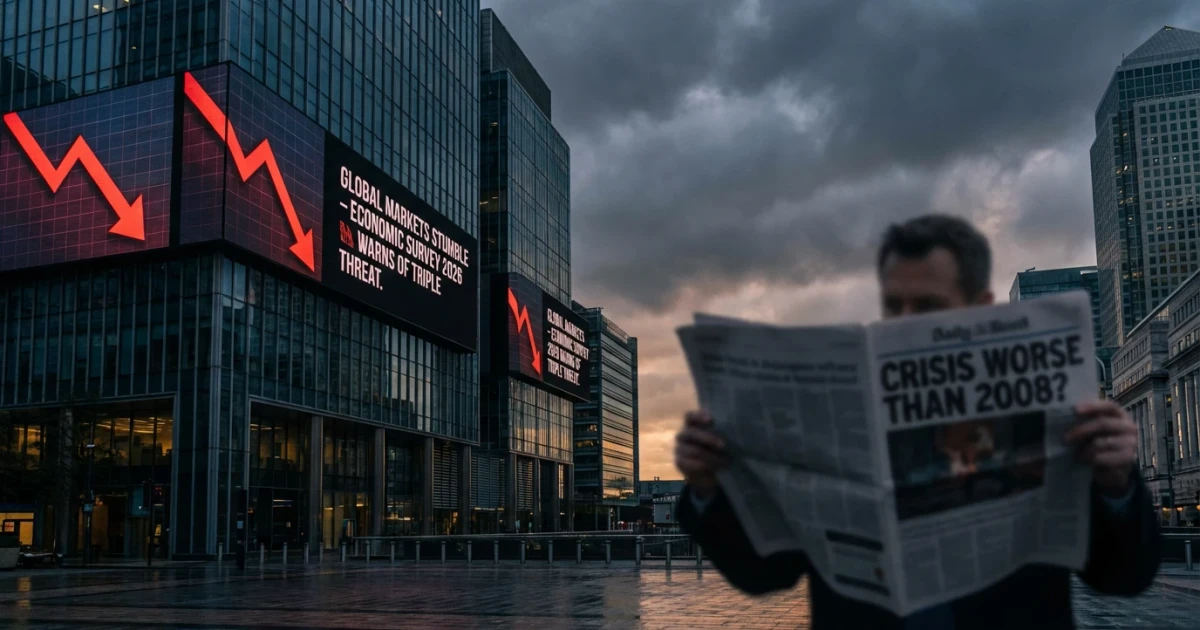
The Economic Survey 2026 has raised alarm bells across financial circles, spotlighting three significant risks that could threaten global market stability. As policymakers and investors take stock of these findings, comparisons are being drawn to the seismic 2008 global financial crisis, prompting a critical question: Could the coming storm be even worse?
The Triple Threat: Core Risks in 2026
The survey identifies three main risk factors currently looming over the world economy:
- Global Market Volatility: Increased unpredictability in equities, currencies, and commodities is cited as a core threat to investor confidence and international trade flows.
- Geopolitical Tensions: Ongoing and escalating conflicts have disrupted supply chains and contributed to inflationary pressures, increasing uncertainty for businesses worldwide.
- Debt Vulnerabilities: Mounting public and private debt across both developed and emerging economies has created structural fragilities, raising concerns over potential defaults or credit crises.
Comparisons to the 2008 Financial Crisis
The shadow of 2008 still looms large. The Economic Survey 2026 poses the possibility that the convergence of these three risks could precipitate a global crisis of similar—or even greater—magnitude. The 2008 meltdown was triggered primarily by financial system weaknesses, but today's risks are broader and more interconnected, amplifying potential contagion effects.
What Makes 2026 Different?
Unlike 2008, when the crisis was largely confined to the financial sector before spreading to the real economy, the 2026 survey warns that today's vulnerabilities are not limited to banks and markets:
- Geopolitical risks extend beyond financial assets to global supply chains and essential commodities.
- Debt vulnerabilities are present in both public and private sectors, in advanced and developing nations alike.
- Volatility is being exacerbated by rapid shifts in technology, energy transitions, and the lingering effects of recent global shocks.
Policy Implications and Market Response
Given these risks, the Economic Survey 2026 urges governments and central banks to adopt proactive measures. Recommendations include:
- Strengthening financial system oversight to detect and mitigate vulnerabilities early
- Enhancing international cooperation to address cross-border risks and supply chain disruptions
- Implementing prudent fiscal policies to manage debt sustainability, especially in emerging markets
Markets have responded with caution, as investors reassess risk exposures and seek safe-haven assets. The survey's warnings have sparked debates among economists about the adequacy of current safeguards and the resilience of global financial architecture.
Looking Ahead: Preparing for Uncertainty
While it remains uncertain whether the risks outlined in the Economic Survey 2026 will culminate in a crisis on par with or exceeding 2008, the message to policymakers, businesses, and investors is clear: vigilance and preparation are paramount. The evolving complexity of global financial risks demands coordinated action and robust contingency planning.
As the world watches for further developments, the insights from the survey serve as both a warning and a call to action—reminding all stakeholders that the lessons of the past cannot be ignored as new challenges emerge on the economic horizon.
Sources
- [1]Mint