Business
Egypt current account deficit widens to $5.1 billion in quarter
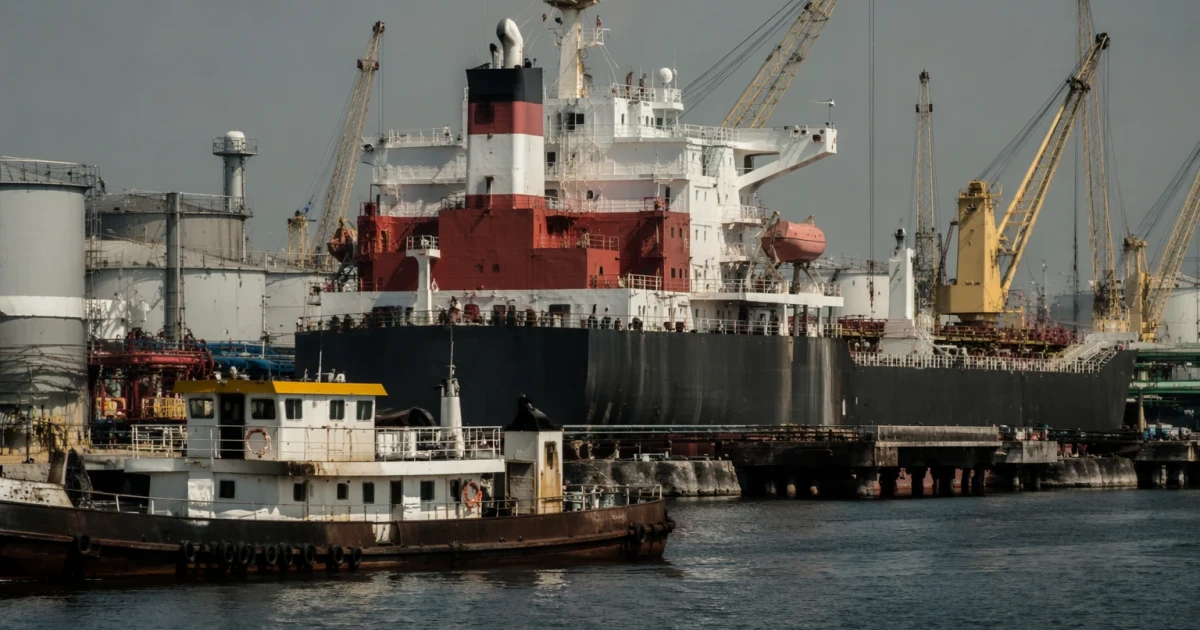
Egypt's current account deficit more than doubled to $5.1 billion in the January-March quarter from $2.3 billion a year earlier, as a larger merchandise trade gap overwhelmed gains from some of the country’s biggest foreign-currency earners. The central bank data show the pressure point plainly: more dollars went out for imports than came in from exports.
Oil drove much of the damage. Oil imports climbed to $5.7 billion from $4.8 billion in the same quarter a year earlier, while exports rose only to $1.6 billion from $1.2 billion. That left the trade account exposed even as remittances from Egyptians working abroad rose sharply to $12.8 billion from $9.3 billion, tourism revenue increased to $4.2 billion from $3.8 billion, and Suez Canal receipts improved. Net foreign direct investment edged down to $3.7 billion from $3.8 billion, underscoring how little fresh outside capital was added to the mix.
The latest balance-of-payments figures suggest the strain is not a one-quarter anomaly. For July-March of fiscal 2025/26, the Central Bank of Egypt said the overall balance of payments deficit narrowed to $1.8 billion from $1.9 billion a year earlier, helped by stronger FDI, remittances, tourism and canal revenues. But the current account deficit still widened to $14.6 billion over the nine months, while portfolio investment recorded a net outflow of $4.4 billion, reversing a $2.1 billion inflow in the previous year. Egypt’s financing picture has therefore remained mixed: more money is coming in through some channels, but it is not flowing steadily enough to erase the external gap.

That pattern matters because Egypt has spent years balancing inflation, currency pressure and its need for dollars to pay for fuel and food imports. In fiscal 2024/25, the central bank said the current account deficit had improved by 22.6 percent to $13.2 billion from $17.1 billion a year earlier, supported by remittances of $26.4 billion and tourism revenue of $12.5 billion. Yet the oil trade deficit still widened to $10.3 billion from $5.1 billion as oil imports jumped to $14.5 billion from $9.7 billion, a reminder that energy costs can erase gains elsewhere.
That dependence leaves Egypt exposed to swings in global oil prices, trade flows and travel demand. President Abdel Fattah al-Sisi has previously put losses from Red Sea disruptions at $10 billion, a figure that shows how quickly Suez Canal receipts can become part of the country’s financing stress.