World
Egyptian cemetery reveals 600 years of changing burial practices
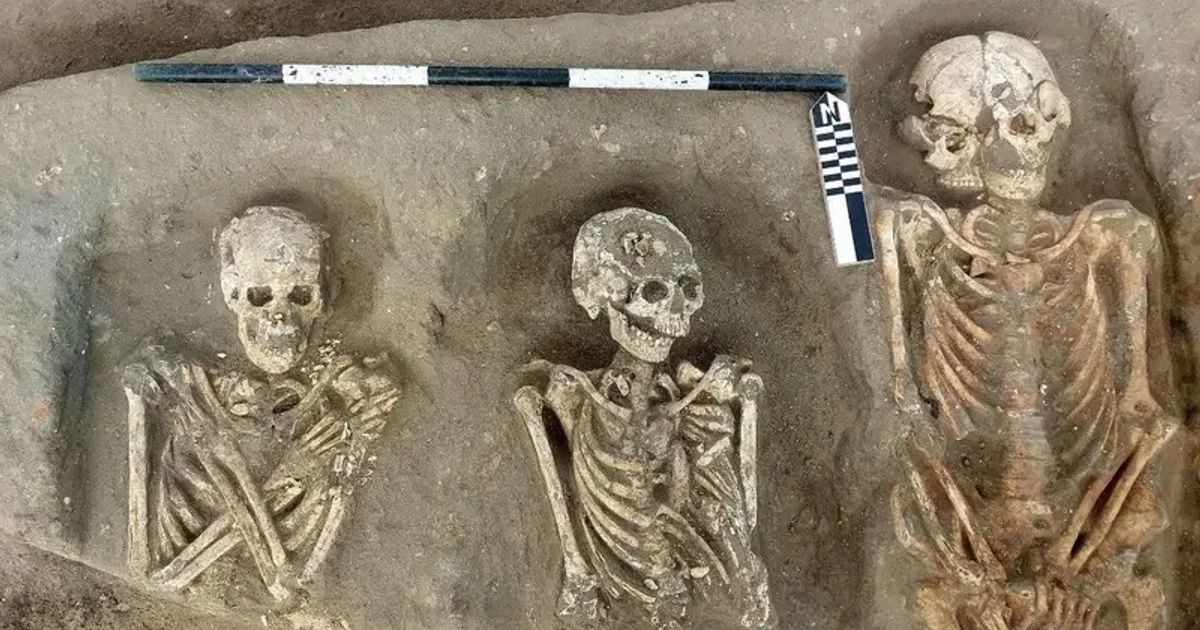
Archaeologists working in Egypt’s Nile Delta uncovered a Greco-Roman cemetery at Tell Kom Aziza in Beheira Governorate that adds a rare human record to a site already known for long occupation. The graves, built above earlier settlement layers, show that the area was used from the Old Kingdom through the New Kingdom and Late Period and into the Greco-Roman era, turning one stretch of ground into a centuries-long archive of changing burial custom.
The cemetery included simple burial pits, mud-brick-lined graves, decorated plaster coffins and barrel-shaped pottery coffins, a form often linked to the Ptolemaic period. Researchers documented both individual and collective burials, with bodies laid north-south and east-west and with hands positioned in several ways, including folded over the pelvis, placed near the neck, stretched along the thighs or crossed over the chest in the Osirian pose. The variation suggests that burial practice at Tell Kom Aziza was never fixed, but shifted over time as religious ideas and local customs evolved.
One of the most unusual finds was a set of complete wild boar burials, a rare discovery in ancient Egyptian funerary contexts. Boars and pigs carried special meaning in some traditions because of their association with Seth, giving the animal remains a significance beyond simple disposal. The presence of human and animal burials in the same cemetery points to a funerary landscape shaped by belief, identity and possibly changing community choices about what belonged in the grave.
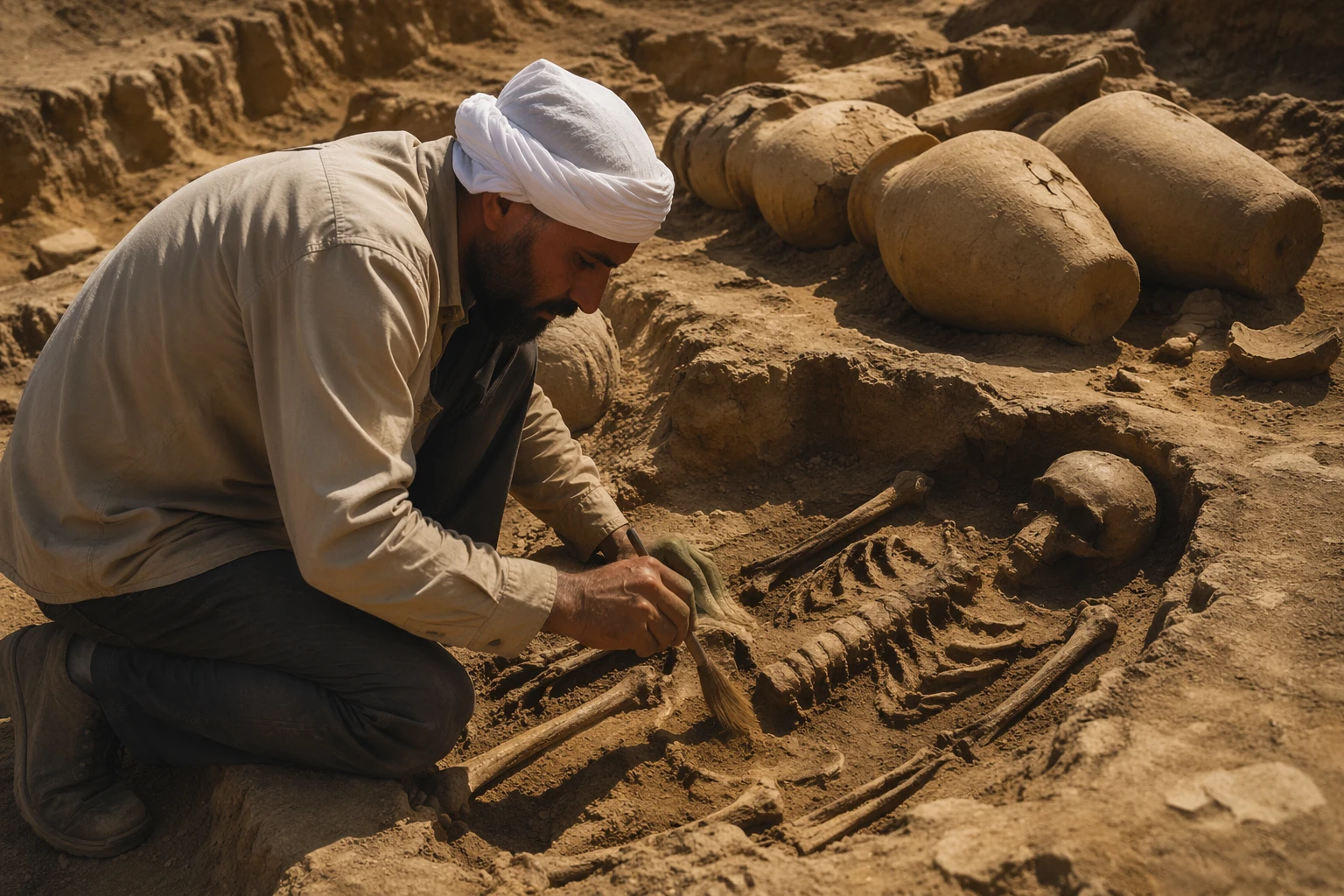
The excavation also produced pottery and stone vessels, bread molds, ovens, storage jars, multi-purpose stone tools and large quantities of fish, bird and mammal bones. Those remains can help archaeologists reconstruct diet, food preparation and local economic activity across successive phases of occupation. Together, the finds show that Tell Kom Aziza was not only a burial ground but also a place where daily life left clear material traces.
Egypt’s Tourism and Antiquities Minister Sherif Fathy described Tell Kom Aziza as a comprehensive archaeological record of settlement patterns, daily life and interaction with the environment over thousands of years. Hisham El-Leithy, secretary-general of the Supreme Council of Antiquities, said the range of burial rites and body treatment points to multiple traditions rather than a single uniform rite. Mohamed Abdel-Badie, head of the Ancient Egyptian Antiquities Sector, said the site saw habitation from the earliest phases of ancient Egyptian history before becoming an area of intensive funerary activity.
Sources
- [1]cbsnews.com
- [2]jpost.com
- [3]archaeologymag.com
- [4]heritagedaily.com
- [5]english.news.cn
- [6]archaeology.org