Business
EIA sees modest U.S. oil growth as Gulf disruptions tighten supplies
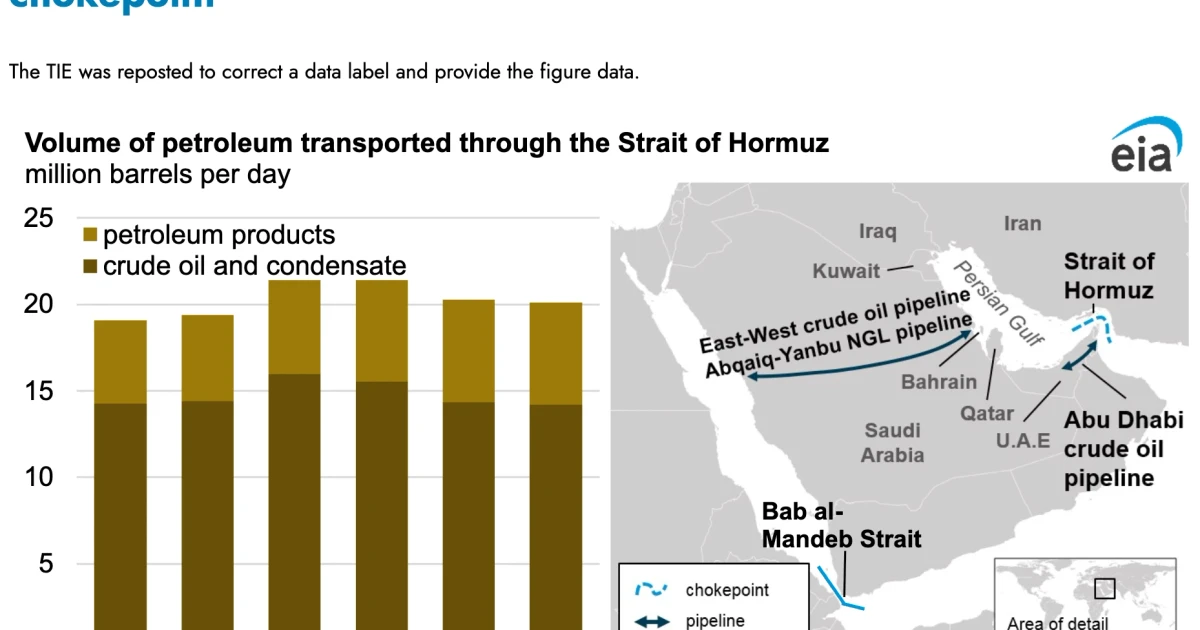
The United States is gaining leverage in the oil market, but not through the kind of shale surge that once reshaped global supply. With the Strait of Hormuz effectively closed in the near term and Middle East oil production still more than 11 million barrels per day below pre-conflict levels in May, the Energy Information Administration says the world is drawing down inventories fast just as U.S. producers are choosing caution over expansion.
That hesitation matters because the EIA now expects shipments through the Strait to resume only in the third quarter of 2026, with traffic not returning to pre-conflict levels until early 2027. The agency also forecasts OECD oil inventories will fall to their lowest levels since 2003, a sign that spare supply remains tight even as geopolitical disruptions keep reshaping trade flows.
For U.S. crude producers, the opening has not translated into a drilling rush. Earlier market commentary pointed to U.S. crude output of about 13.37 million barrels per day in 2026, slightly below roughly 13.42 million in 2025, underscoring how modest growth is expected to be despite the tighter market. Companies appear focused on capital discipline and balance-sheet restraint, not on chasing short-term market share while prices remain uncertain.

The United States is already capturing more of the opportunity on the product side. Since March, the EIA estimates the country has exported an average of 6.2 million barrels per day more petroleum products than it imported, and April net exports hit 6.3 million barrels per day, the highest on record. The agency now expects net petroleum product exports to average 5.6 million barrels per day in 2026, also a record, with distillate fuel net exports reaching 1.5 million barrels per day in the second quarter and jet fuel net exports about 0.3 million barrels per day.
Higher crude prices are feeding directly into refined-fuel costs. The EIA forecasts Brent crude averaging $95 a barrel in 2026, its highest annual average since 2022, while U.S. wholesale gasoline is seen at $2.98 a gallon and diesel at $3.40. The International Energy Agency says the oil shock in May has pushed world demand down by 420,000 barrels per day year over year in 2026, while global supply fell by another 1.8 million barrels per day in April and refinery crude throughputs are set to plunge by 4.5 million barrels per day in the second quarter.

The result is a market that is tighter, pricier and still waiting for a stronger U.S. crude response. For now, shale producers are choosing discipline, and that leaves the United States more influential as a supplier of refined products than as a new source of crude barrels when rivals are disrupted.
Sources
- [1]nytimes.com
- [2]eia.gov
- [3]iea.org
- [4]reuters.com