World
Eid al-Adha Marked by Global Celebrations and Reflection
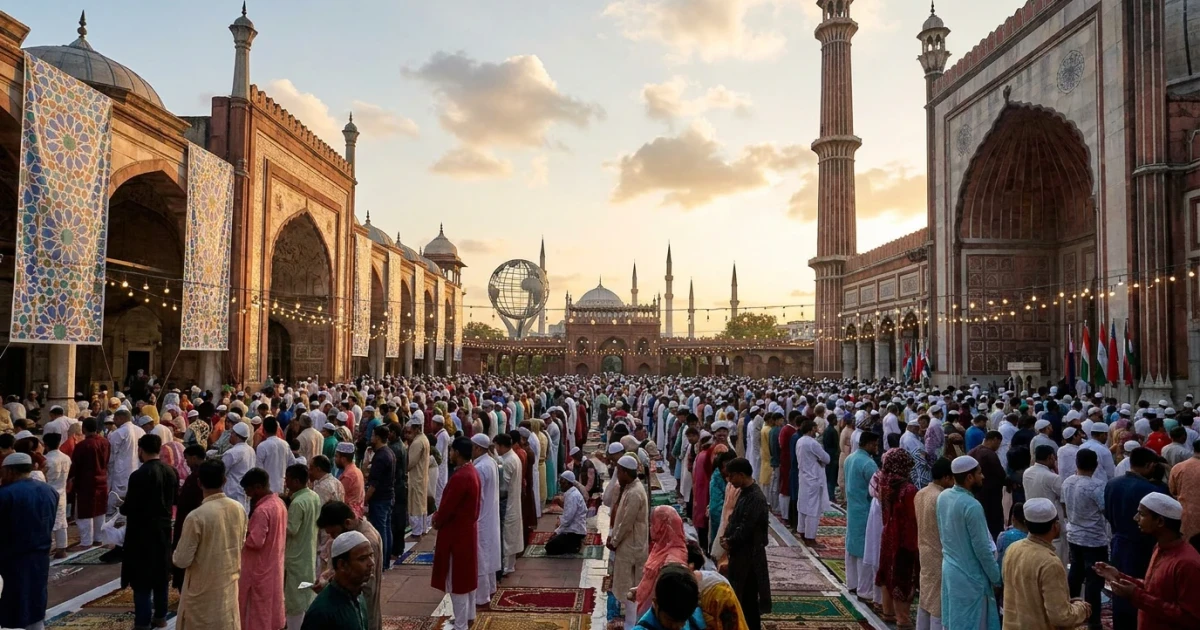
Muslims worldwide came together this week to celebrate Eid al-Adha, one of the most significant religious festivals in Islam. The holiday, observed by millions across continents, is a time of prayer, charity, and communal gatherings, marked by rituals that symbolize sacrifice and solidarity.
Understanding Eid al-Adha’s Significance
Eid al-Adha, often translated as the "Festival of Sacrifice," commemorates the willingness of the Prophet Ibrahim (Abraham) to sacrifice his son as an act of obedience to God. According to Britannica, this event is central to Islamic tradition and is observed annually in the final days of the Hajj pilgrimage. The festival is distinct from Eid al-Fitr, which marks the end of Ramadan, and together, these two Eids represent milestones in the Islamic calendar.
- Observance includes special prayers at mosques, family gatherings, and community meals.
- Animal sacrifice—typically sheep, goats, or cattle—is performed in many regions, with meat distributed to relatives, neighbors, and the needy.
- The timing of Eid al-Adha is based on the lunar Islamic calendar, meaning its exact date shifts each year.
Global Celebrations and Customs
As reported by AP News, Muslims in diverse countries—from Indonesia and Egypt to Nigeria and the United States—gathered for dawn prayers, shared festive meals, and engaged in acts of charity. The scale of the observance highlights Islam’s global reach; according to Pew Research Center, there are over 1.9 billion Muslims worldwide, making Islam the second-largest religion.
- In Jakarta, Indonesia, worshippers filled mosques and public squares, offering prayers and distributing meat from sacrificial animals.
- In Cairo, Egypt, families visited relatives and exchanged gifts, while children enjoyed traditional sweets and games.
- In Lagos, Nigeria, community events emphasized the importance of charity, with local organizations coordinating food donations.
- In New York City, Muslims gathered in parks and mosques, reflecting the multicultural fabric of American Islam.
These celebrations, captured in photo essays and news reports, illustrate the diversity of customs while underscoring shared values of generosity and compassion.
Charity and Community Spirit
Charitable giving is fundamental to Eid al-Adha. As explained by the Organization of Islamic Cooperation (OIC), the festival encourages Muslims to support those less fortunate, with many communities organizing food drives and donations. The ritual of animal sacrifice, known as qurbani, is intended to ensure that everyone, regardless of socioeconomic status, partakes in the festivities.
Public Holidays and Recognition
Eid al-Adha is a public holiday in many Muslim-majority countries, including Saudi Arabia, Turkey, Pakistan, and Indonesia. However, in nations with smaller Muslim populations, observance is often more localized, with community centers and mosques serving as focal points for celebration.
Broader Impact and Reflection
The festival’s rituals and gatherings offer a moment for reflection on unity and faith. As AP News highlighted, this year’s celebrations also served as a reminder of the resilience of Muslim communities amid ongoing global challenges. Across continents, Eid al-Adha brought together families, neighbors, and strangers in acts of devotion and kindness, reinforcing values that transcend borders.
With Islam’s global population continuing to grow—statistical projections from Statista show increases in both religious affiliation and holiday observance—the significance of Eid al-Adha will remain central to Muslim identity and community life.
The festival’s enduring traditions, whether in bustling cities or remote villages, echo the spirit of sacrifice, gratitude, and togetherness that defines Eid al-Adha for millions around the world.